
Climbing Mt Sinai
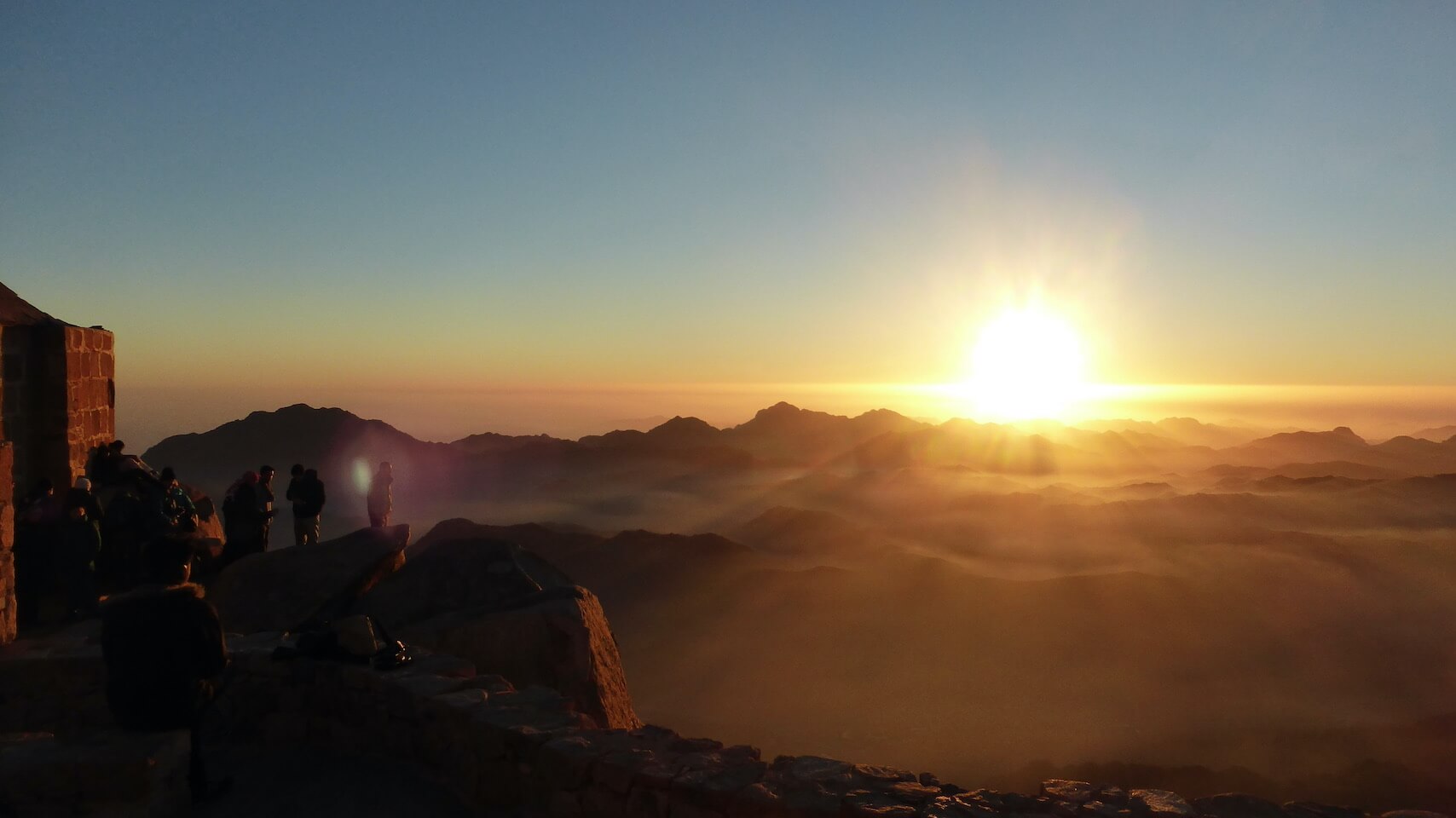
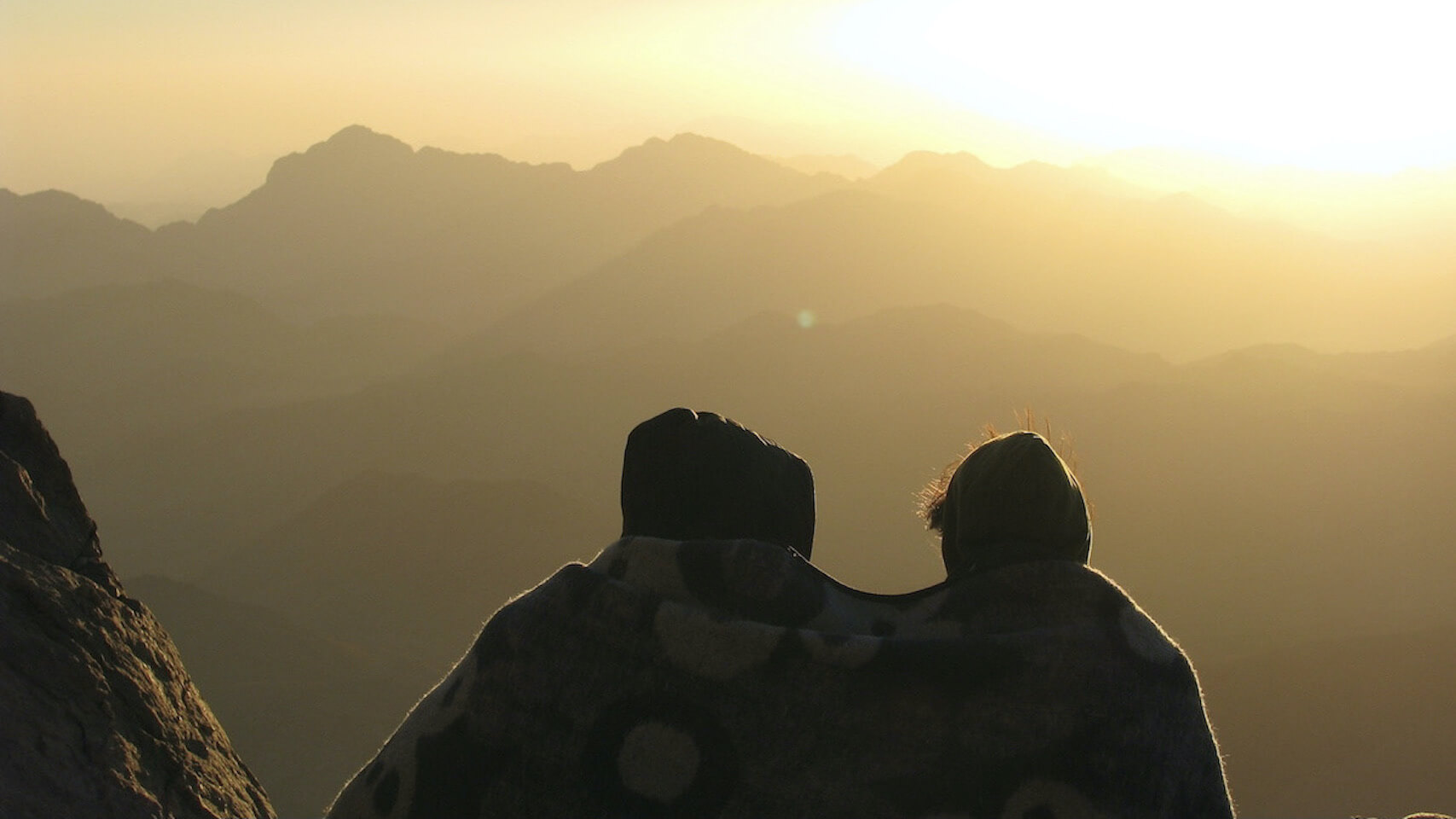

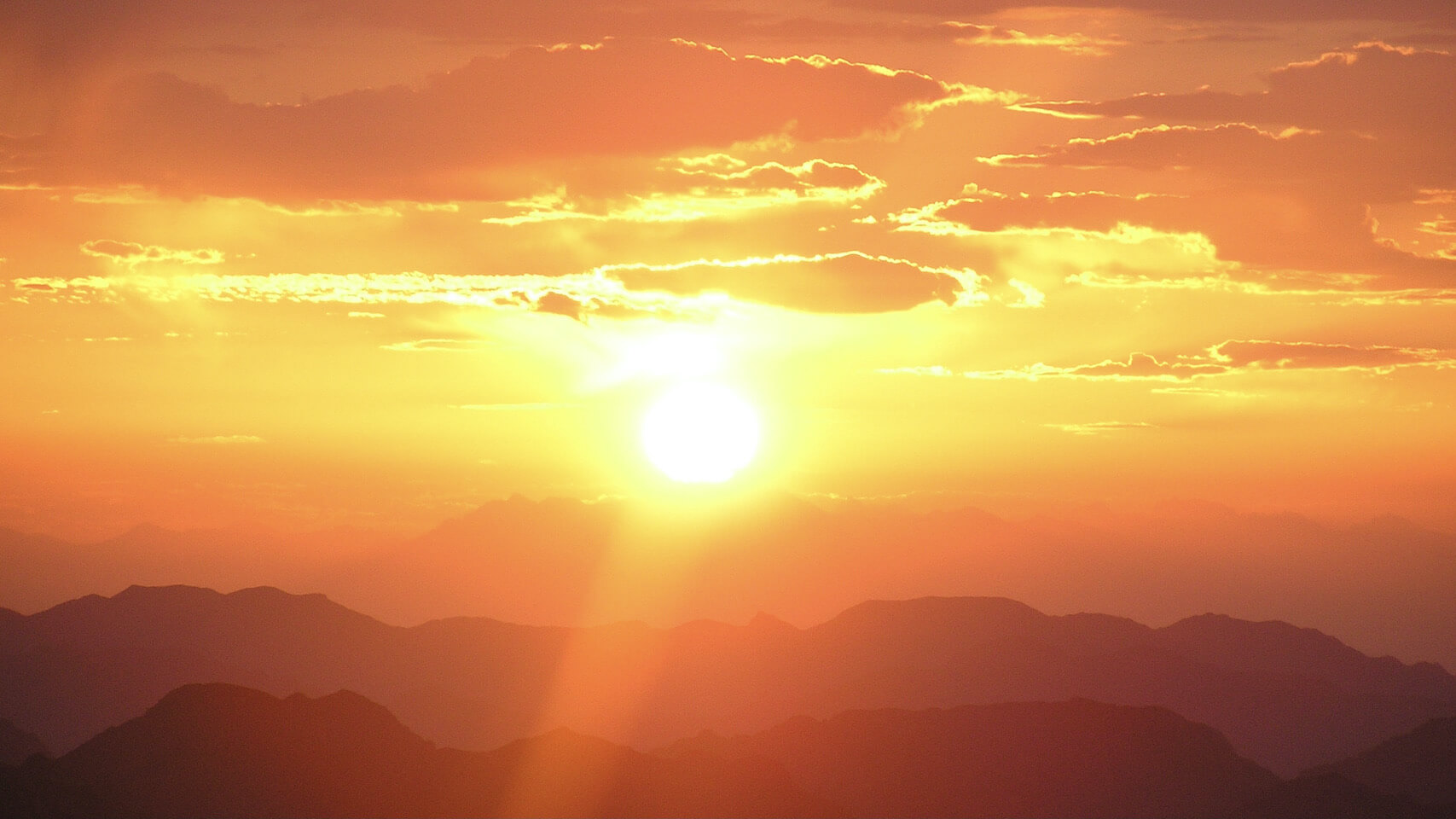
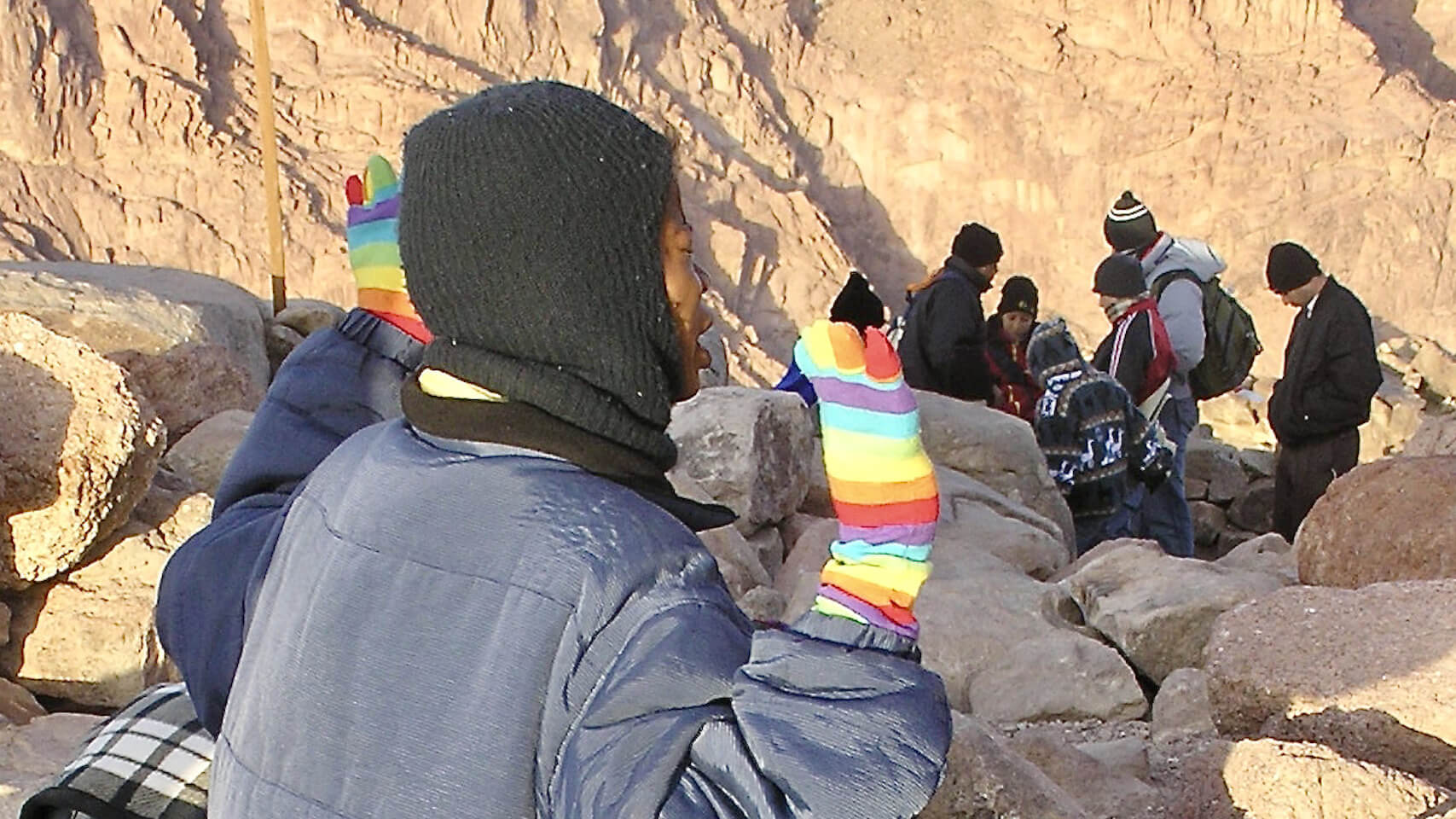

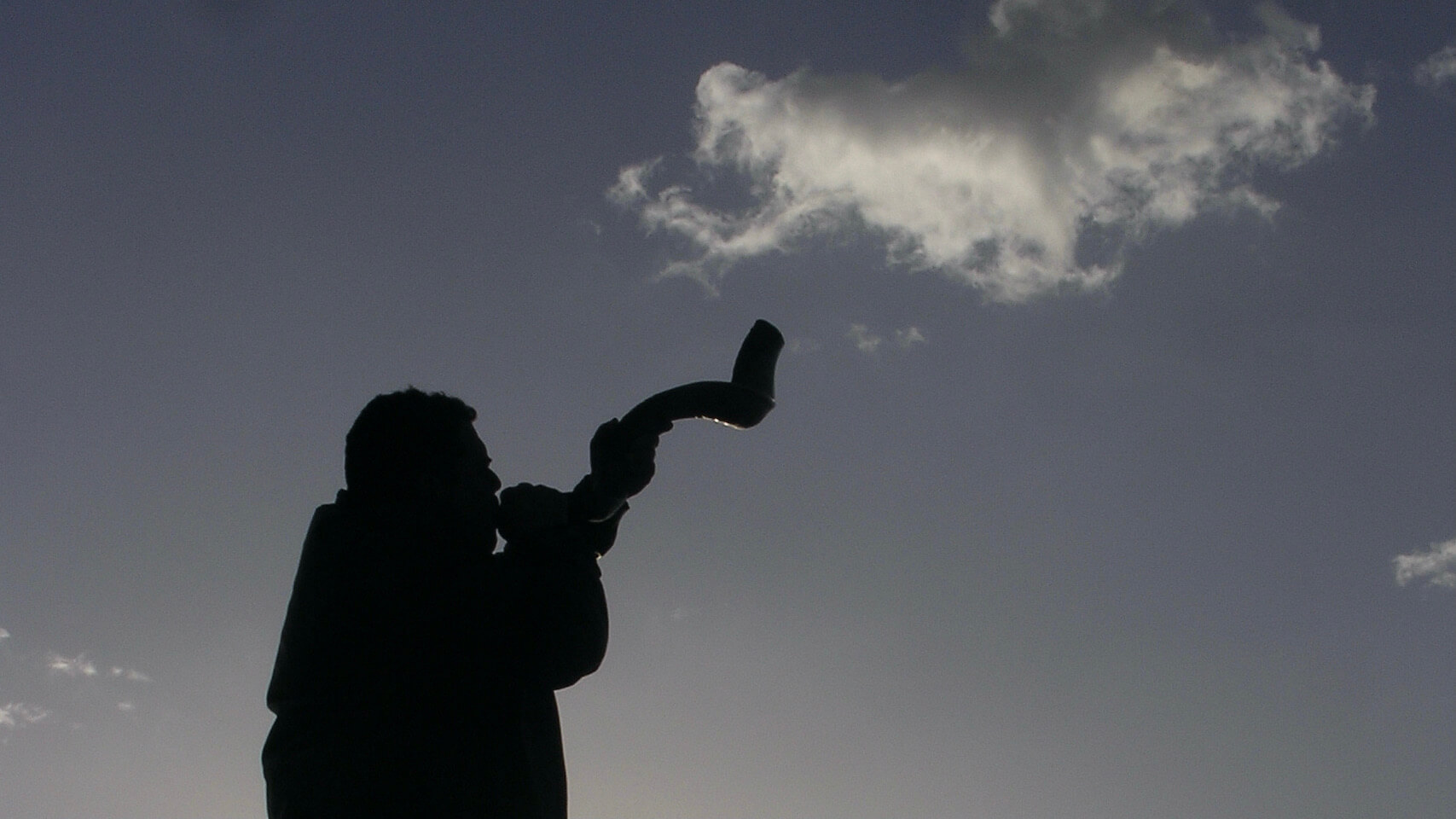

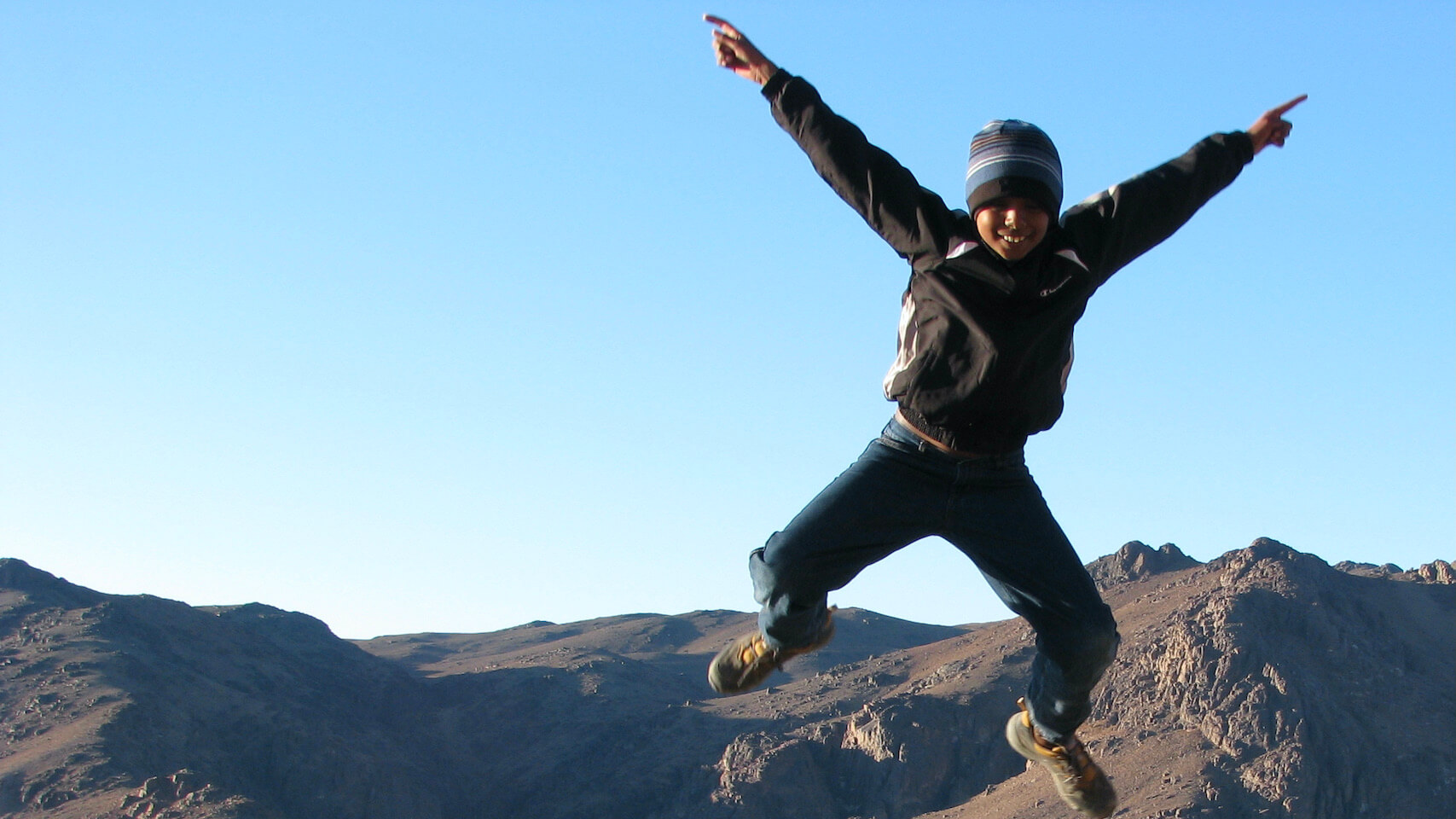
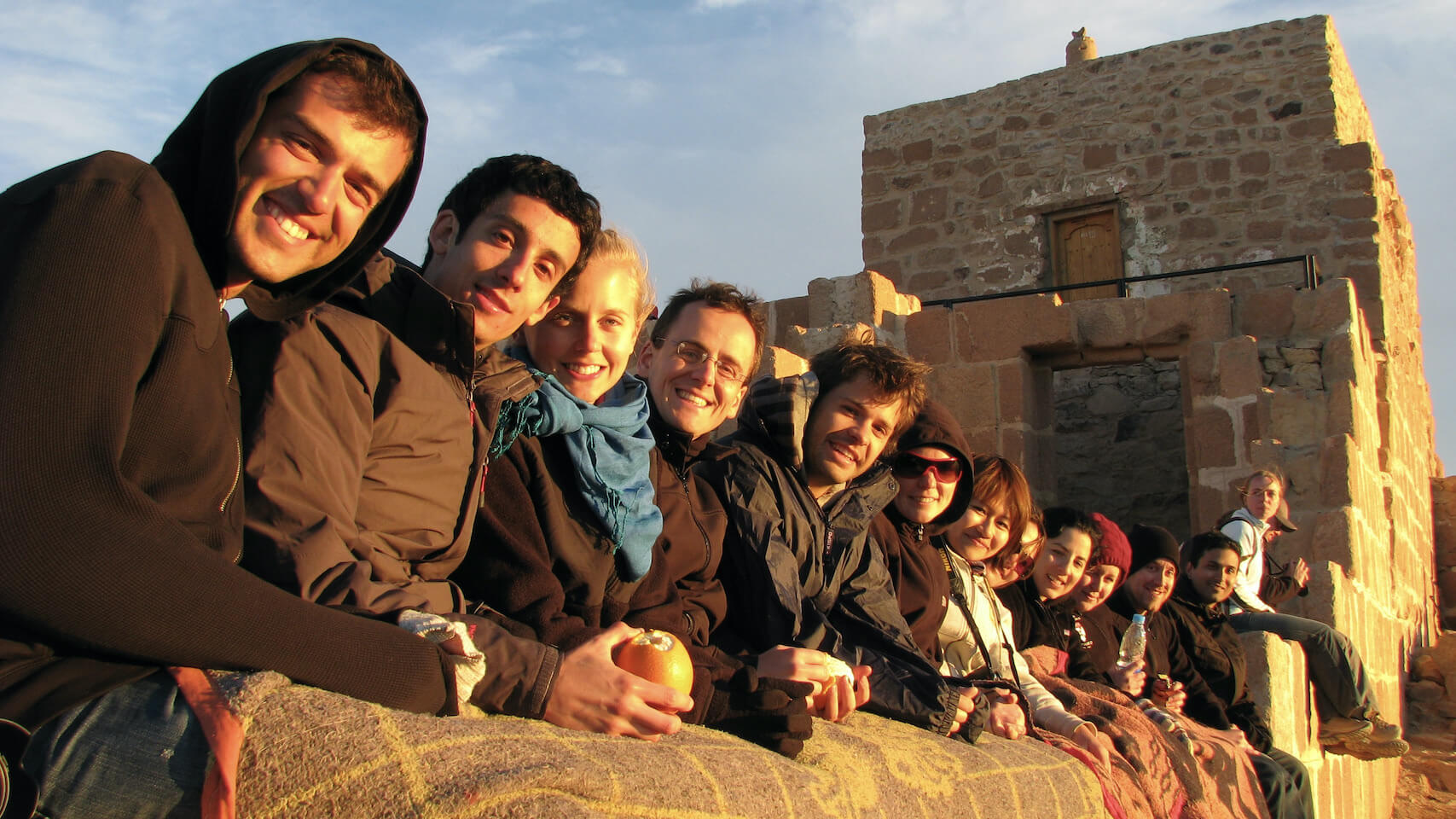



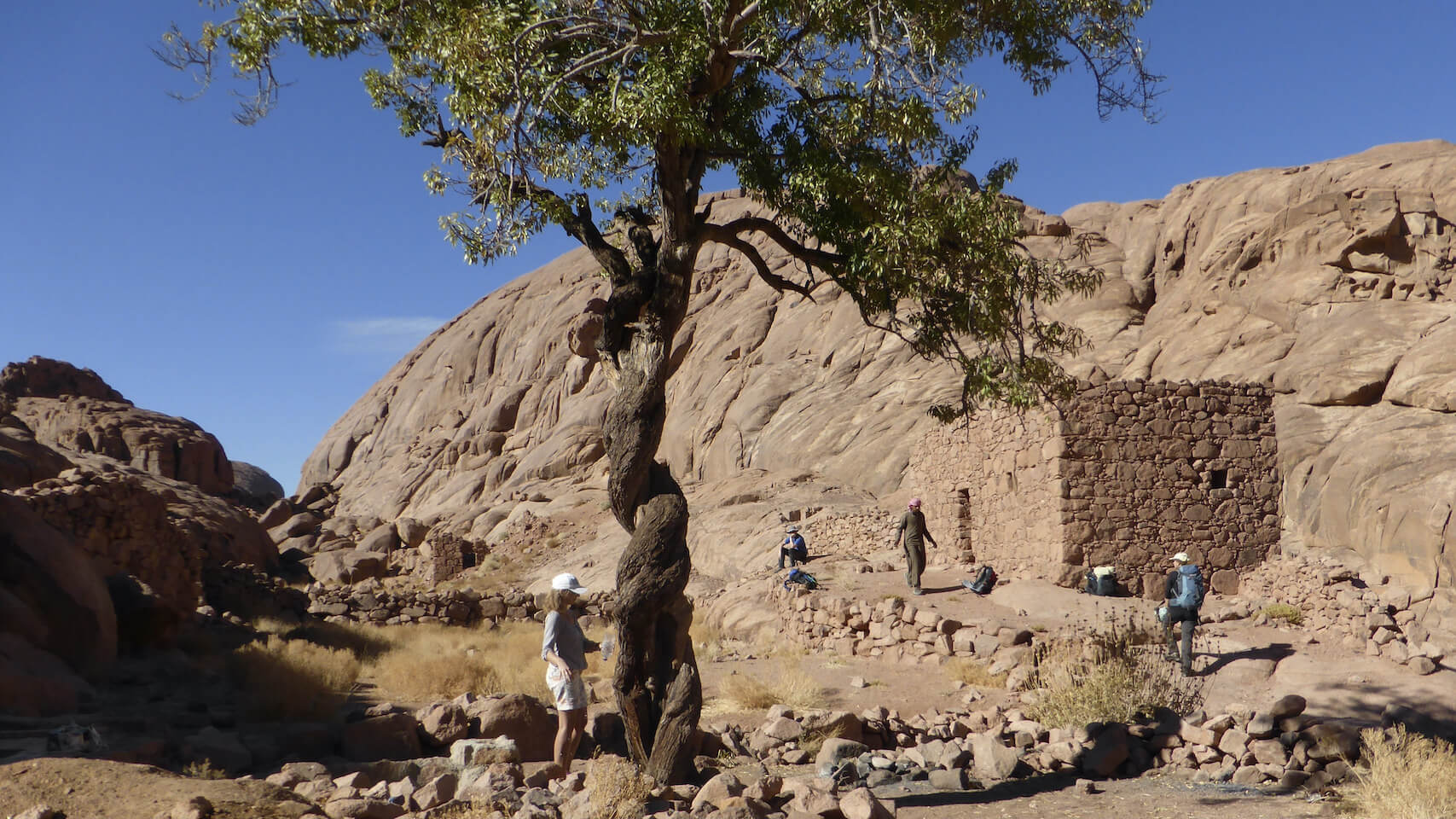
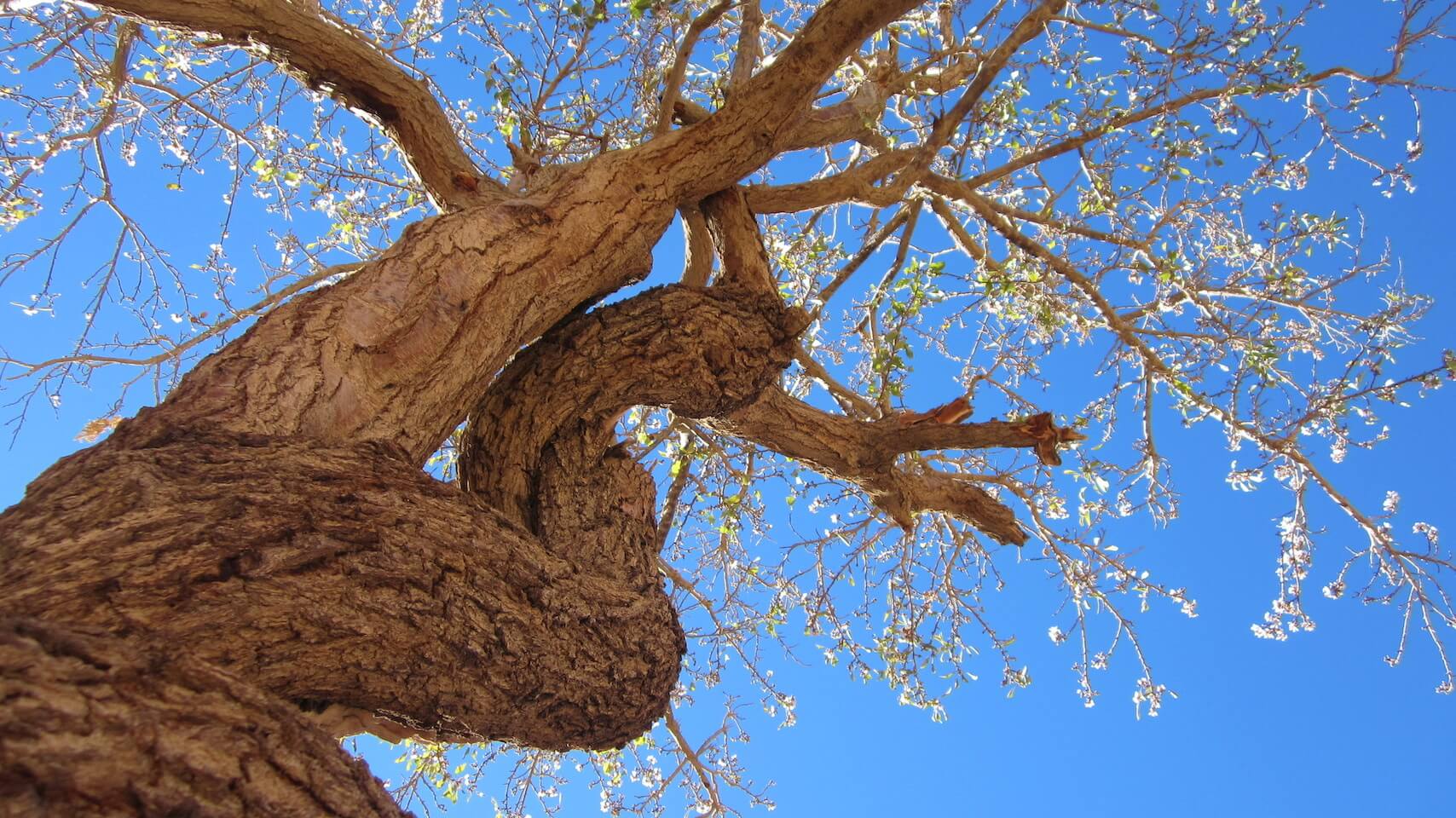

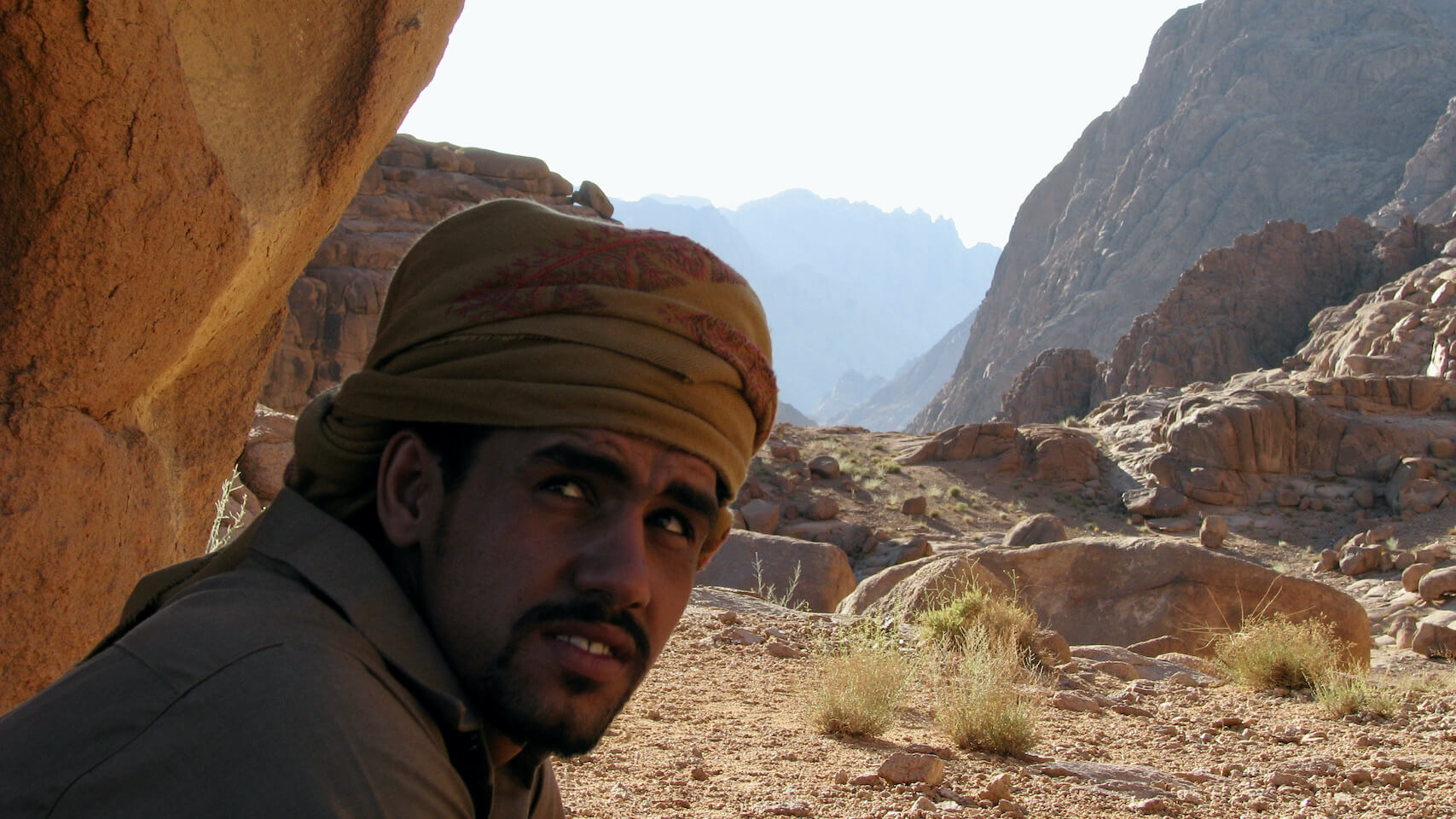


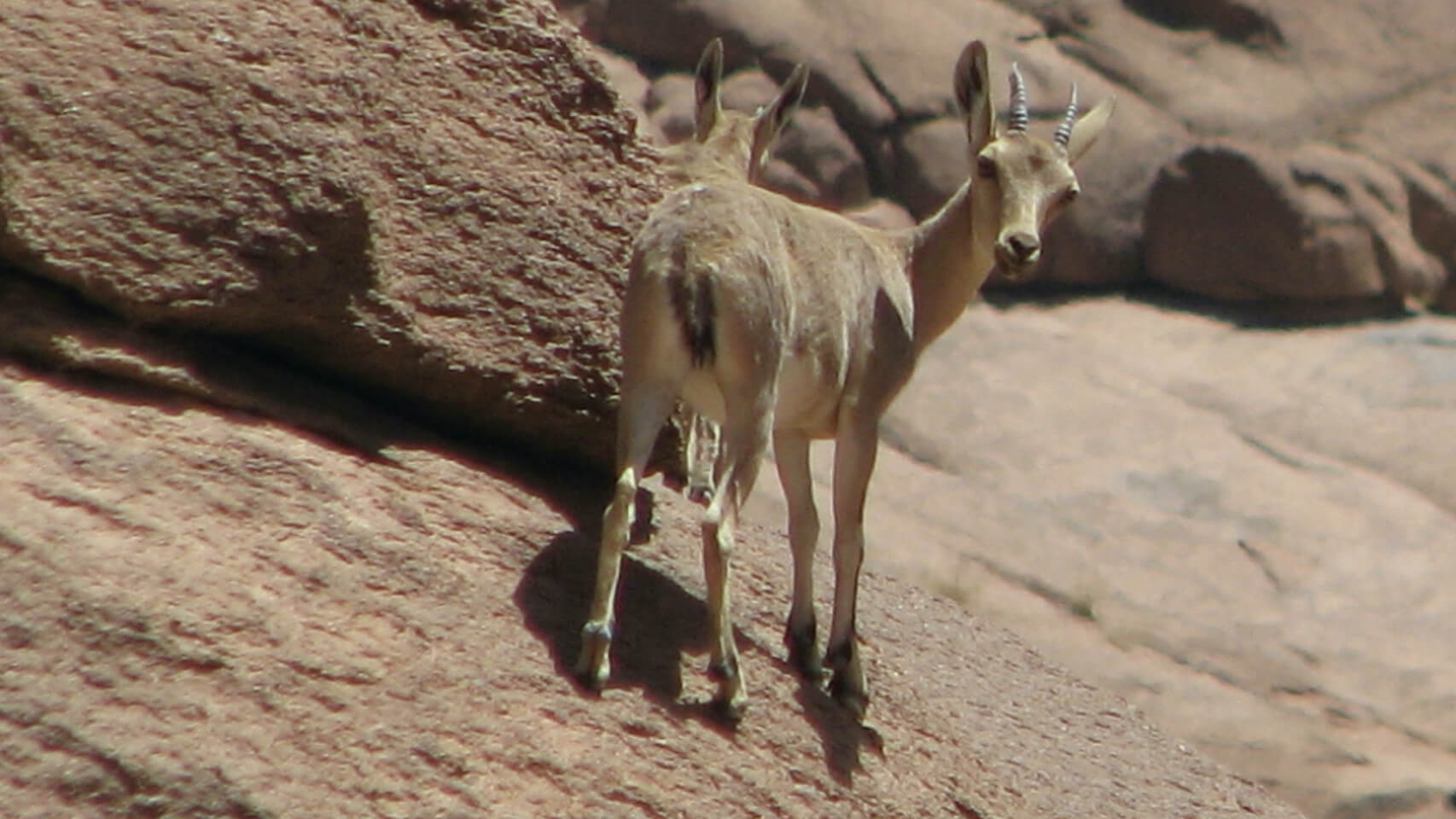
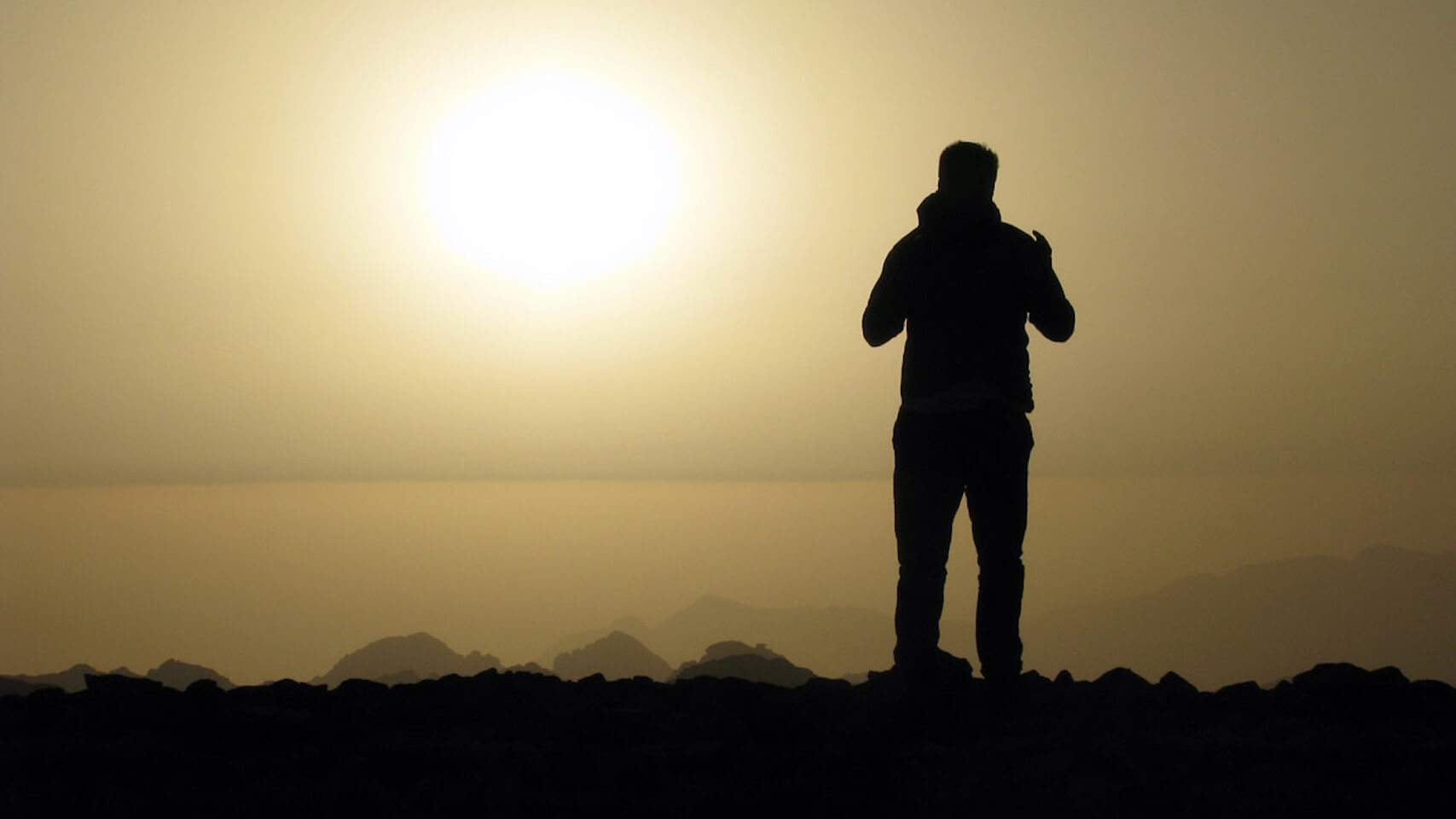
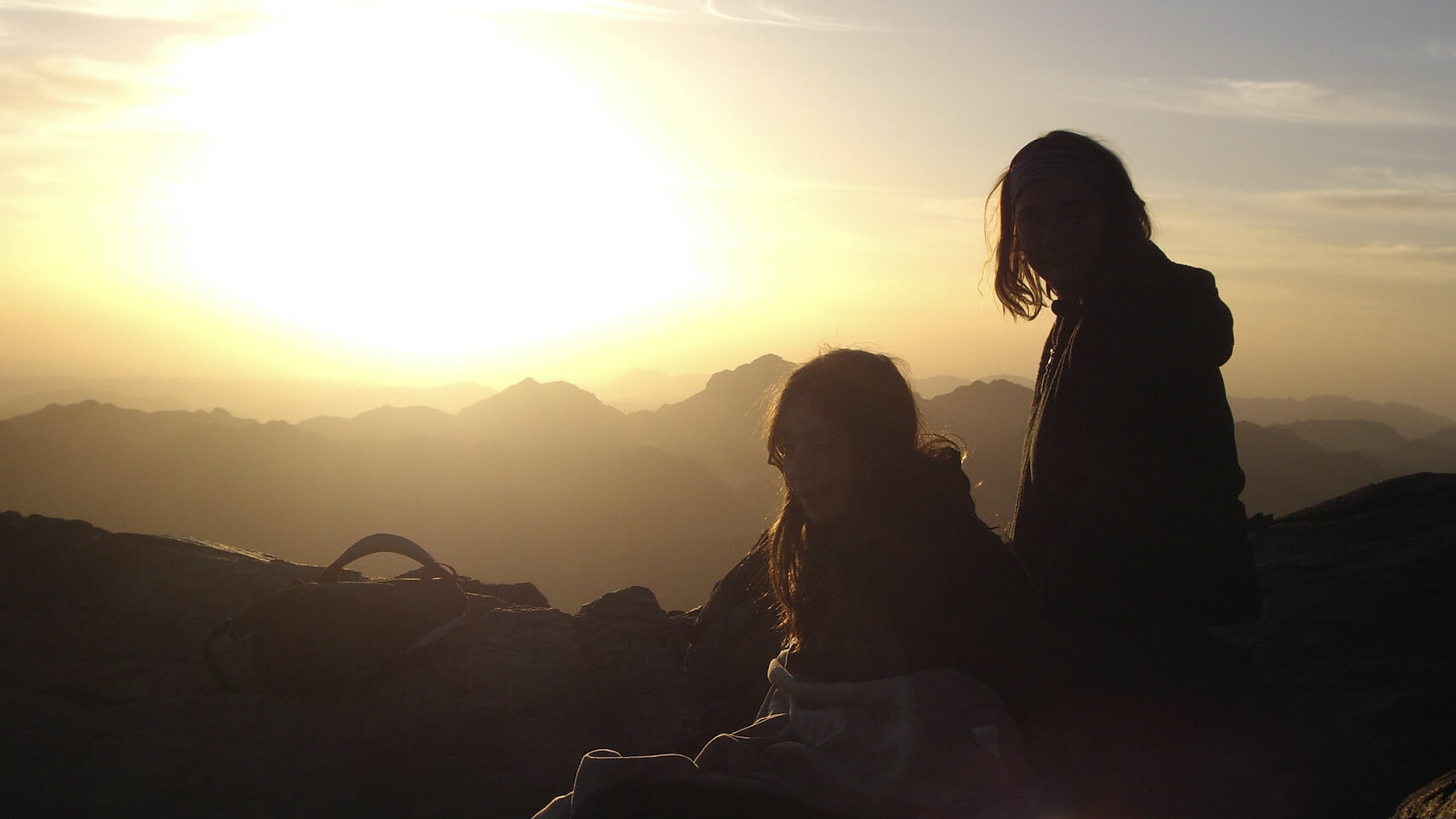
Traditionally, visitors and pilgrims climb Mount Sinai at night time, fighting the crowds, cold and sleep deprivation to see the sun rise from the summit. They are then hustled down to visit the monastery before being bussed back comatose to their resorts in Dahab and Sharm. They never experience the quiet and fascination of the place.
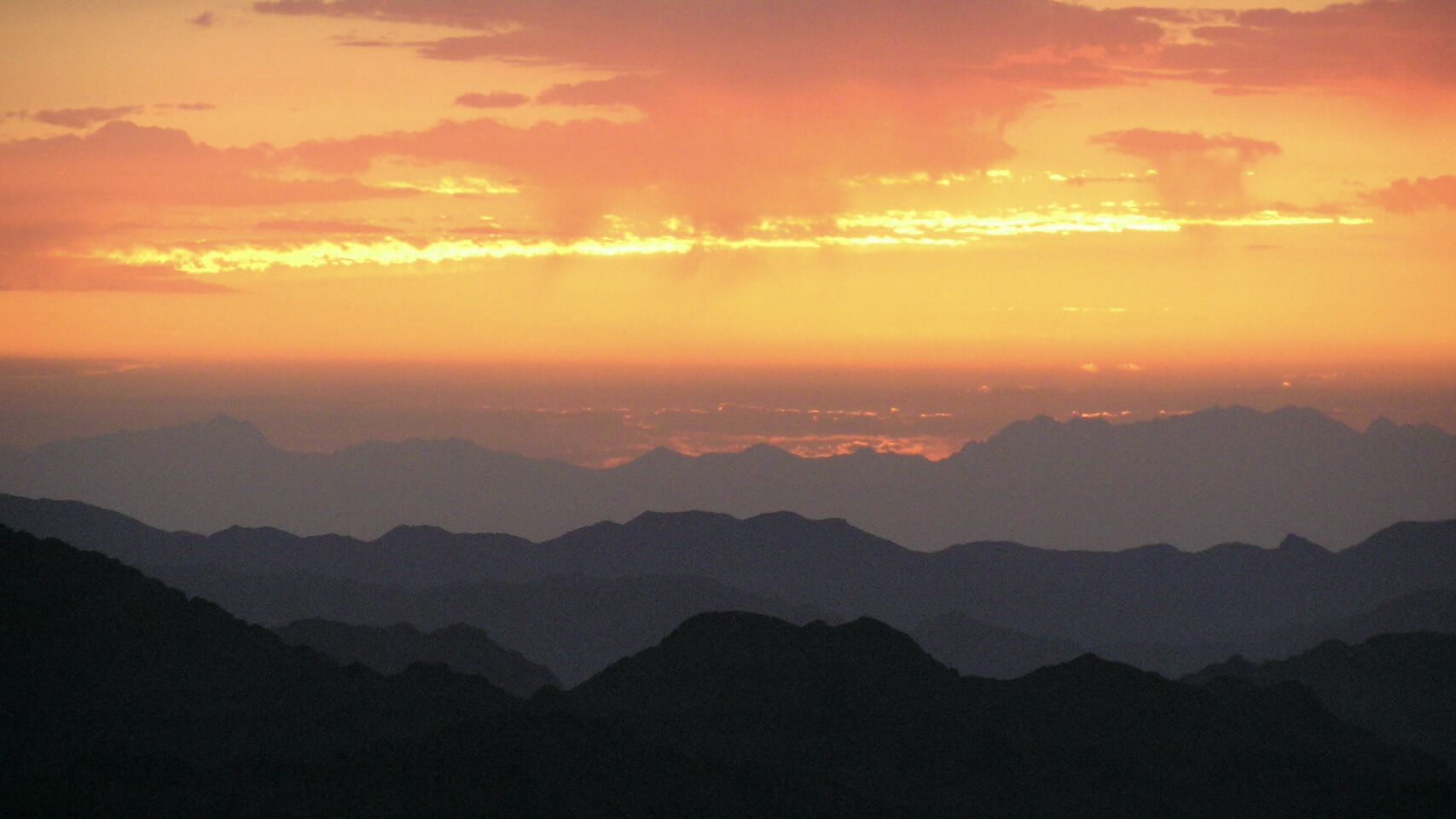
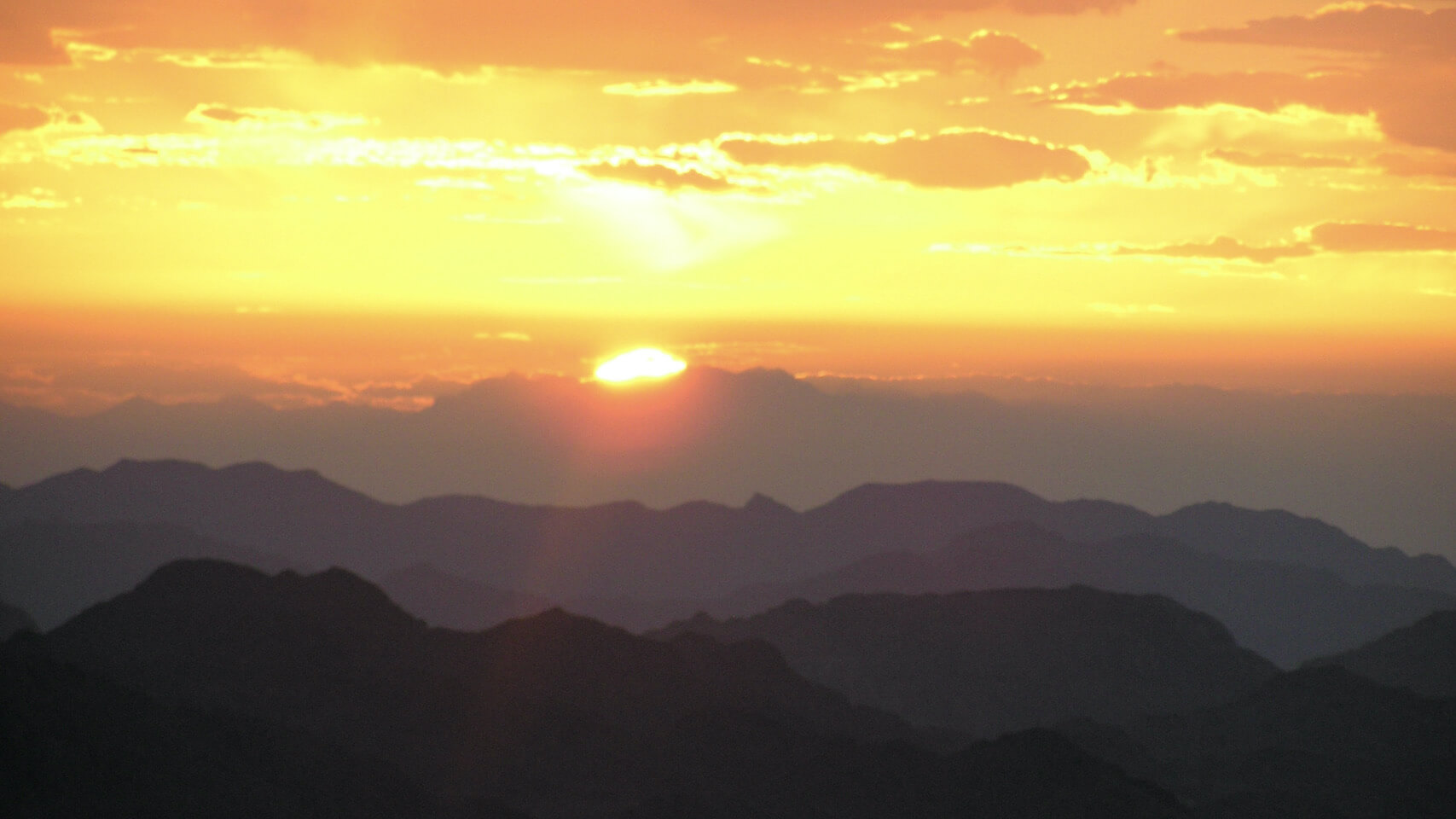
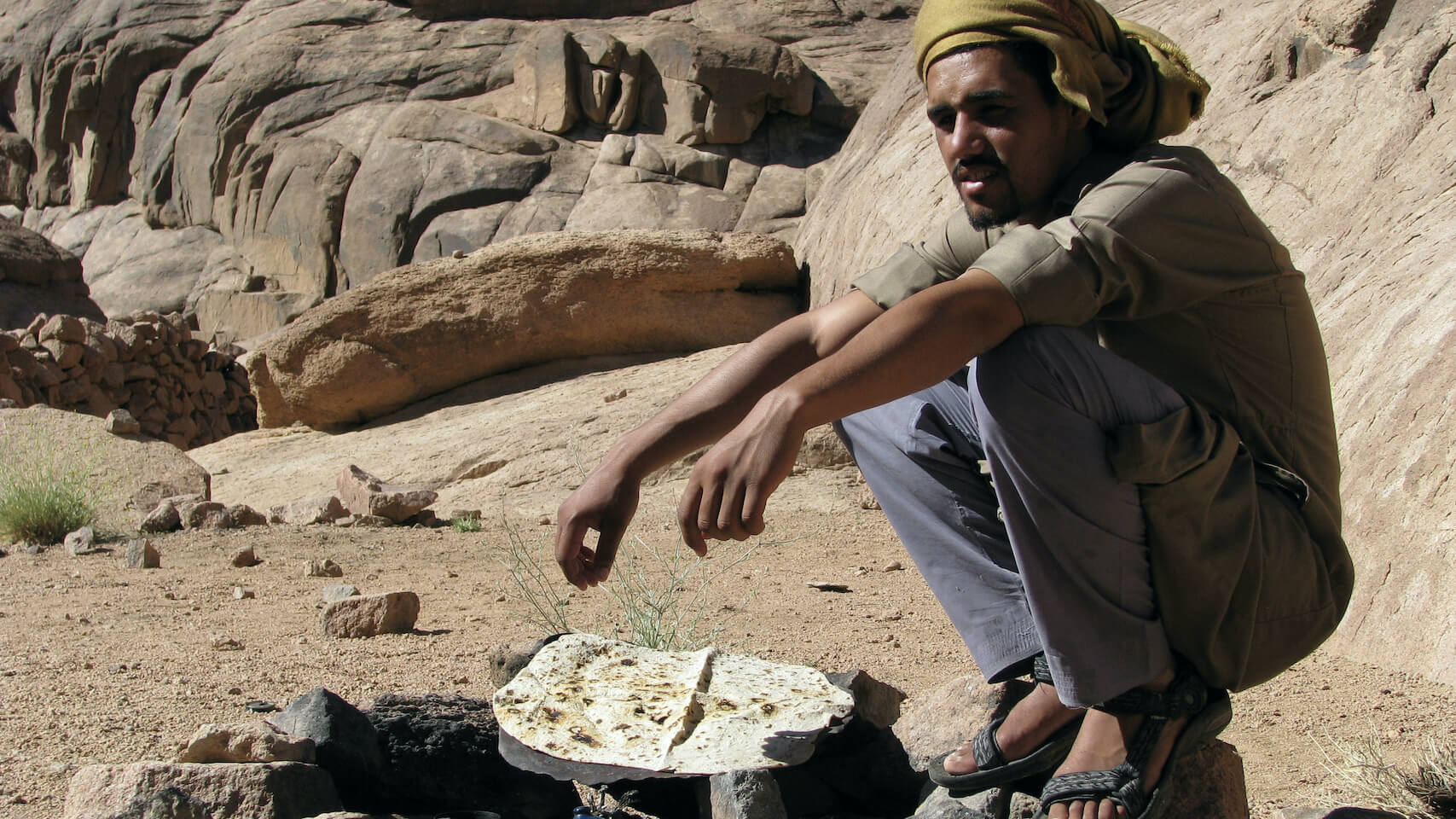
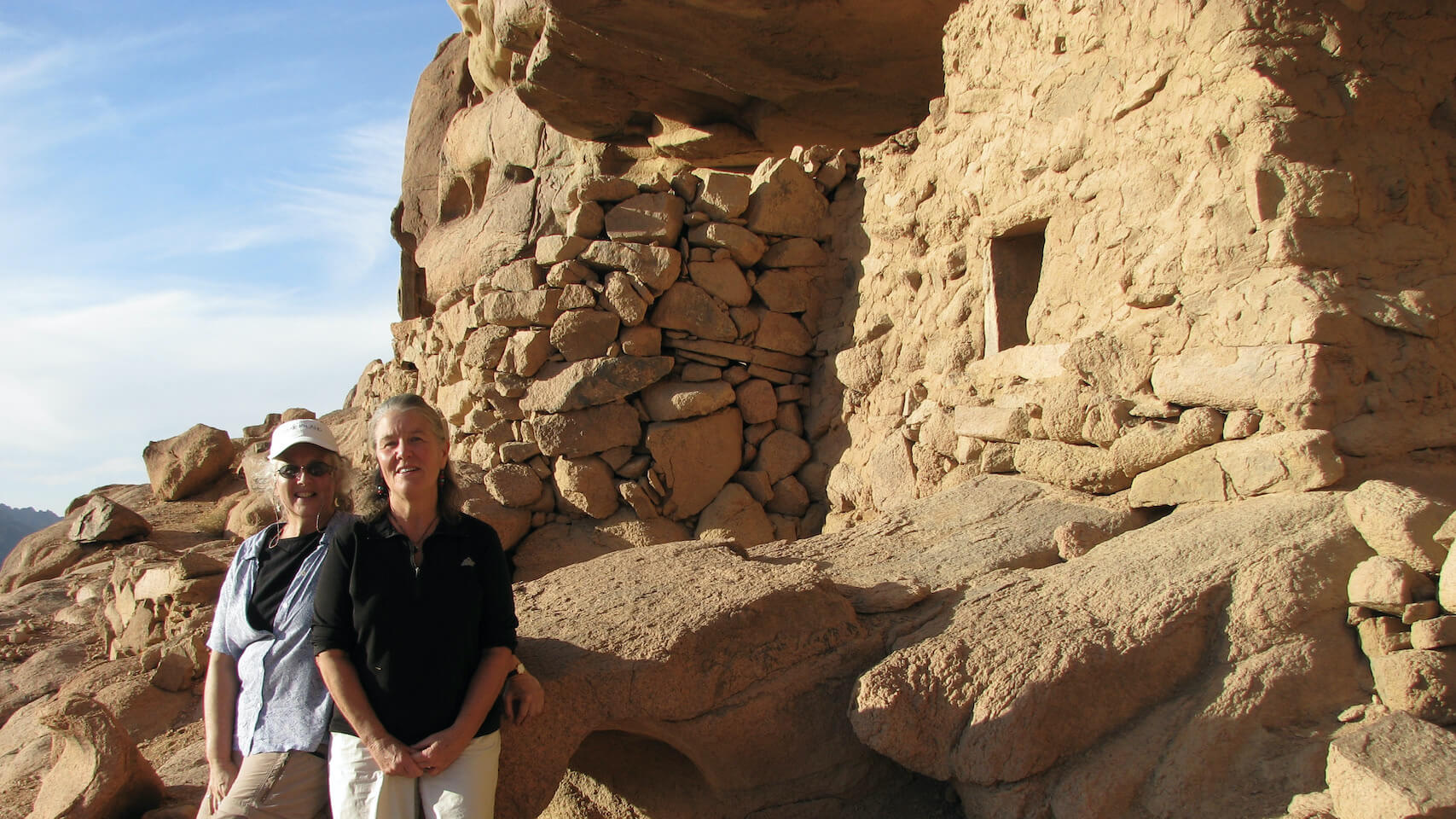
We propose an alternative: visit the Monastery of St Catherine in the morning to see its icon gallery and basilica; climb the mountain by ancient pilgrimage trails for a campfire lunch in Elijah’s Basin; explore the ridge for hermit cells, Byzantine ruins, medieval chapels, ancient prayer niches and rock carvings; climb to the summit of Mt Sinai for sunset; descend by the camel path in the twilight. Avoid the crowds and truly discover the extraordinary power of the place.
We can also arrange to see sunrise from Mt Sinai after a special night in our Bedouin tent in the Monastery garden camp of Elijah’s Basin.
Mountain trekking
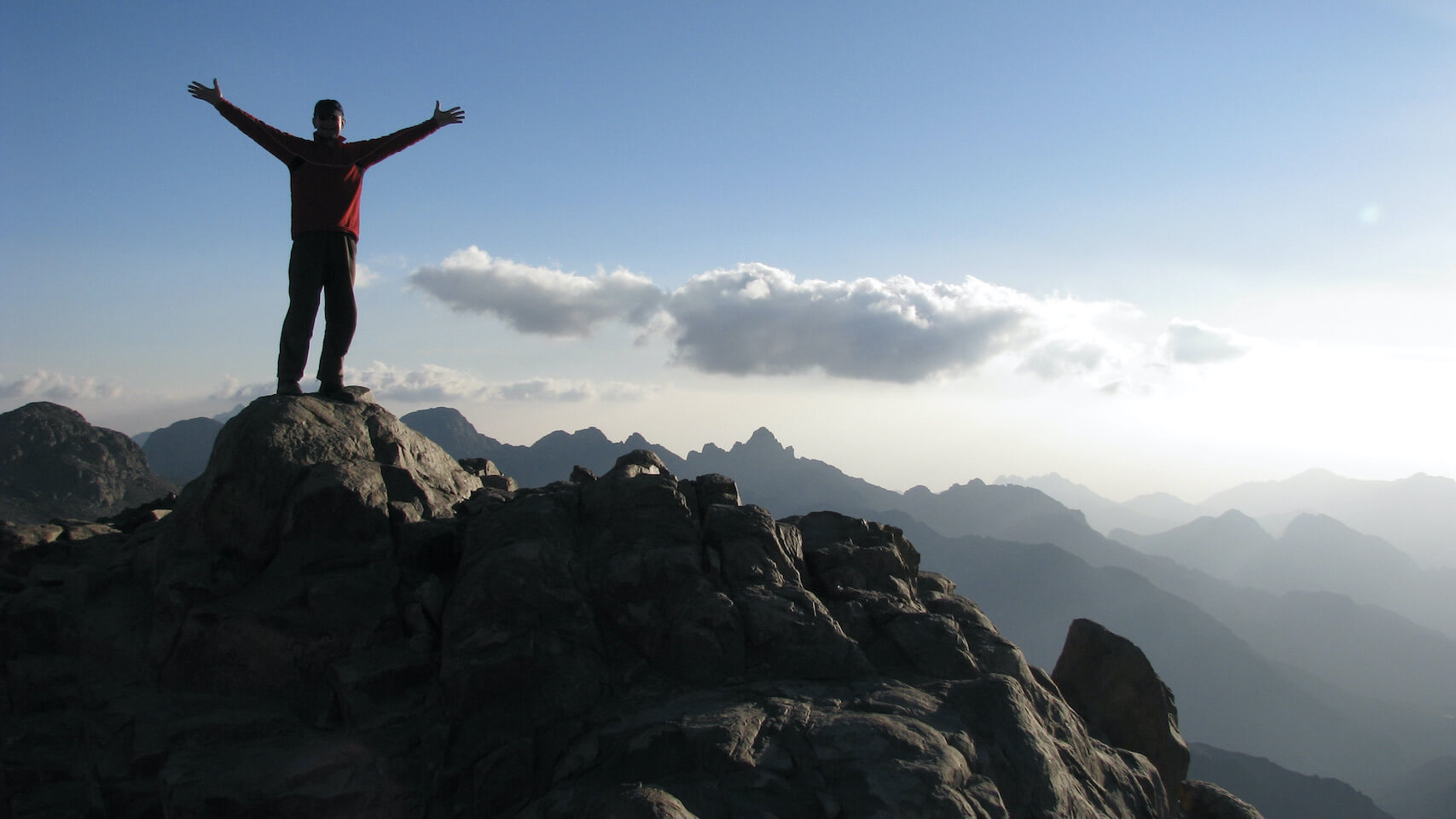
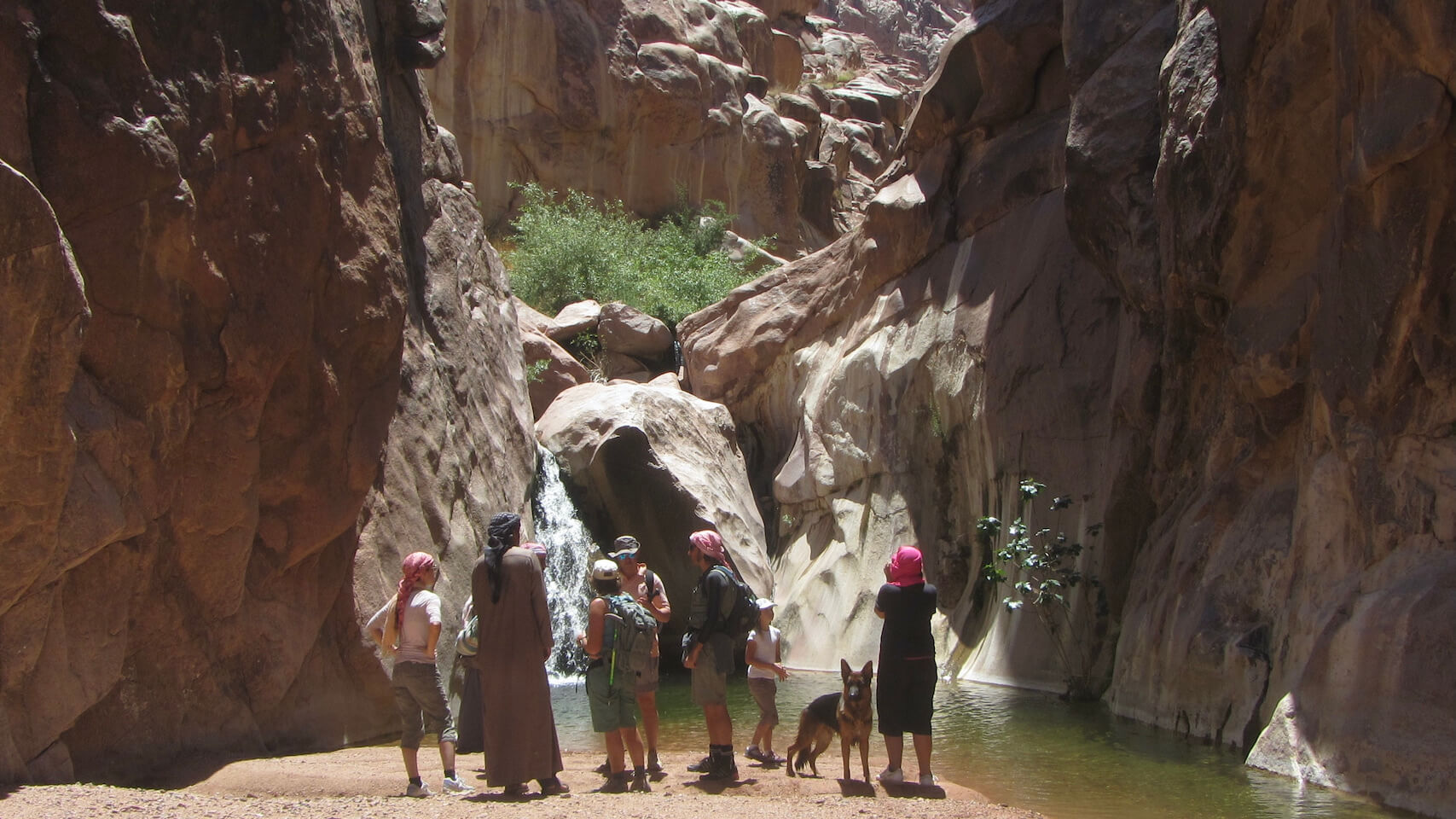

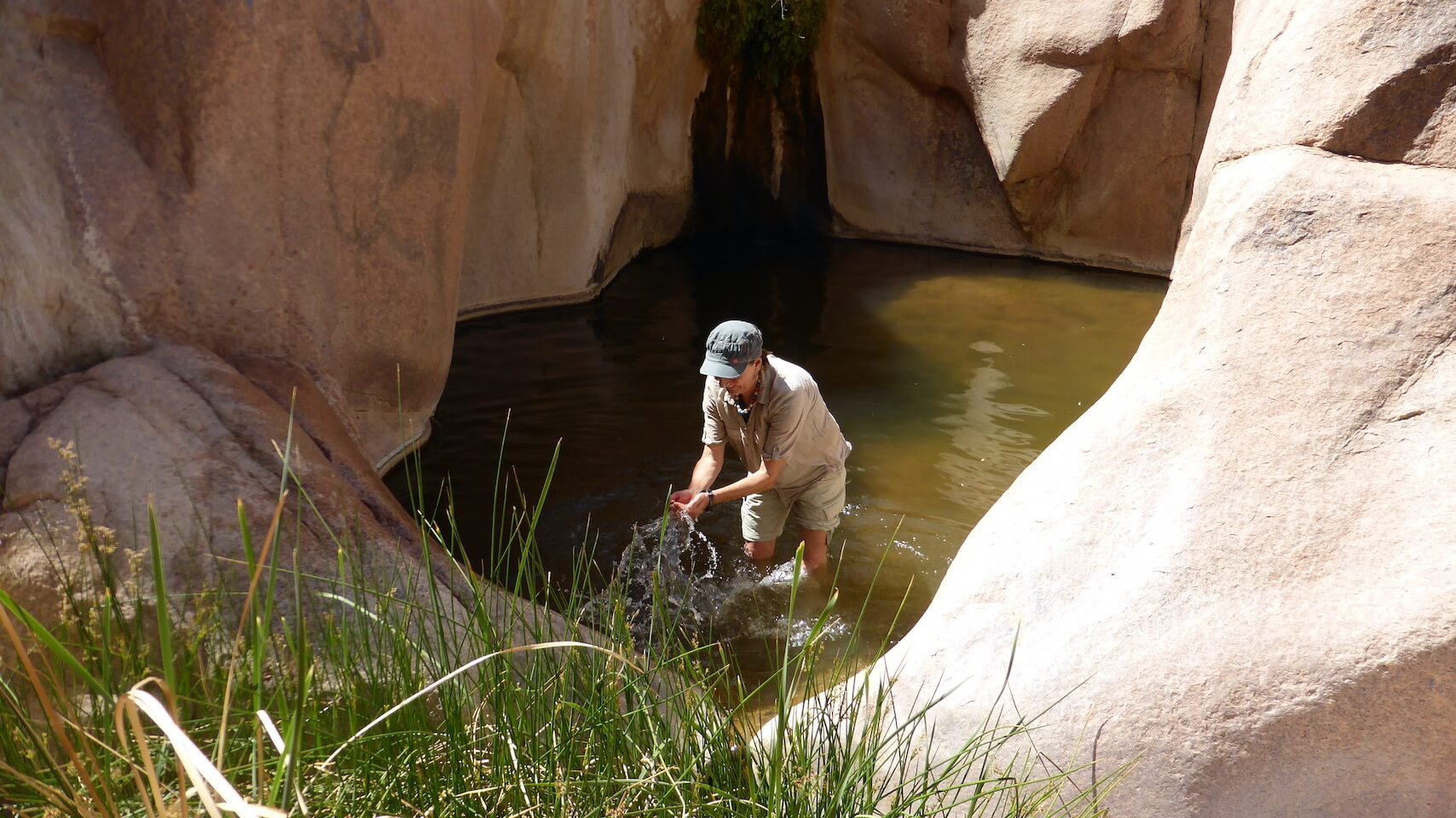
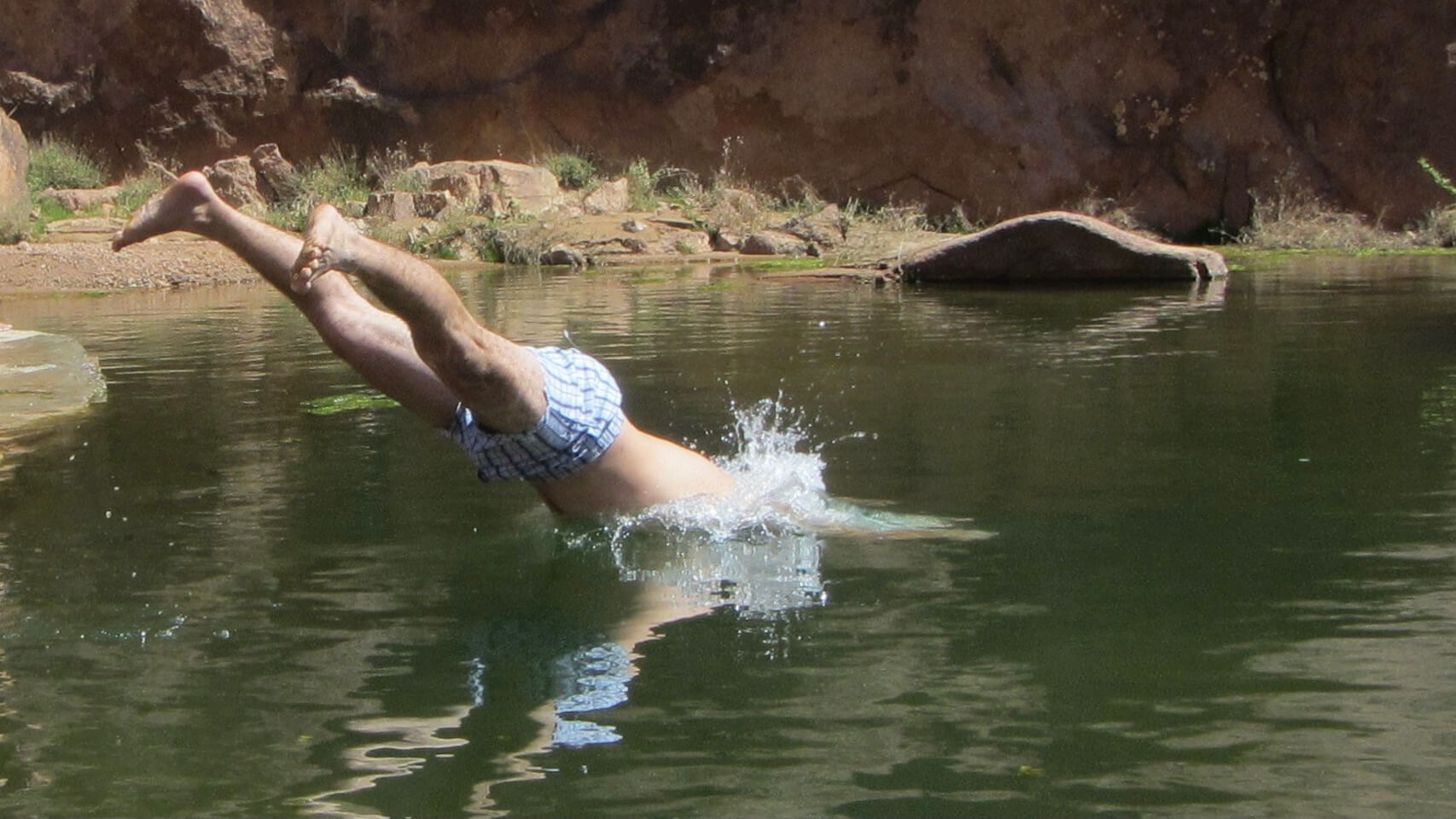
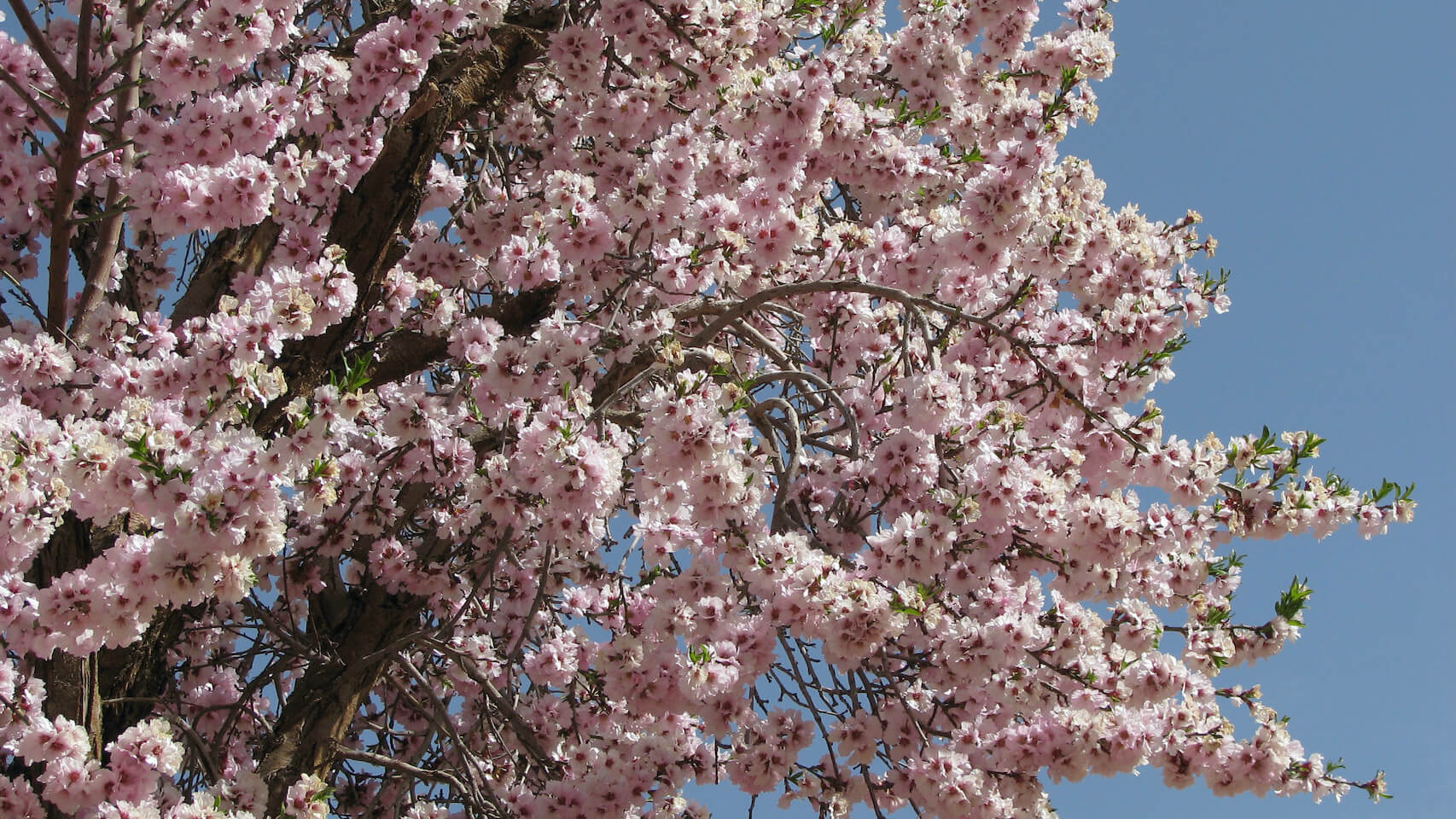

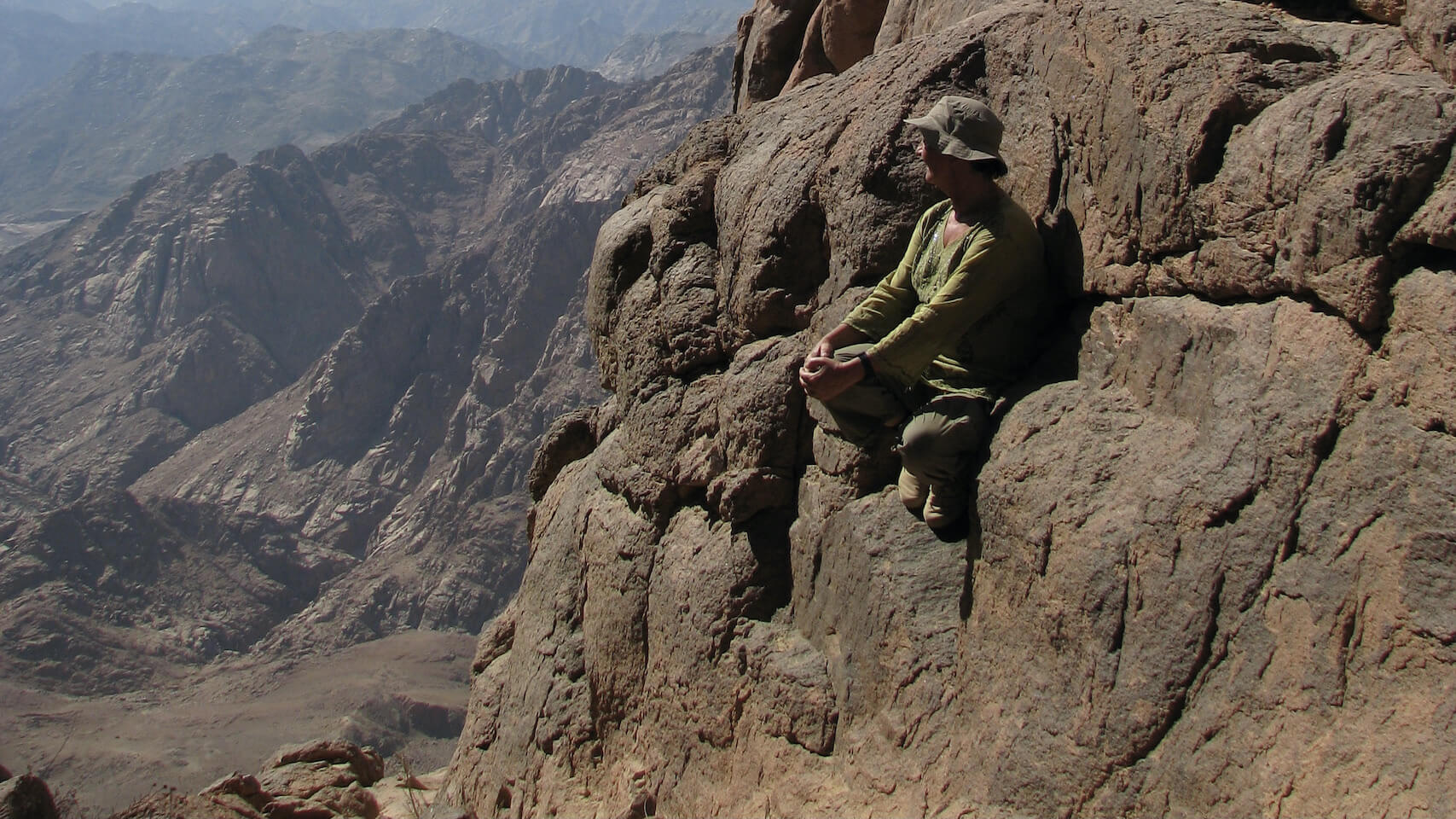

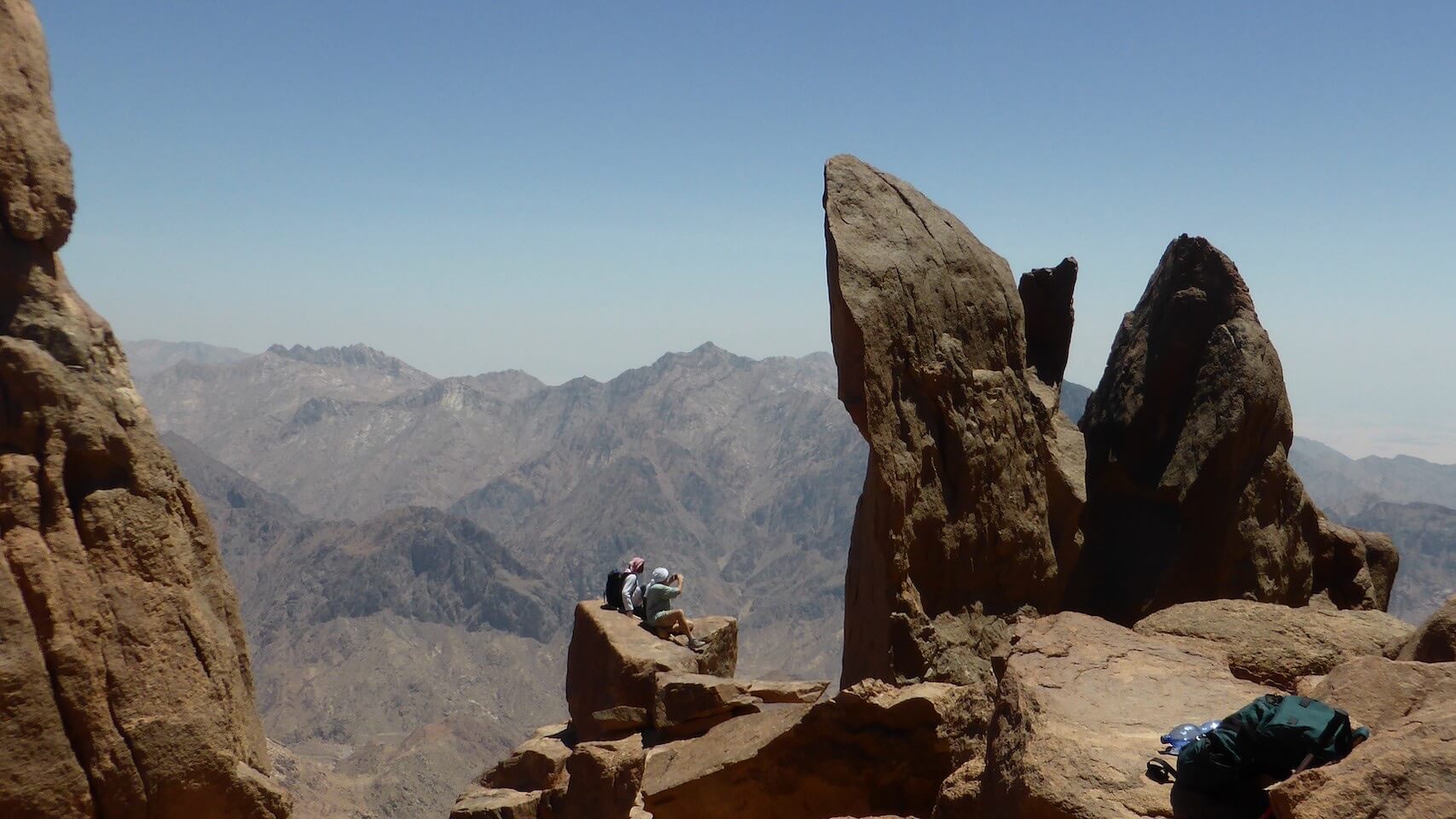
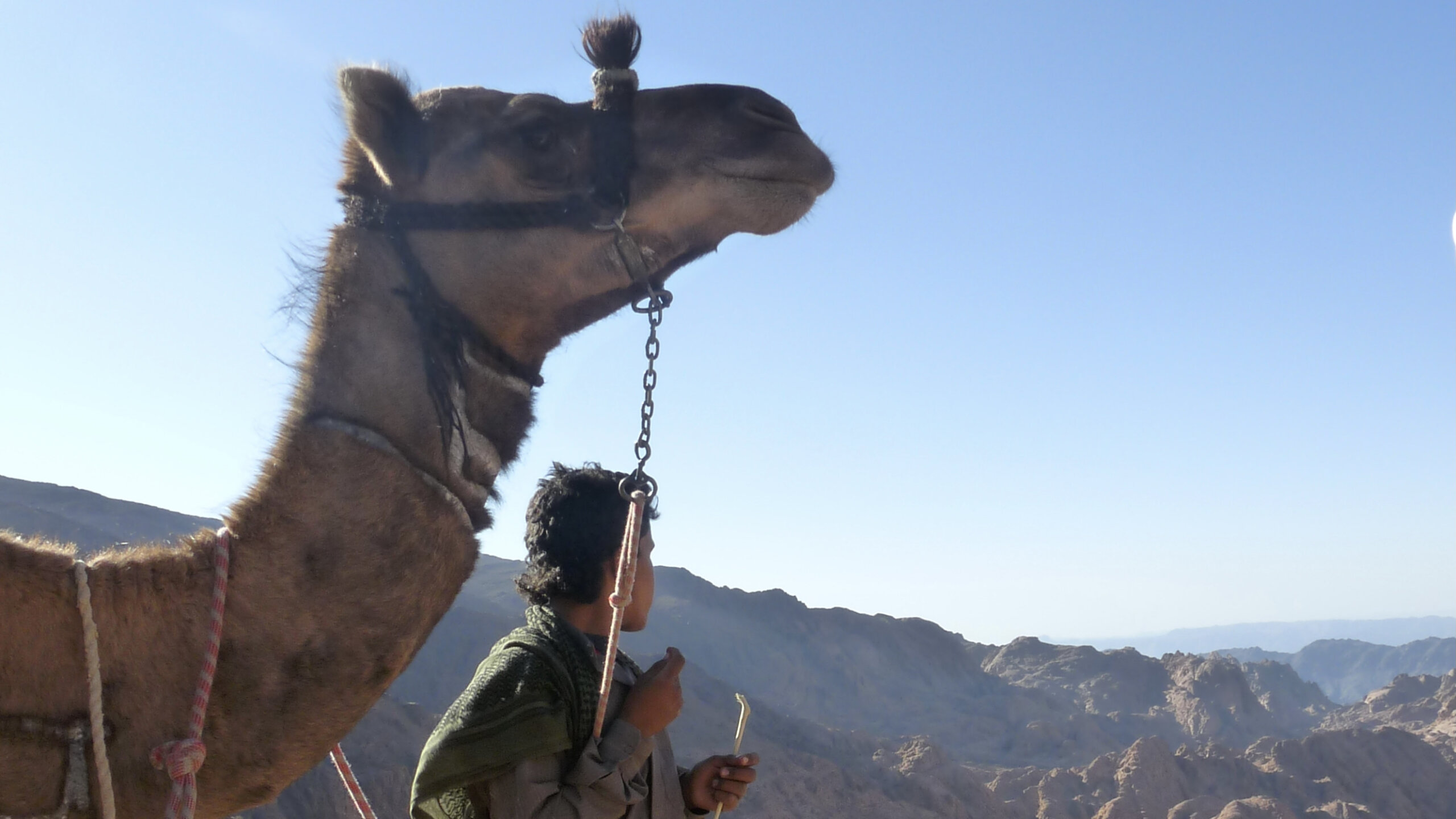
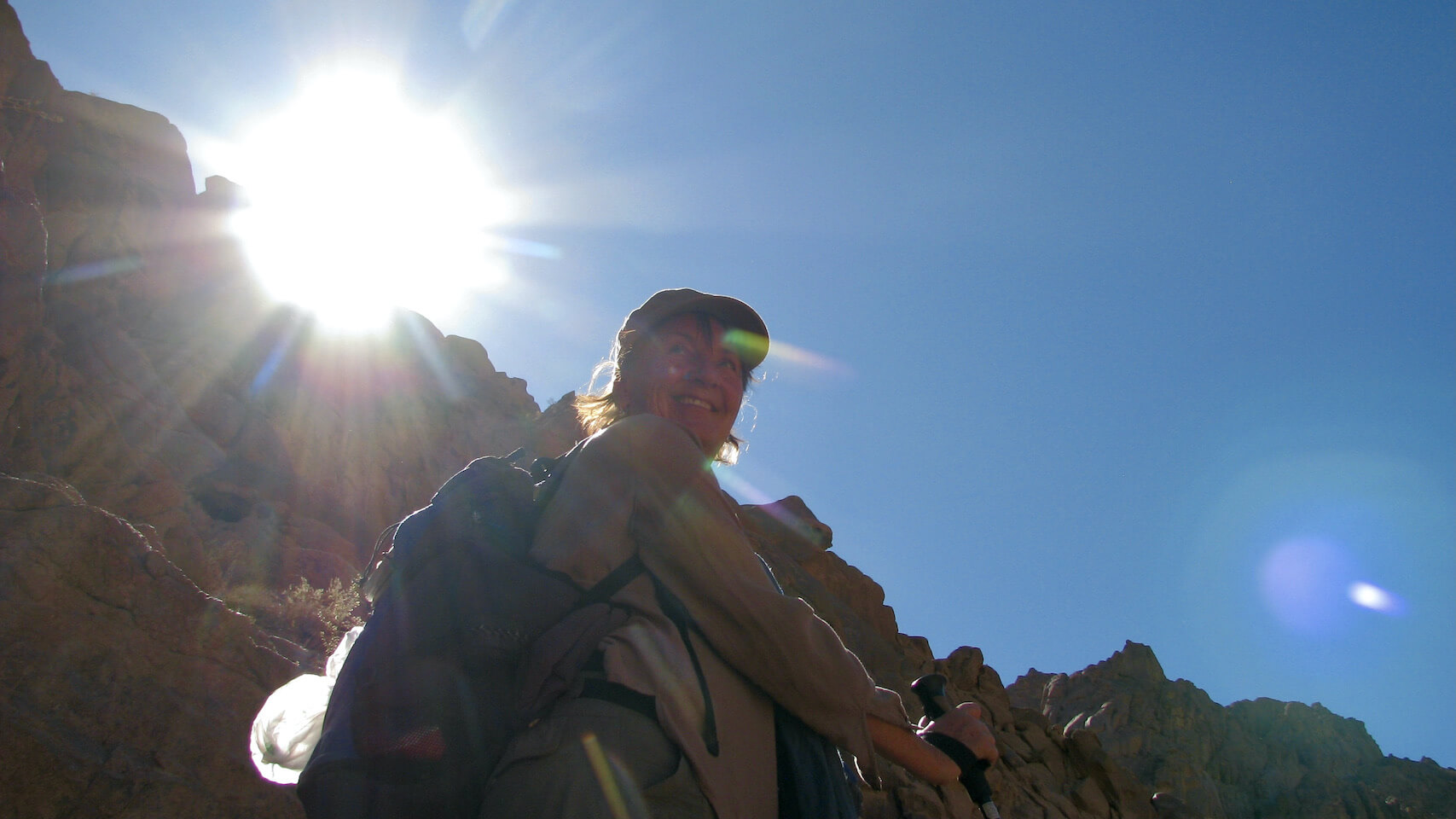

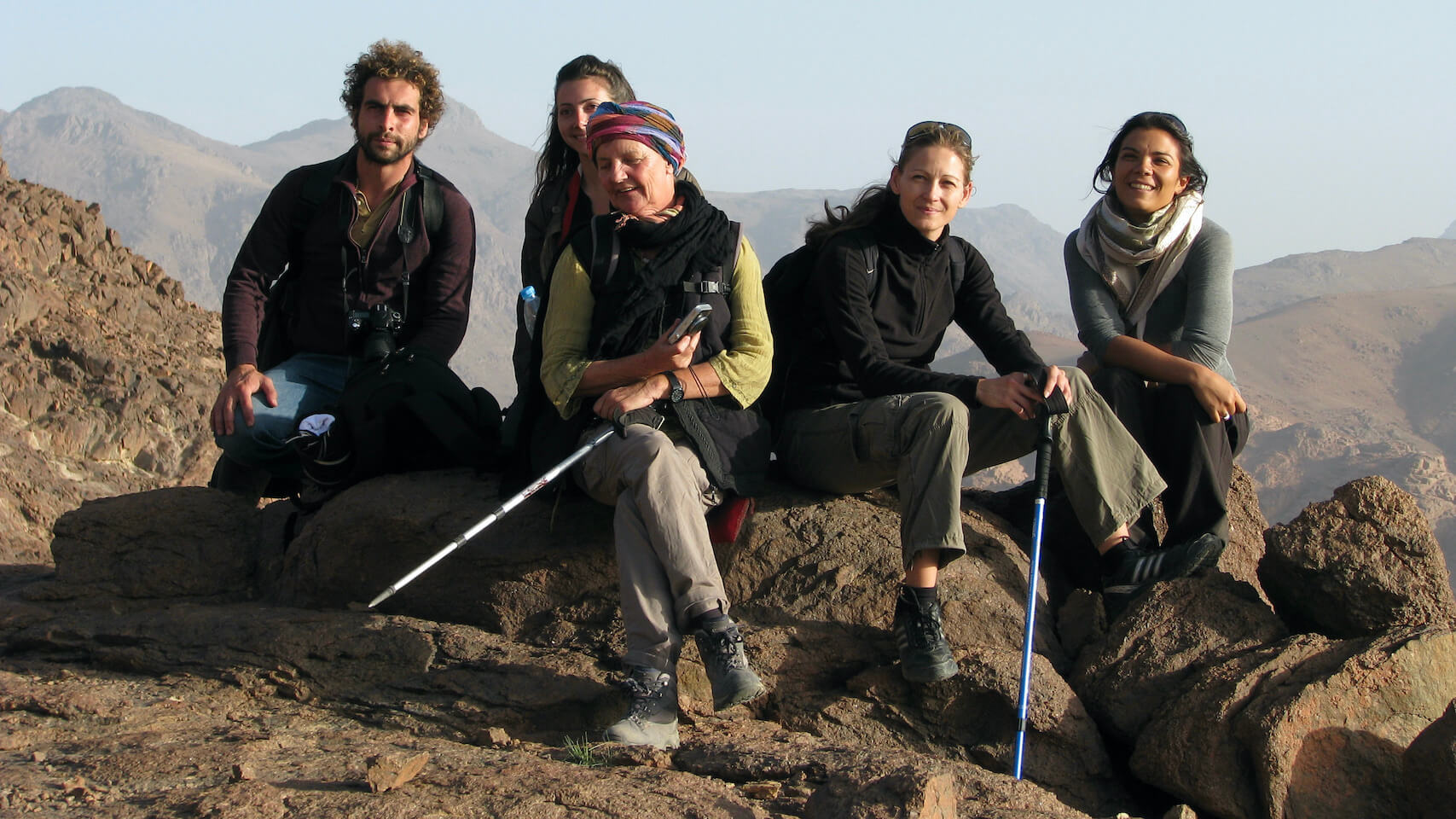
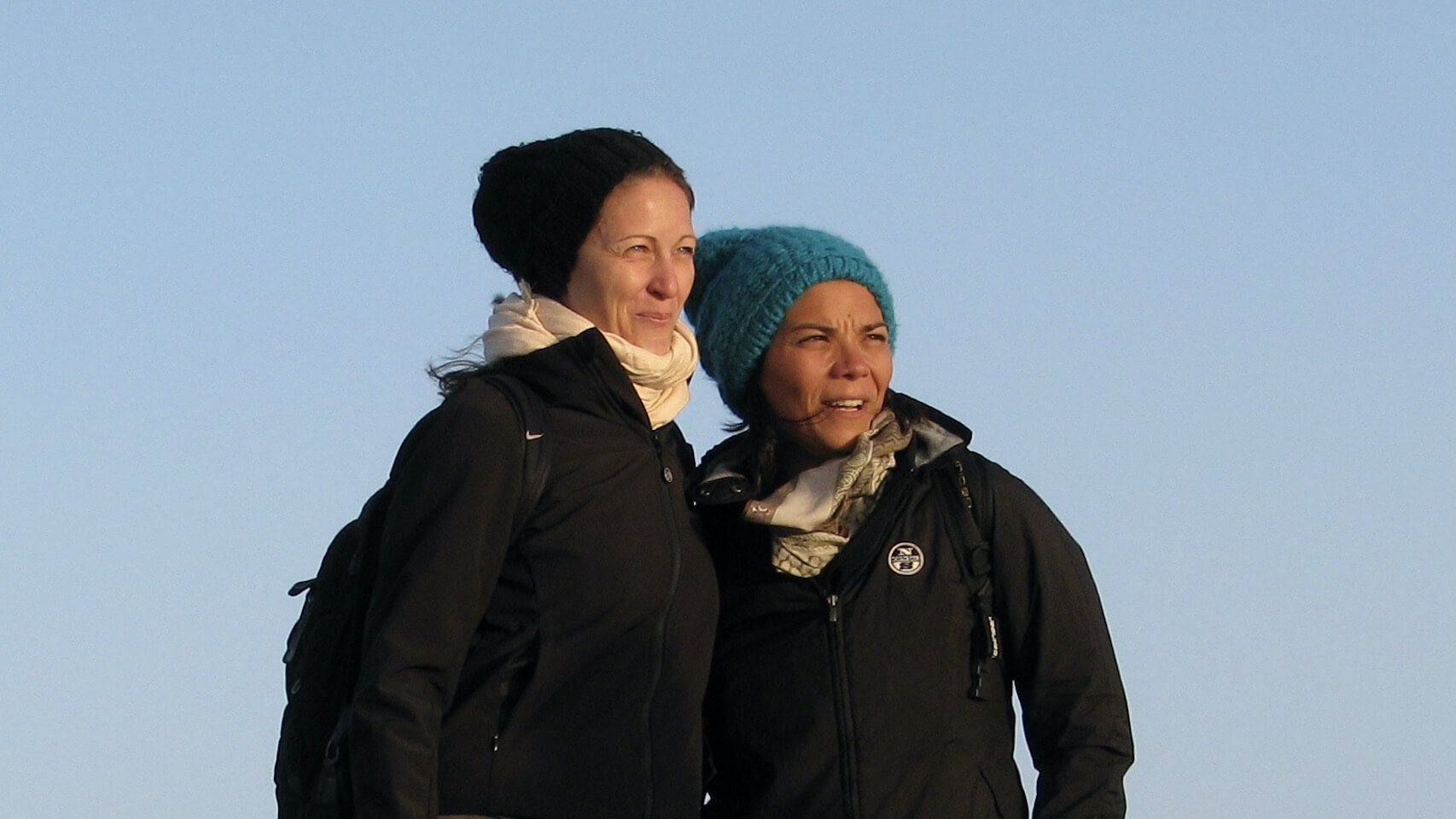

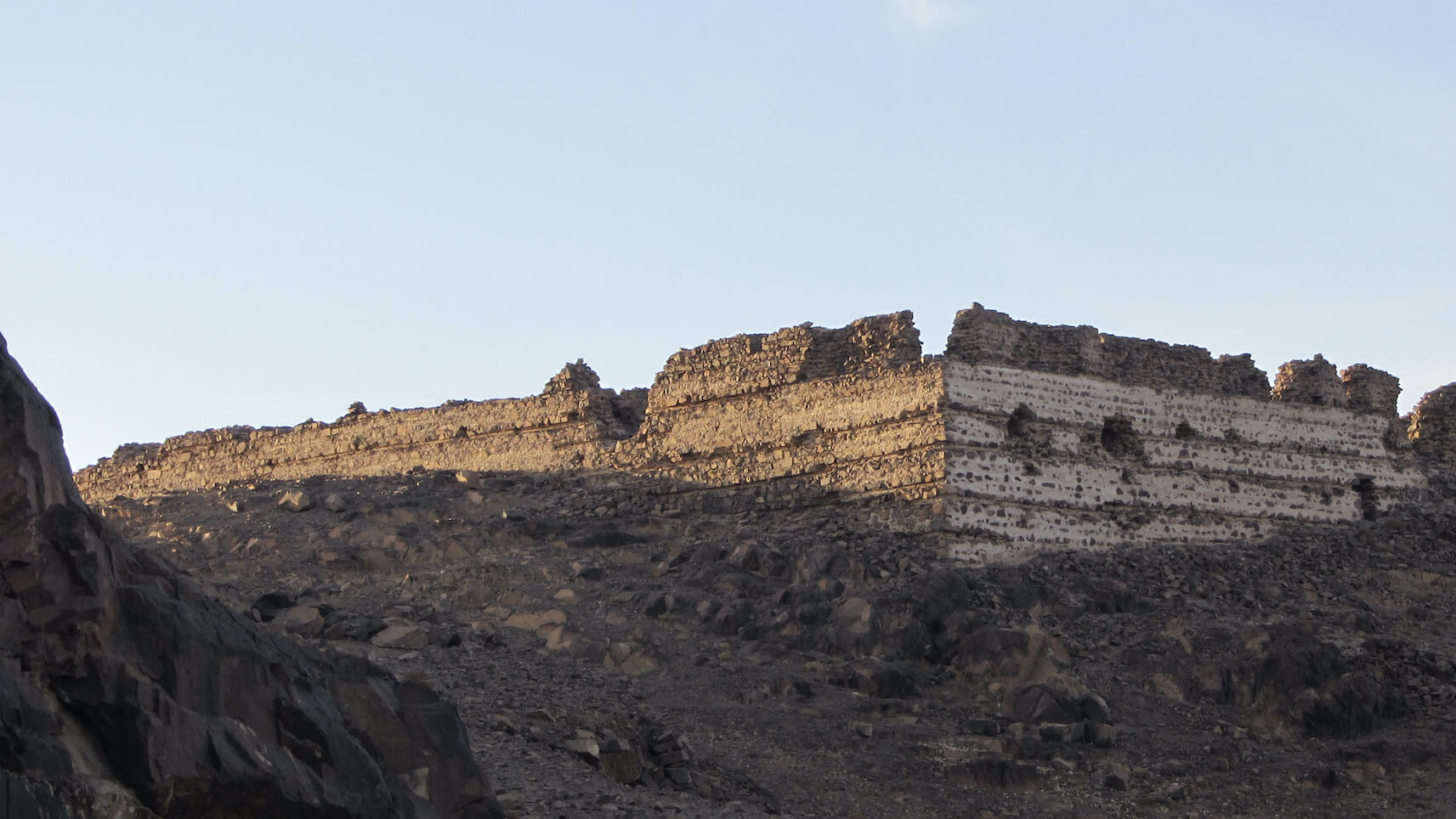
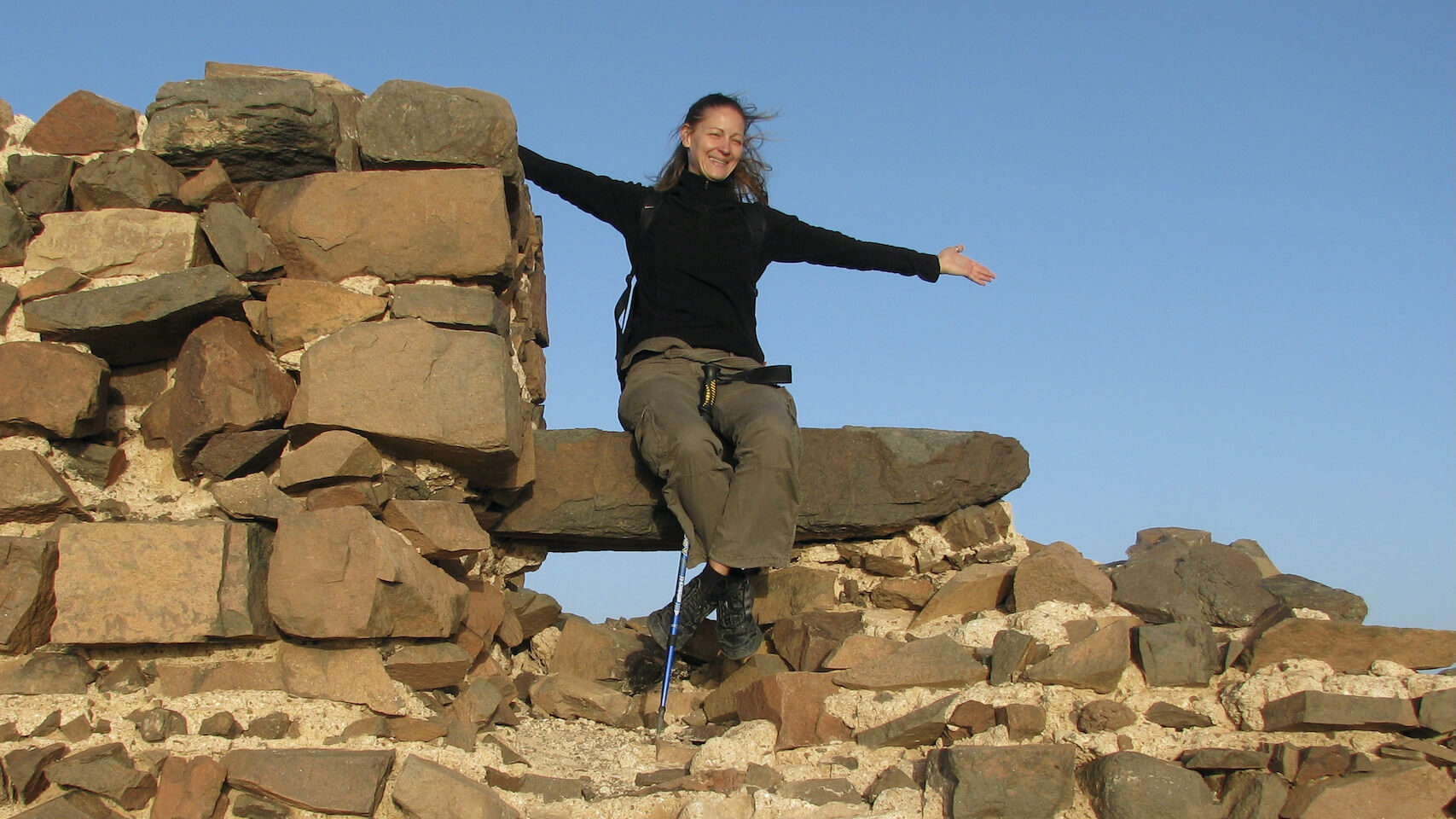

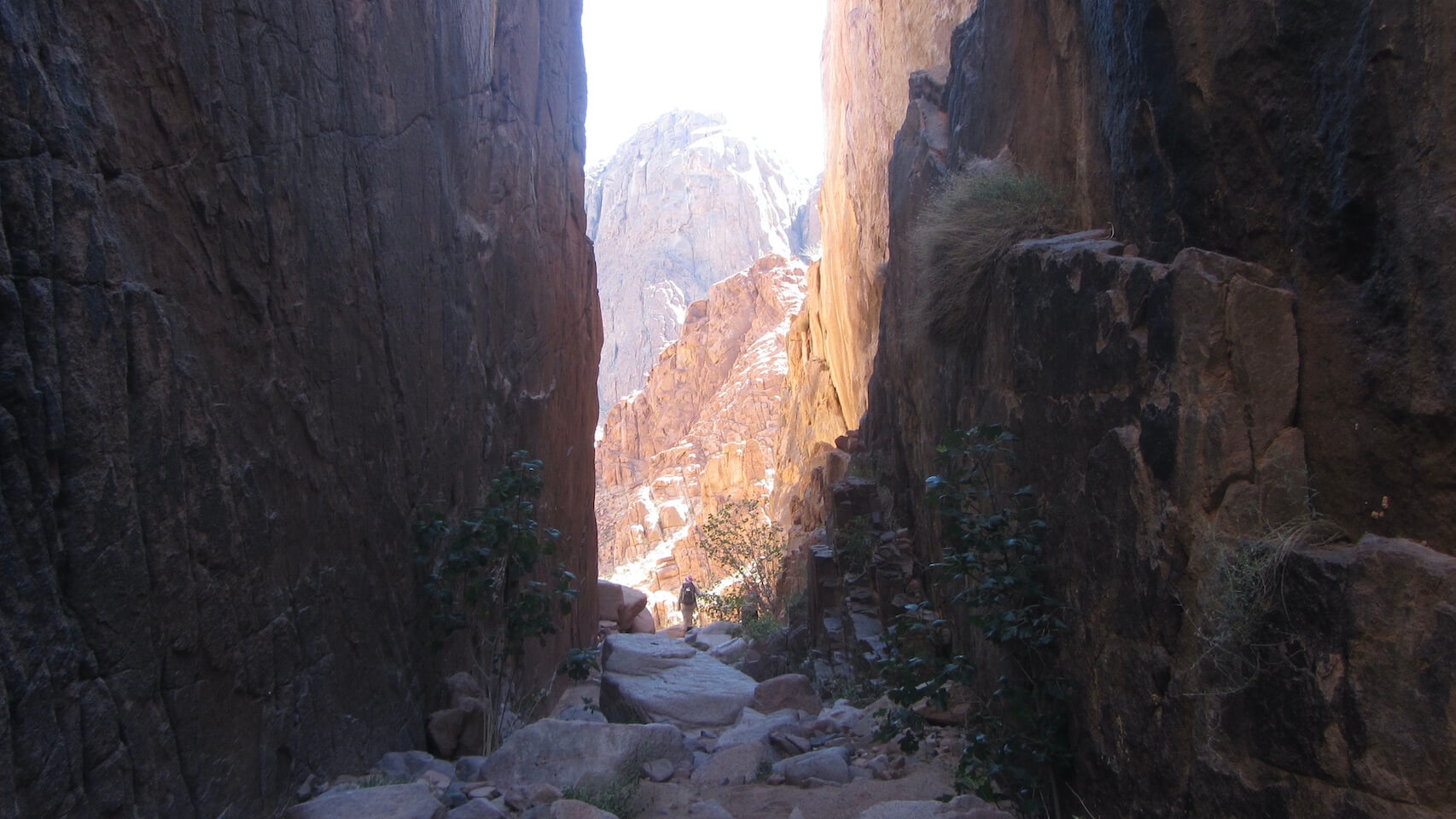
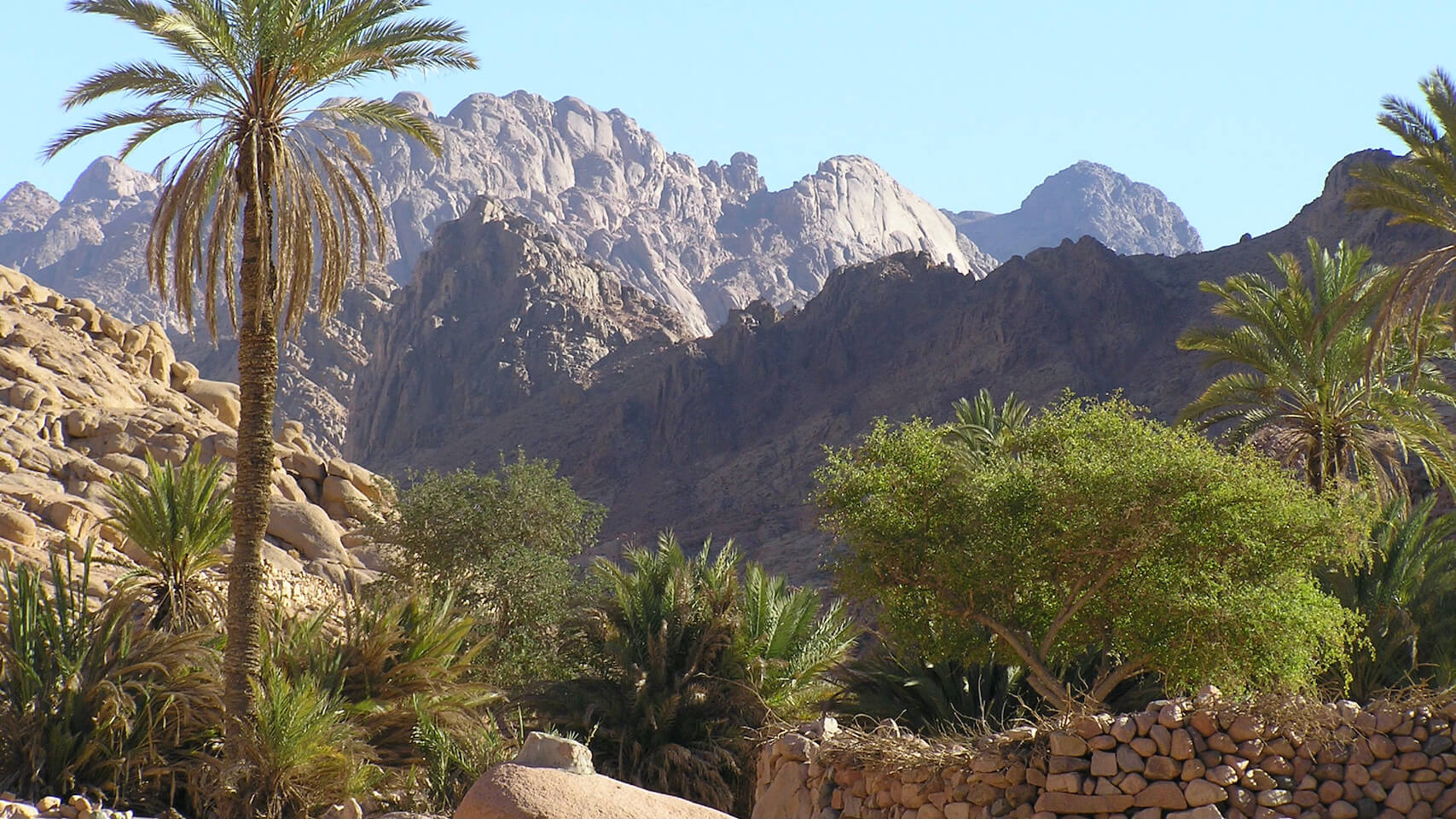
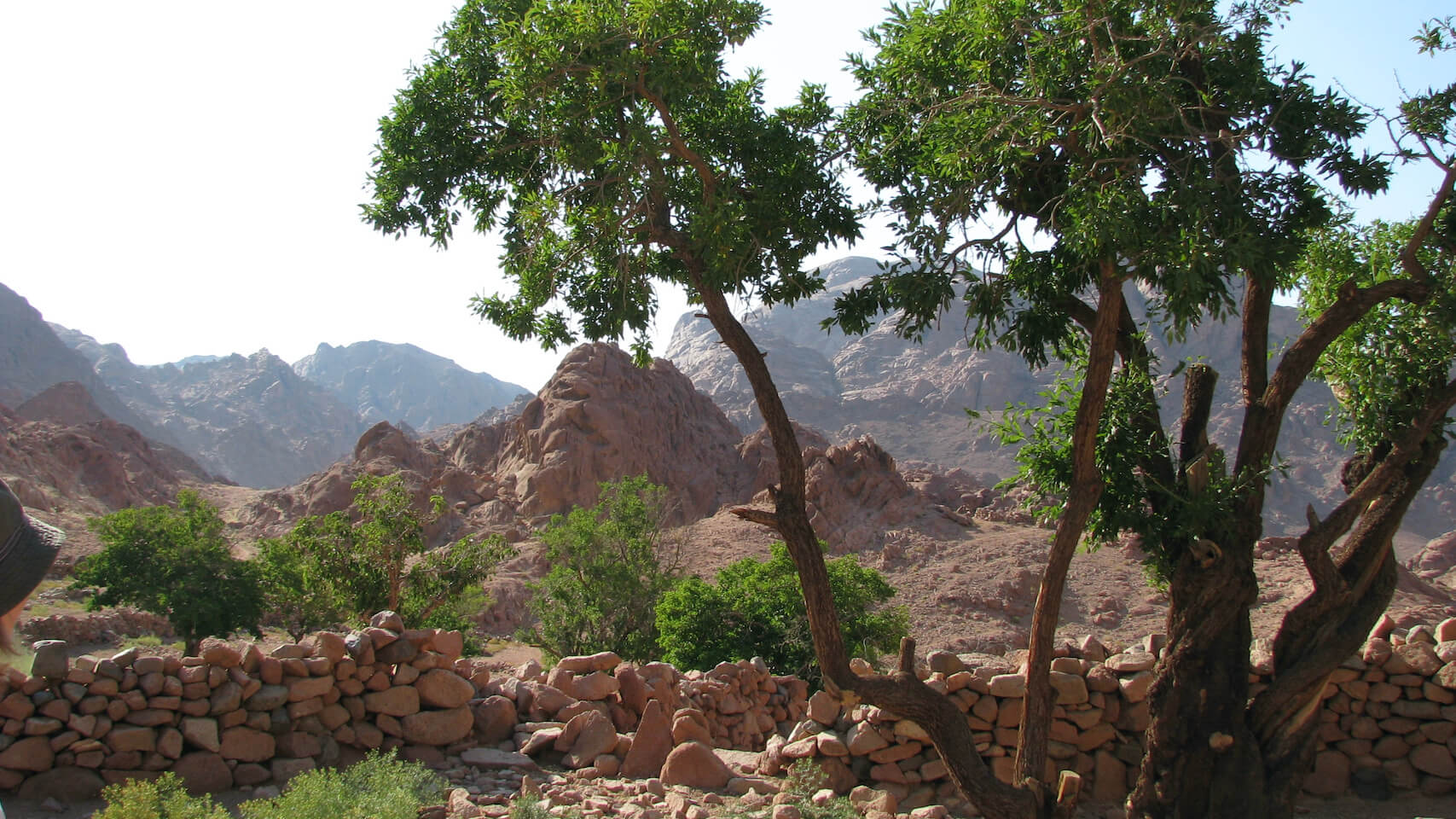


It’s not a fact well known, but it’s not a secret, the weather in Sinai is the best in Egypt. When you’re sweltering in Cairo and finding it difficult to breathe, it’s cool and clean here in Katrine. It even snows in winter! In the summer, it’s lovely and green.
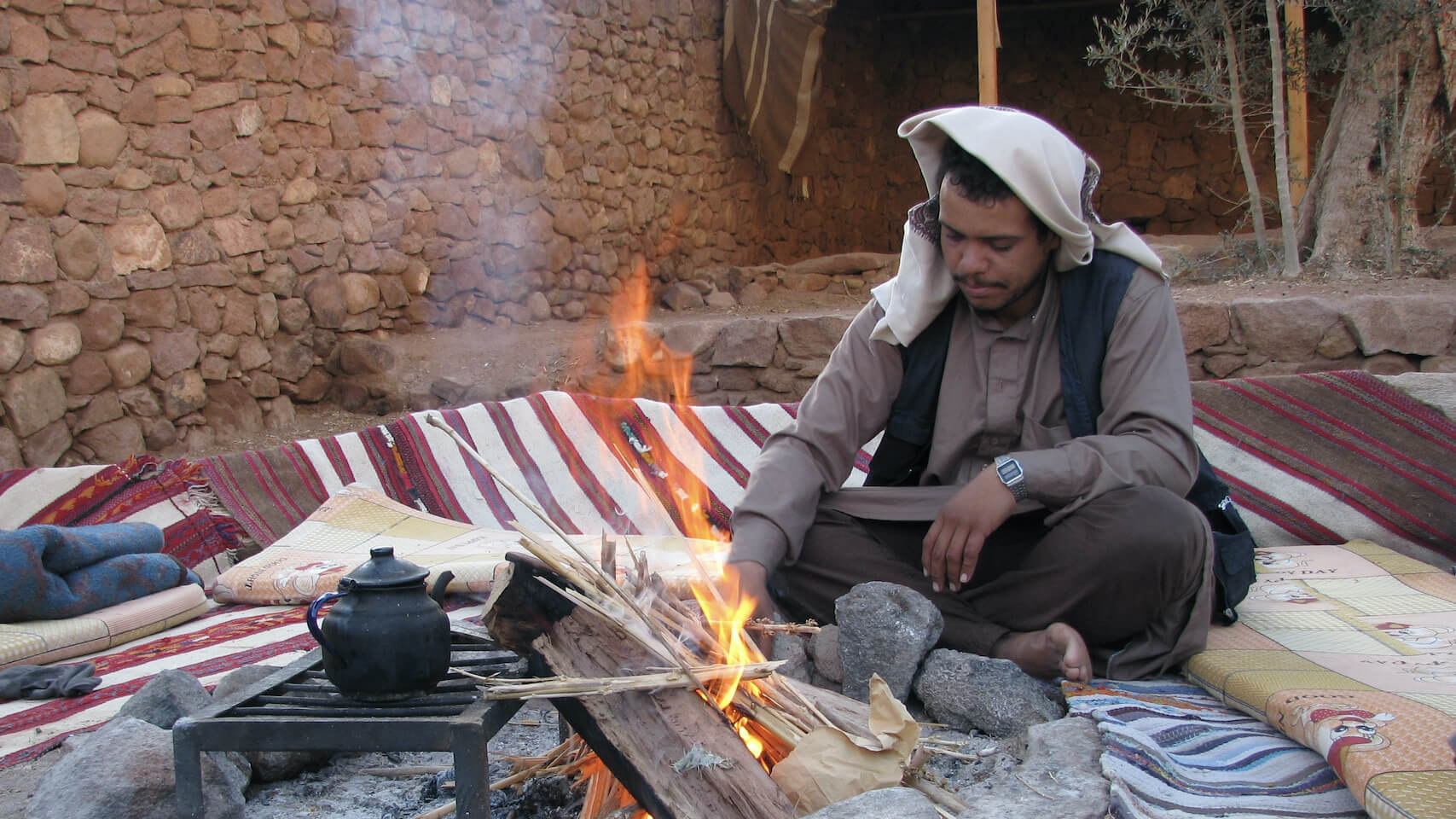
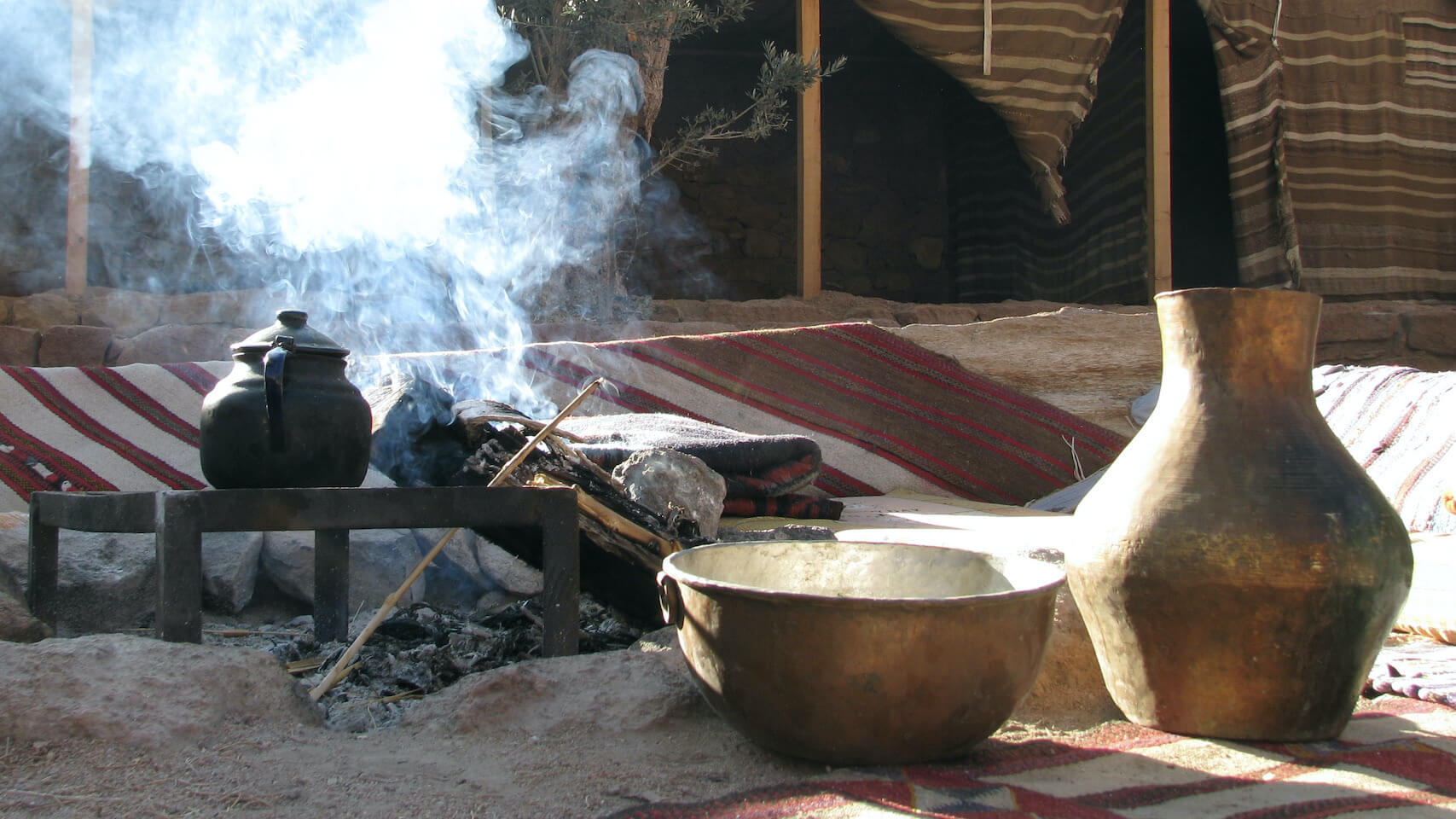
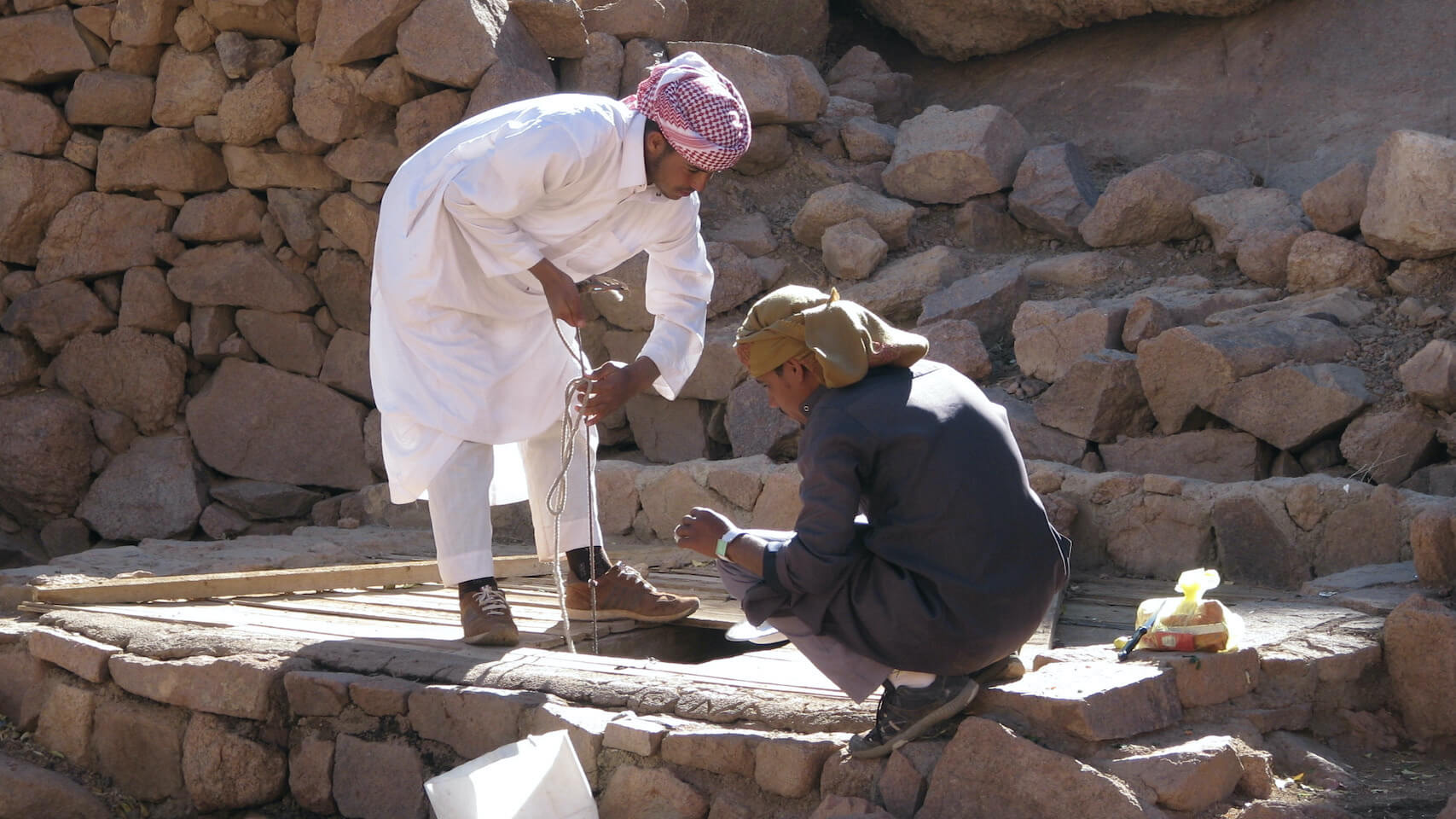
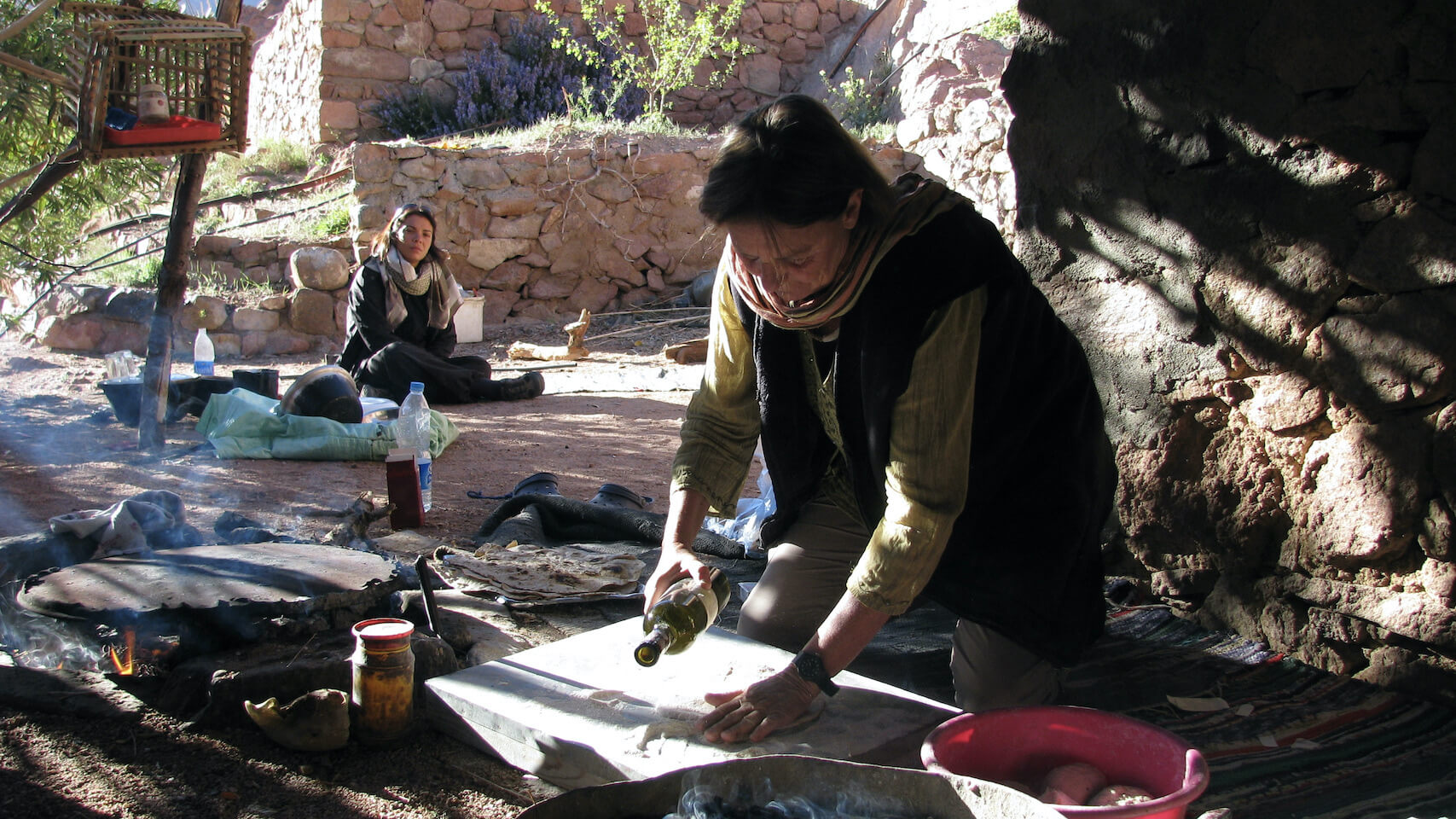
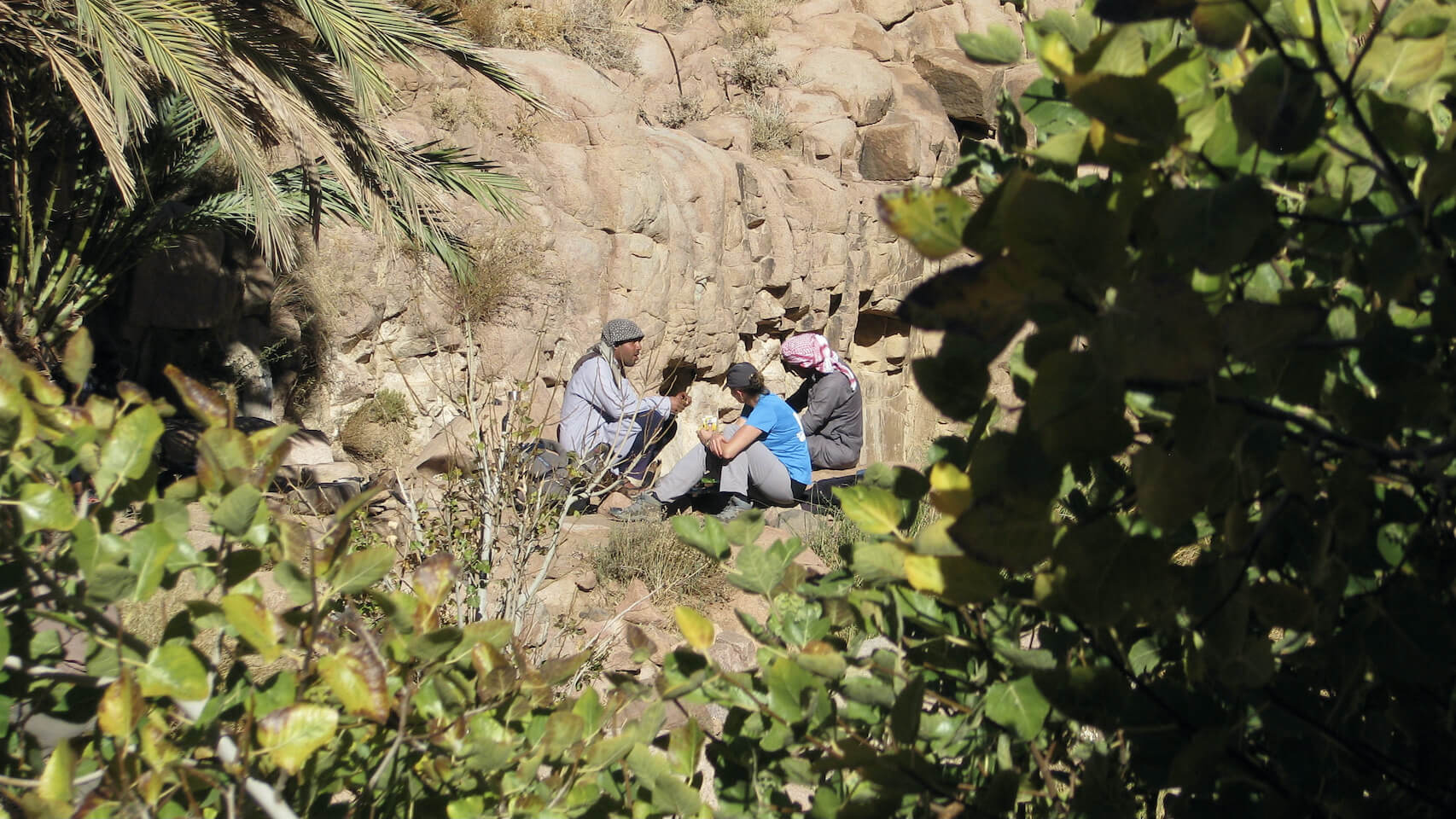
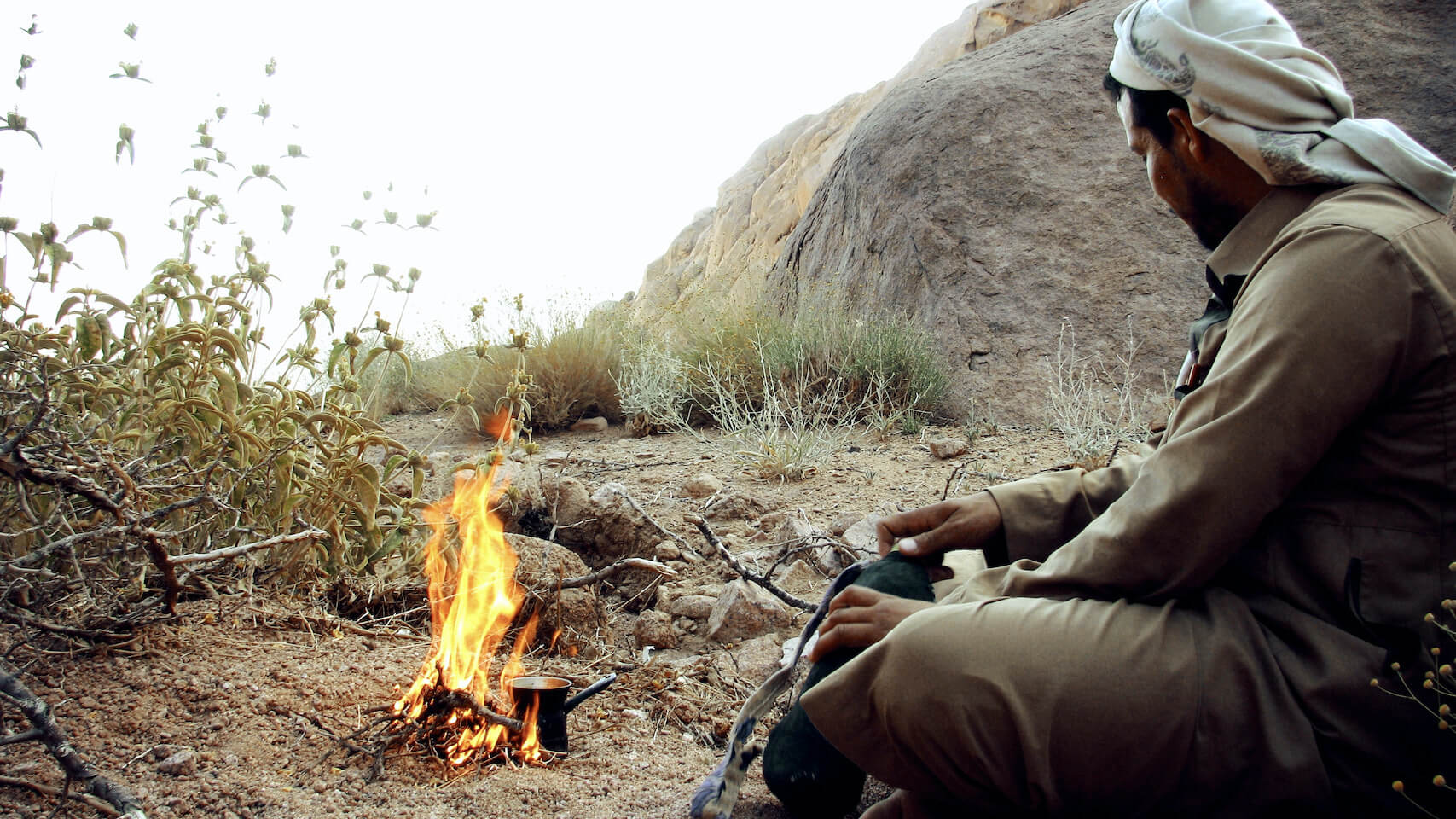
To trek in the mountains of Sinai, just sling a day pack over your shoulders and let the camels carry your bags. Overnights are spent in the Bedouin gardens where you can grab a fig or crack an almond. Your guides will prepare your meals and you can join them round the campfire.
We can arrange treks for just one day or over several days with camping in the Bedouin gardens. We adapt our programmes to the interests and fitness of our guests. With larger groups, we can separate into smaller groups and meet up to share experiences in the evenings.
Camel Riding School
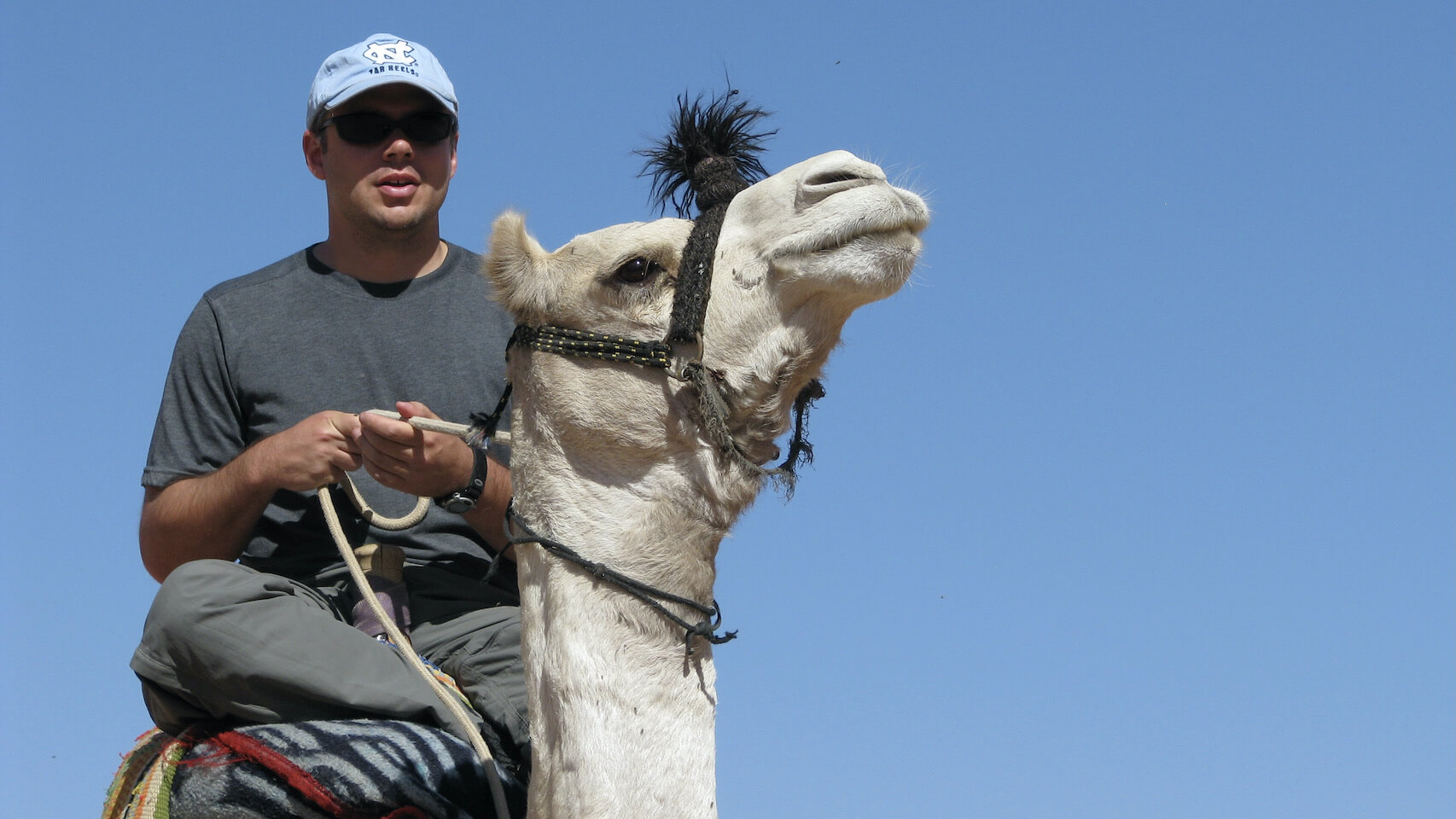
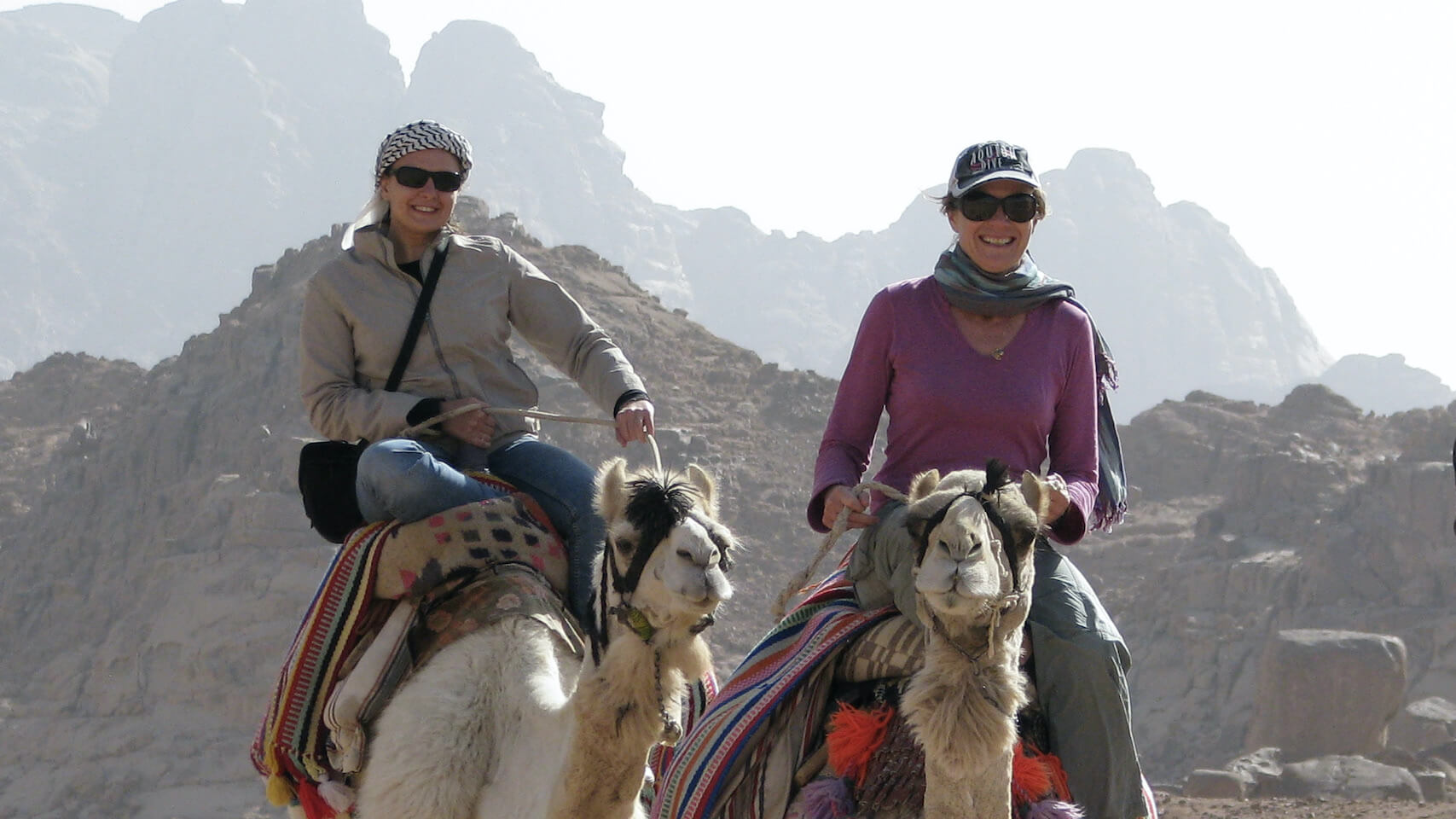
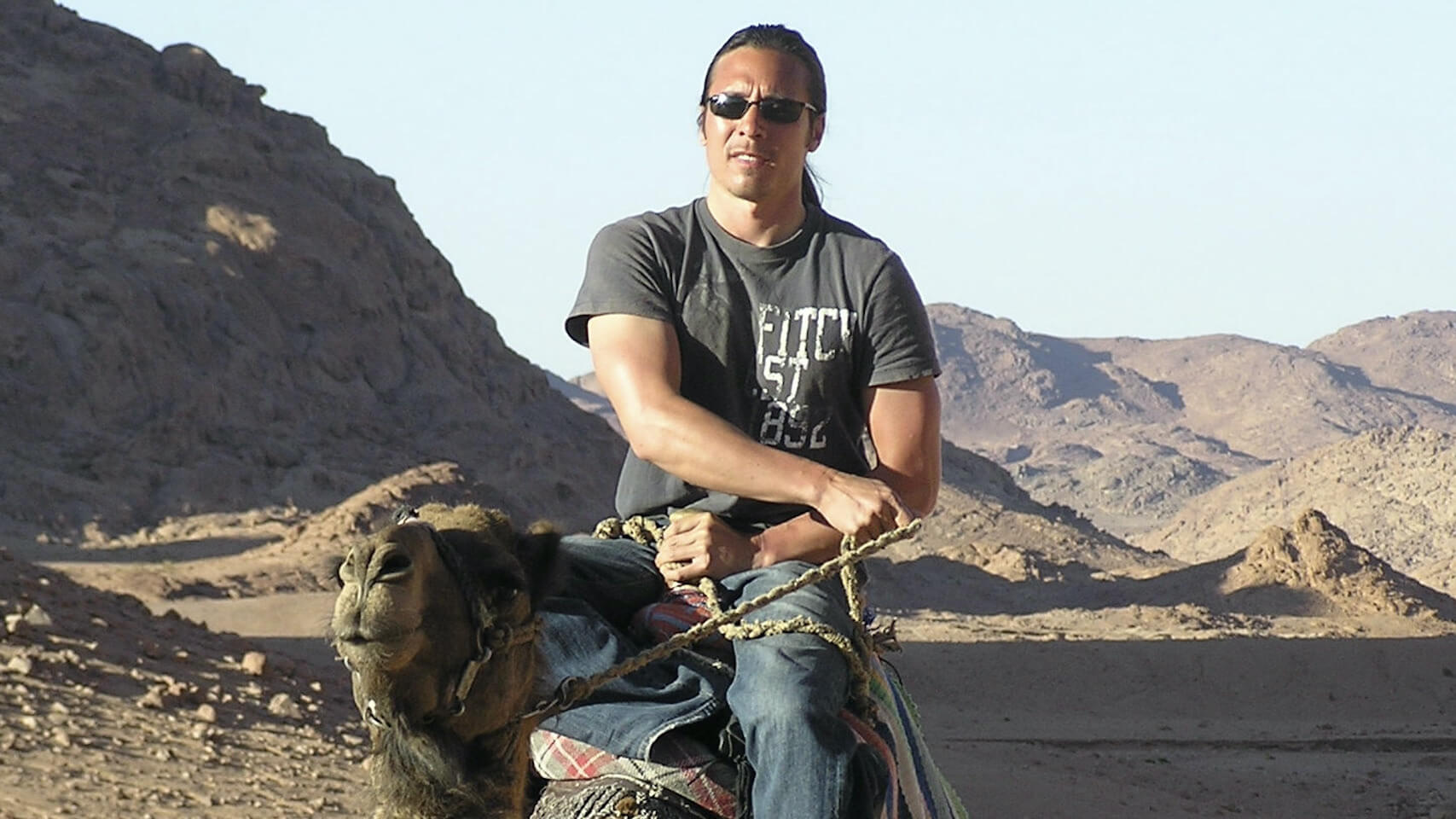
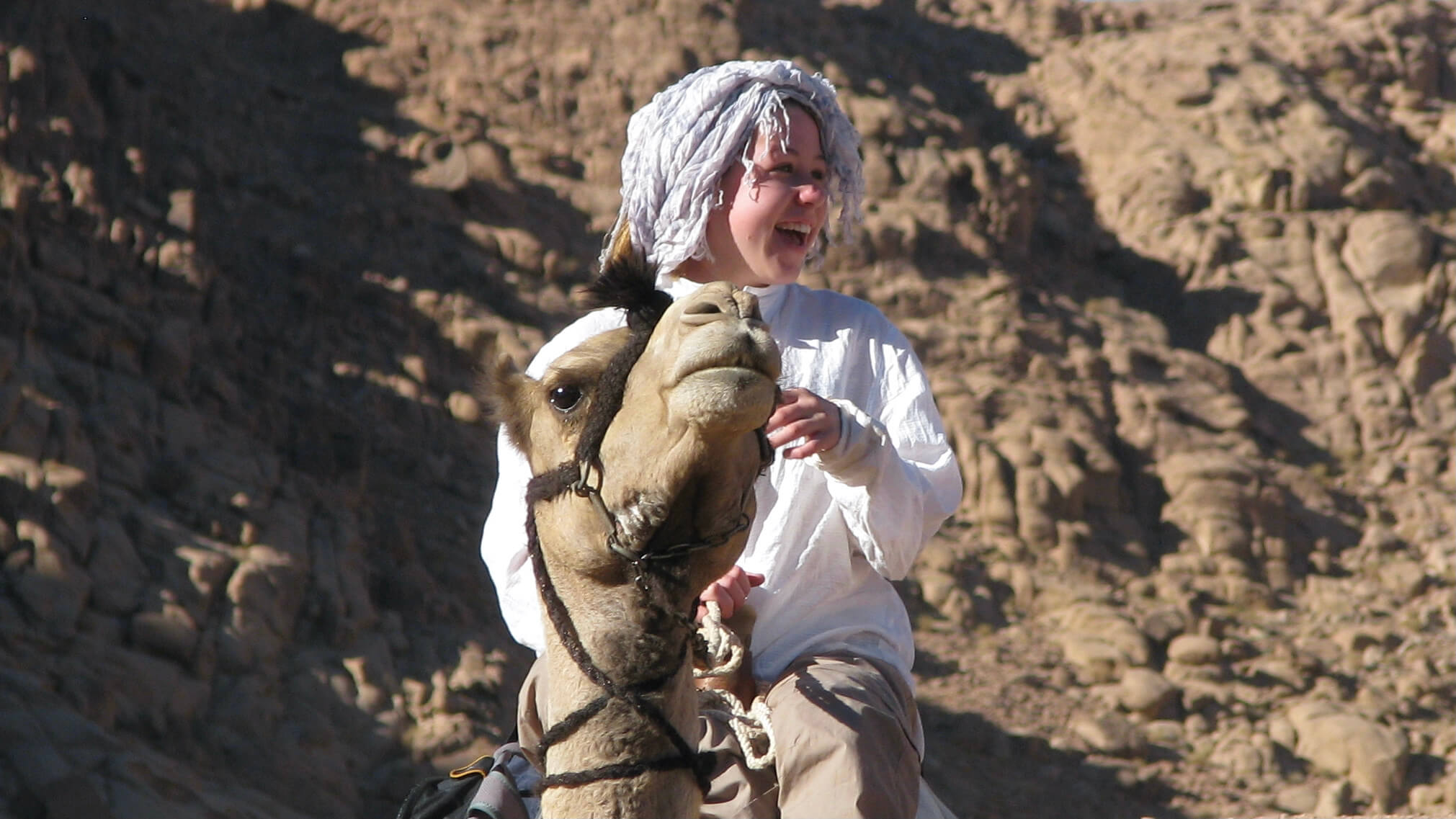
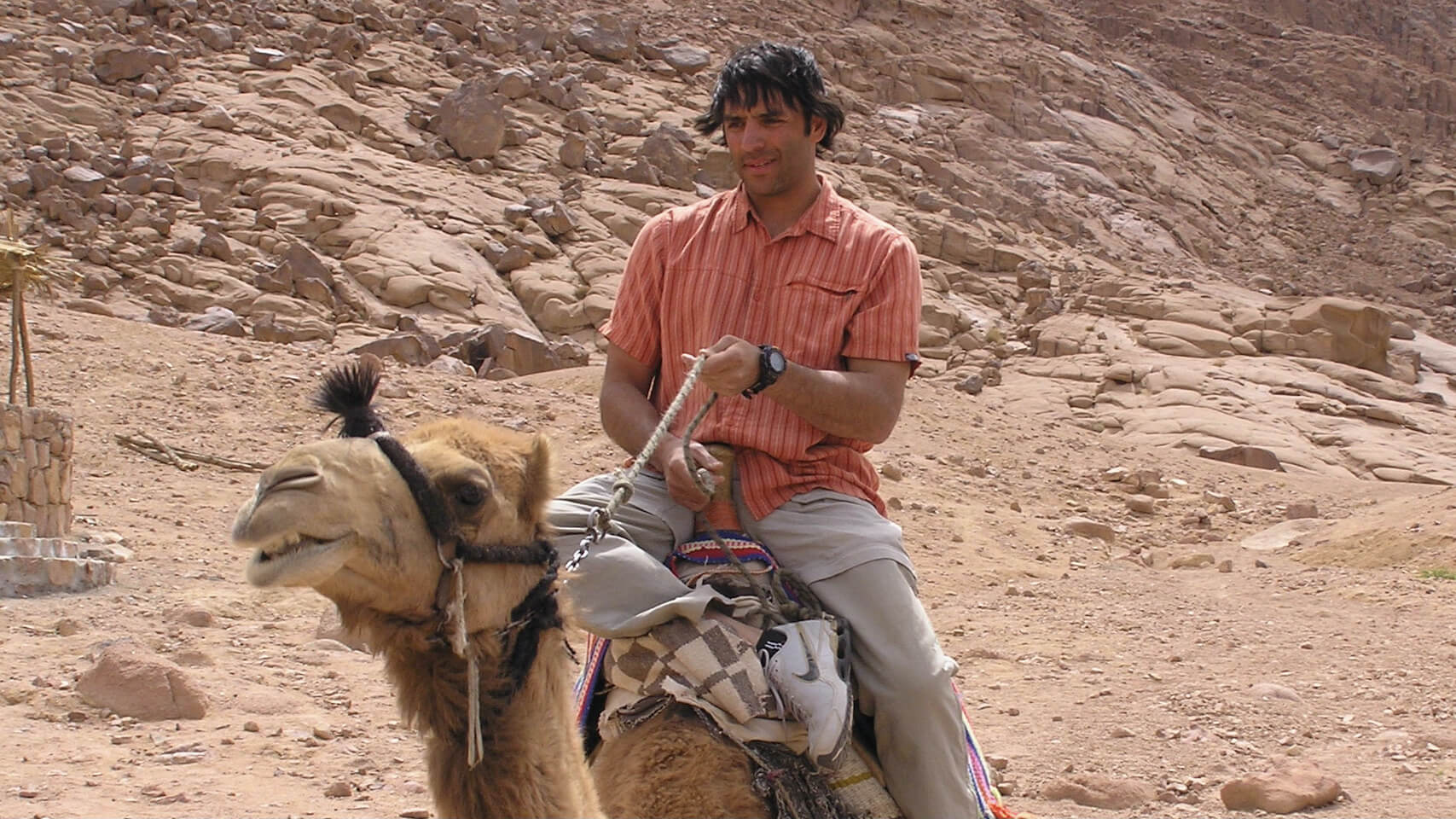
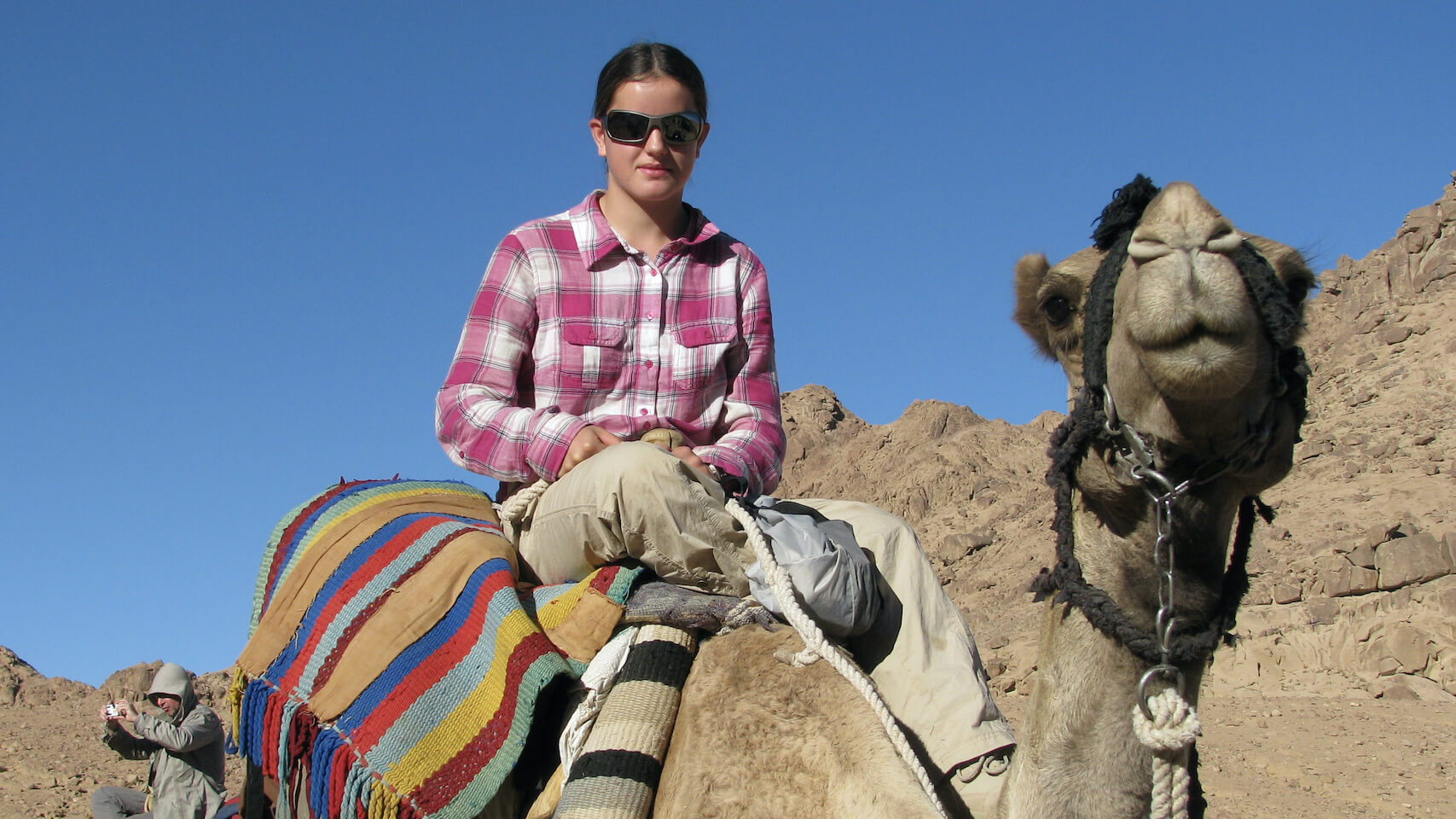


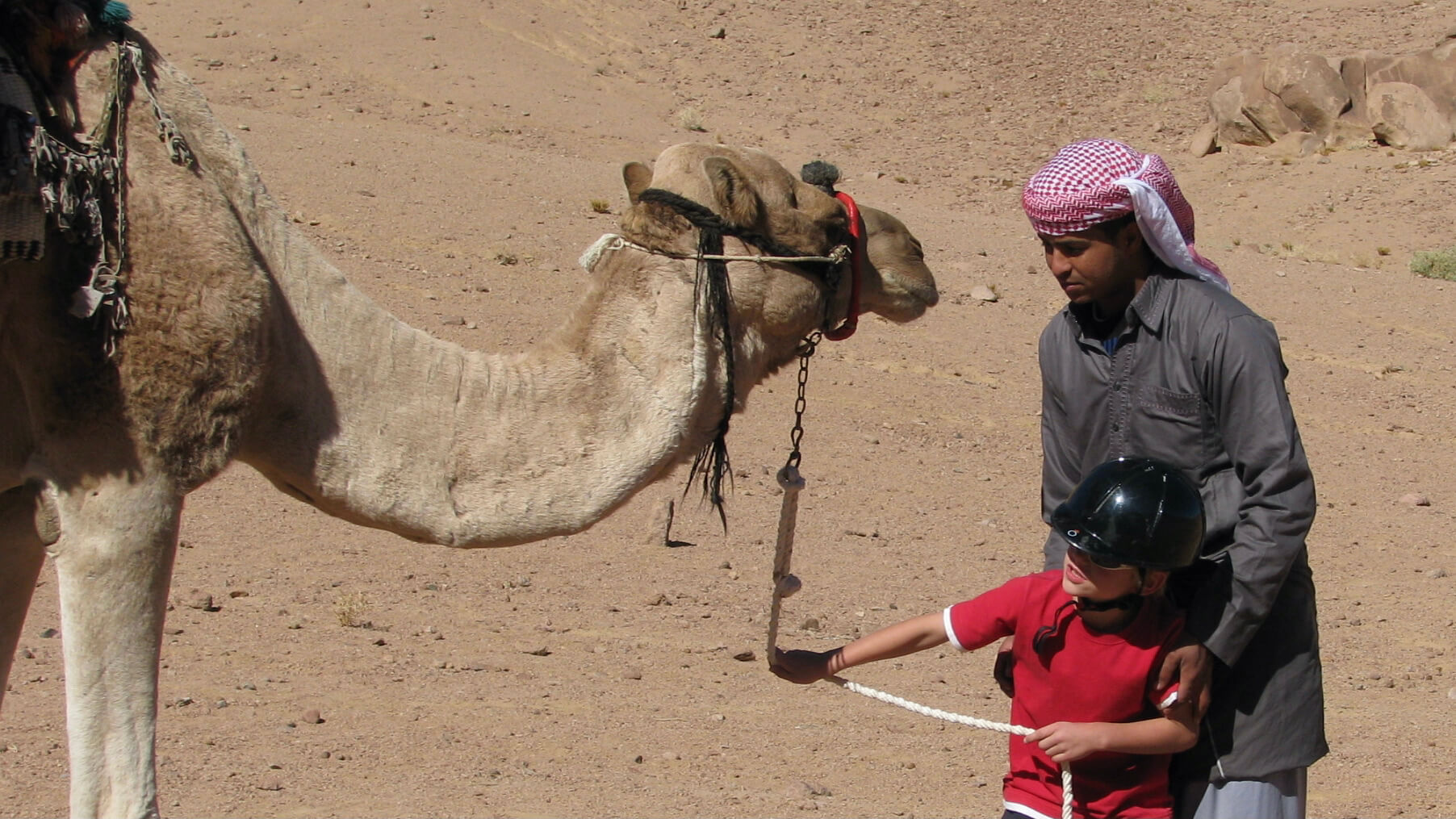
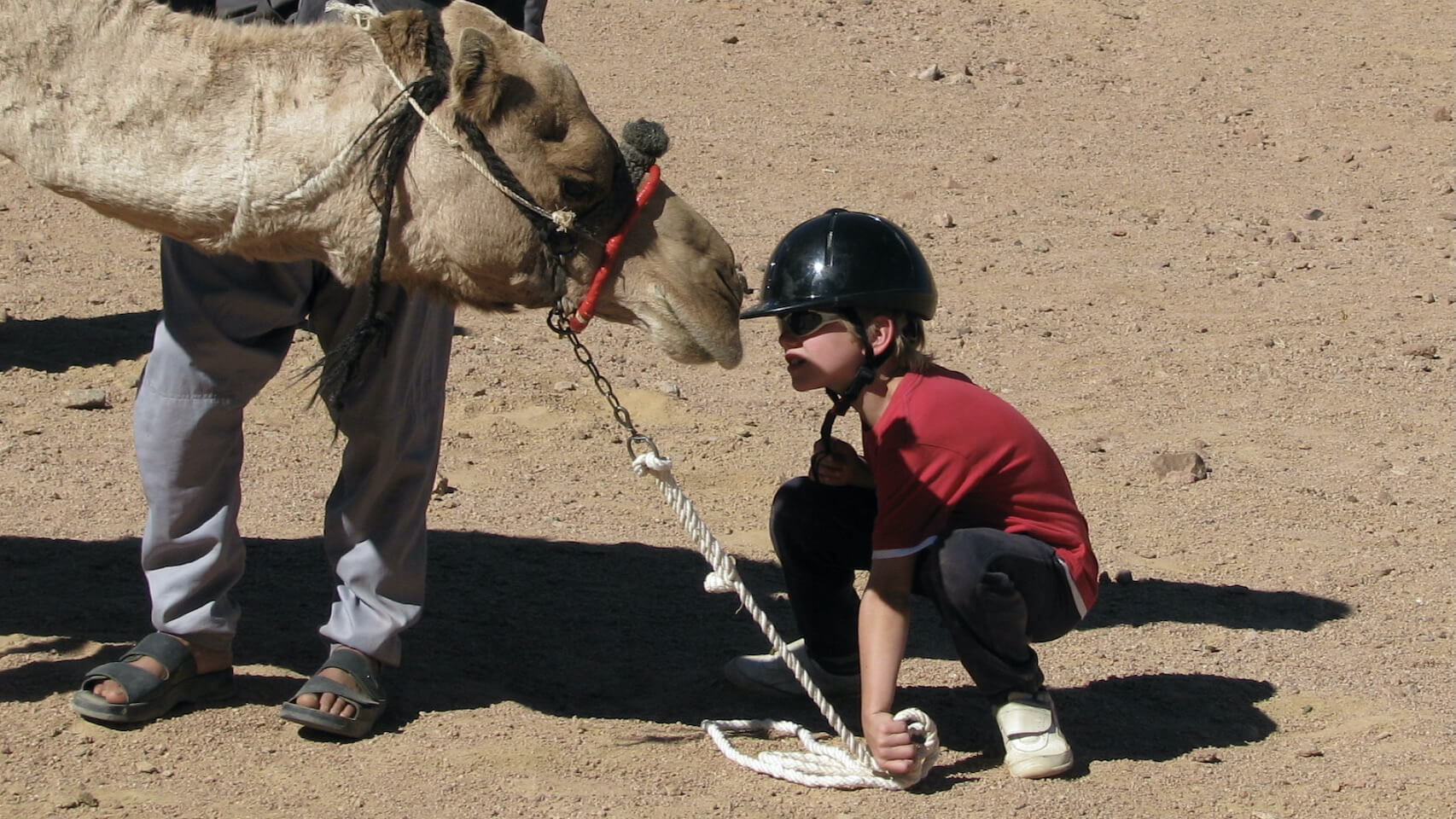

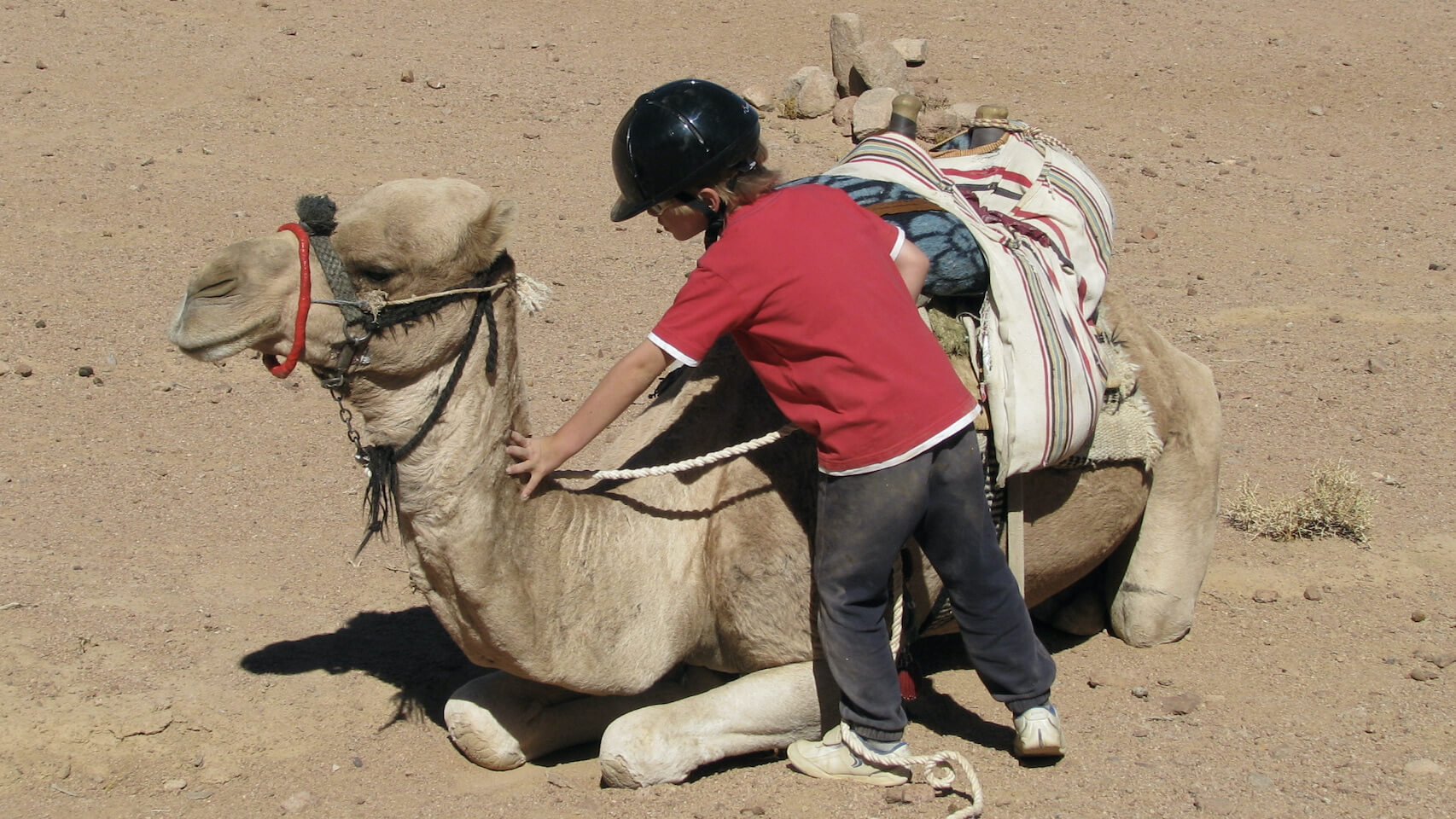
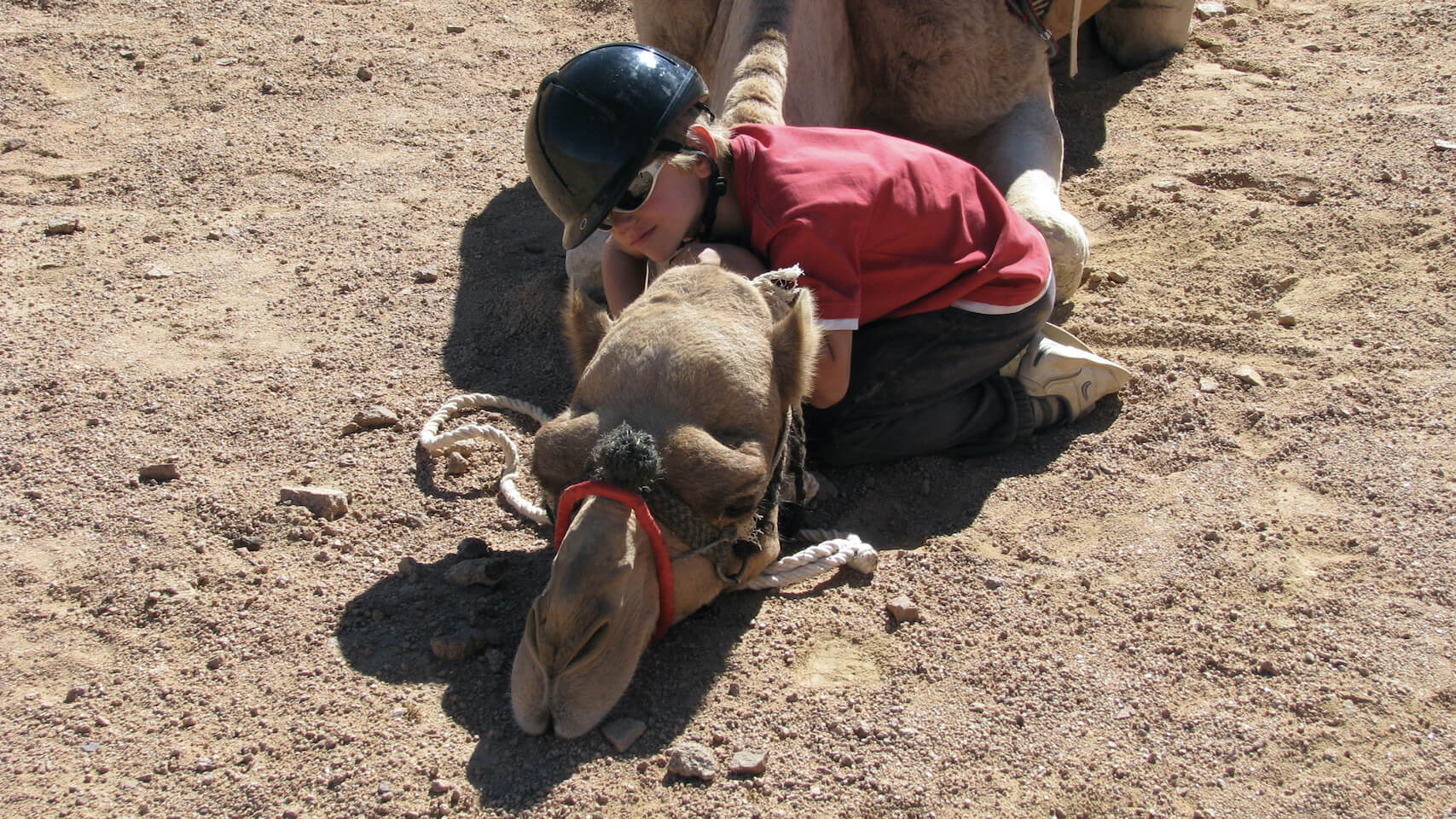
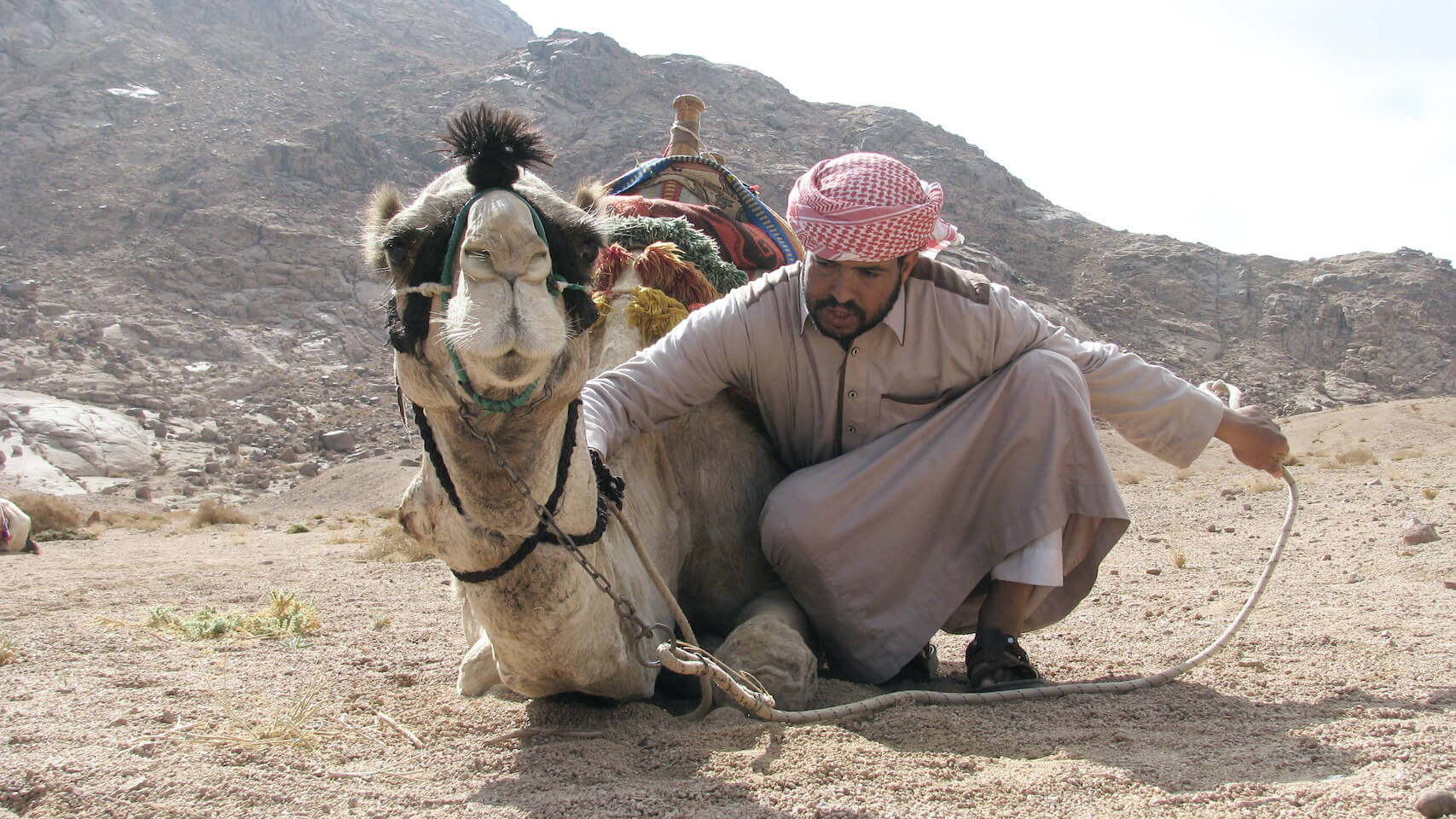

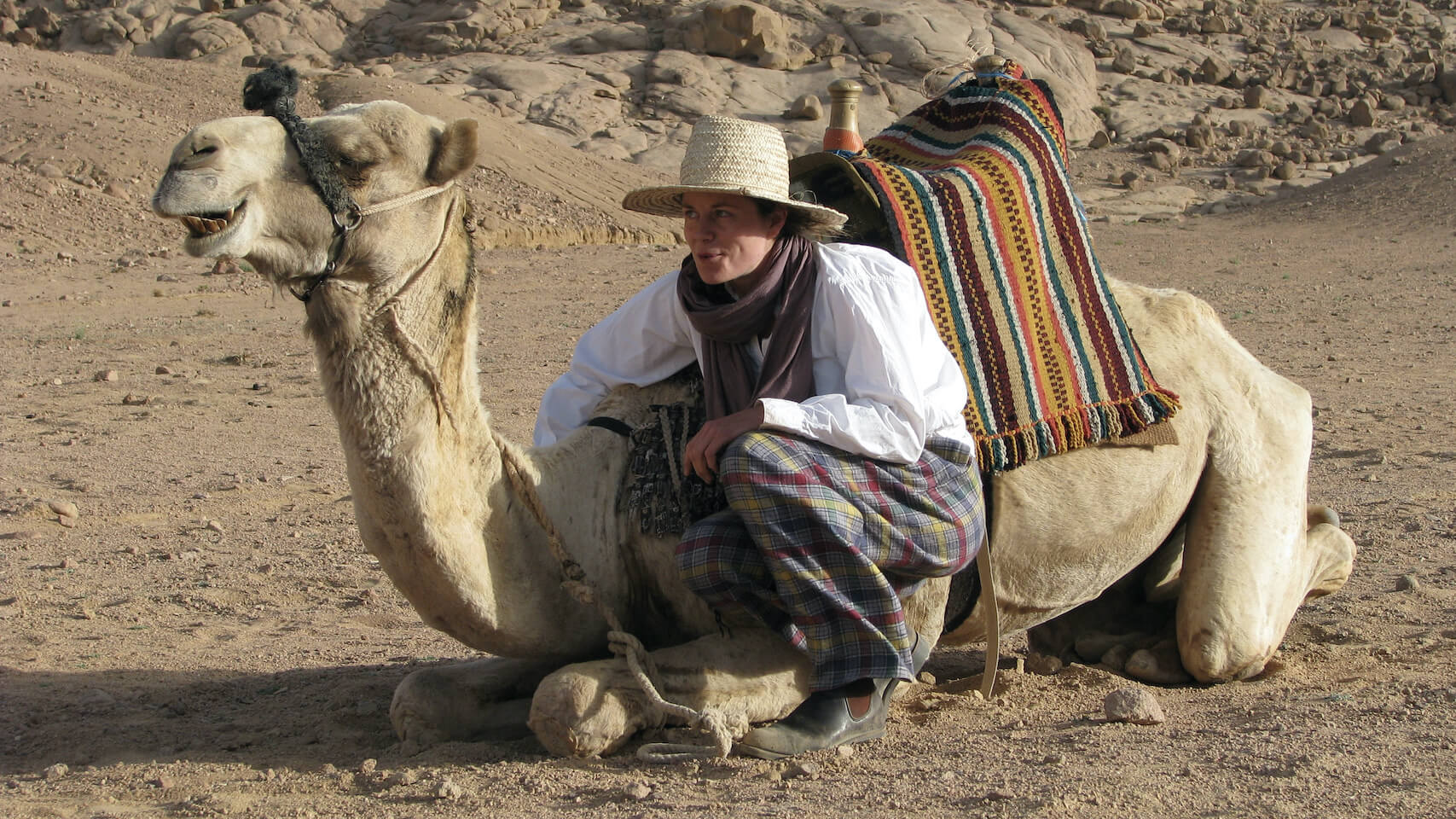

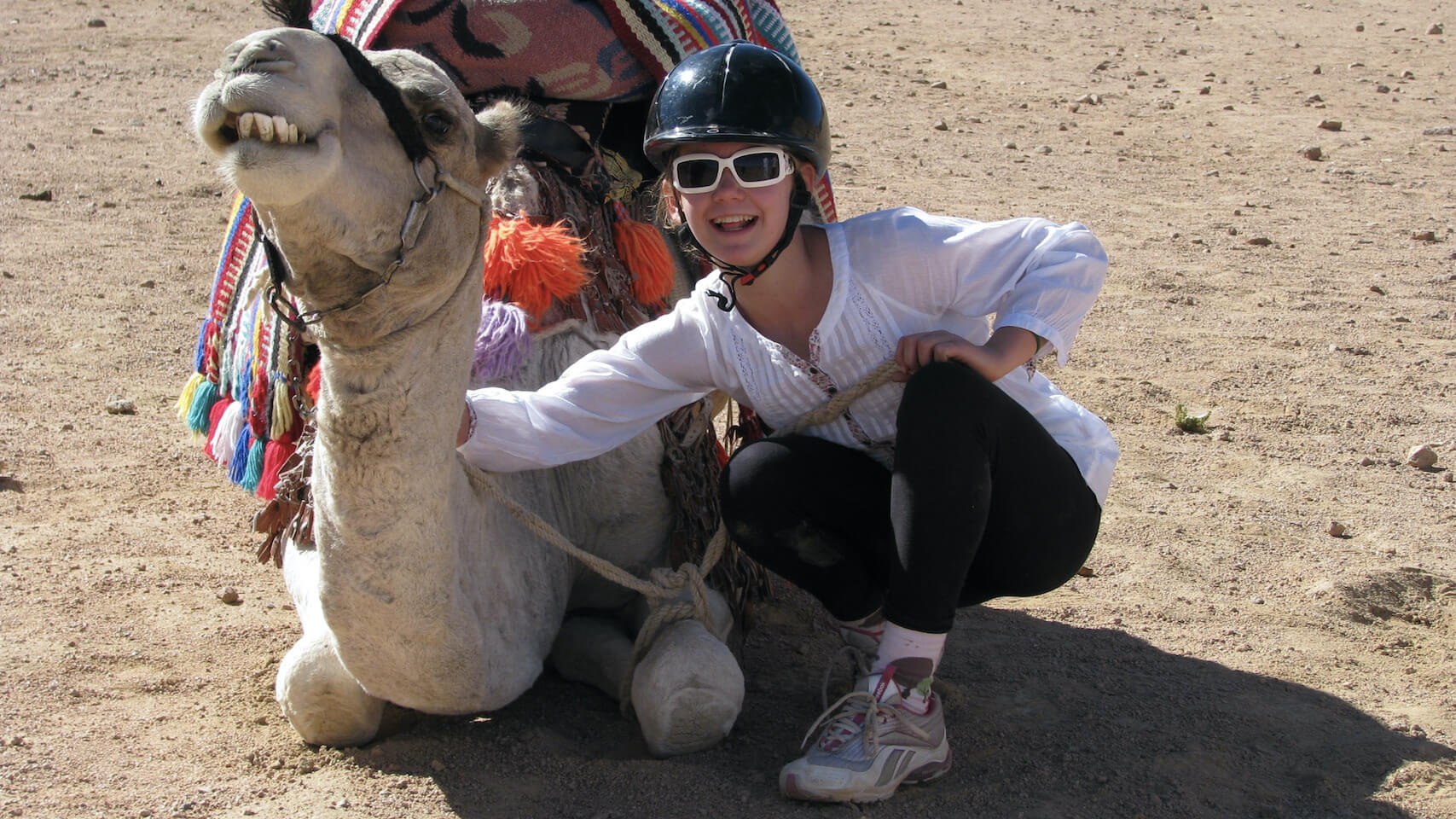
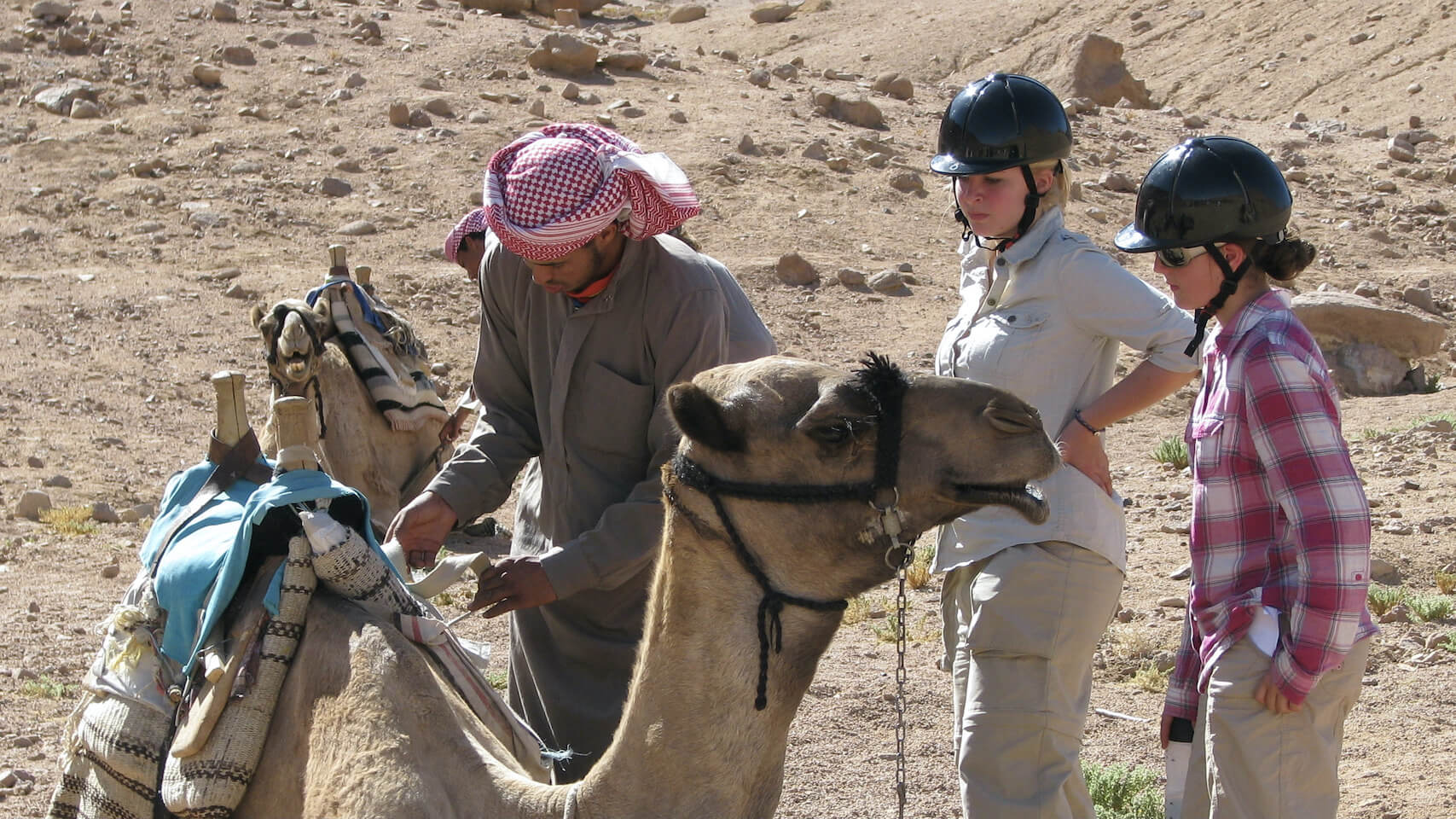
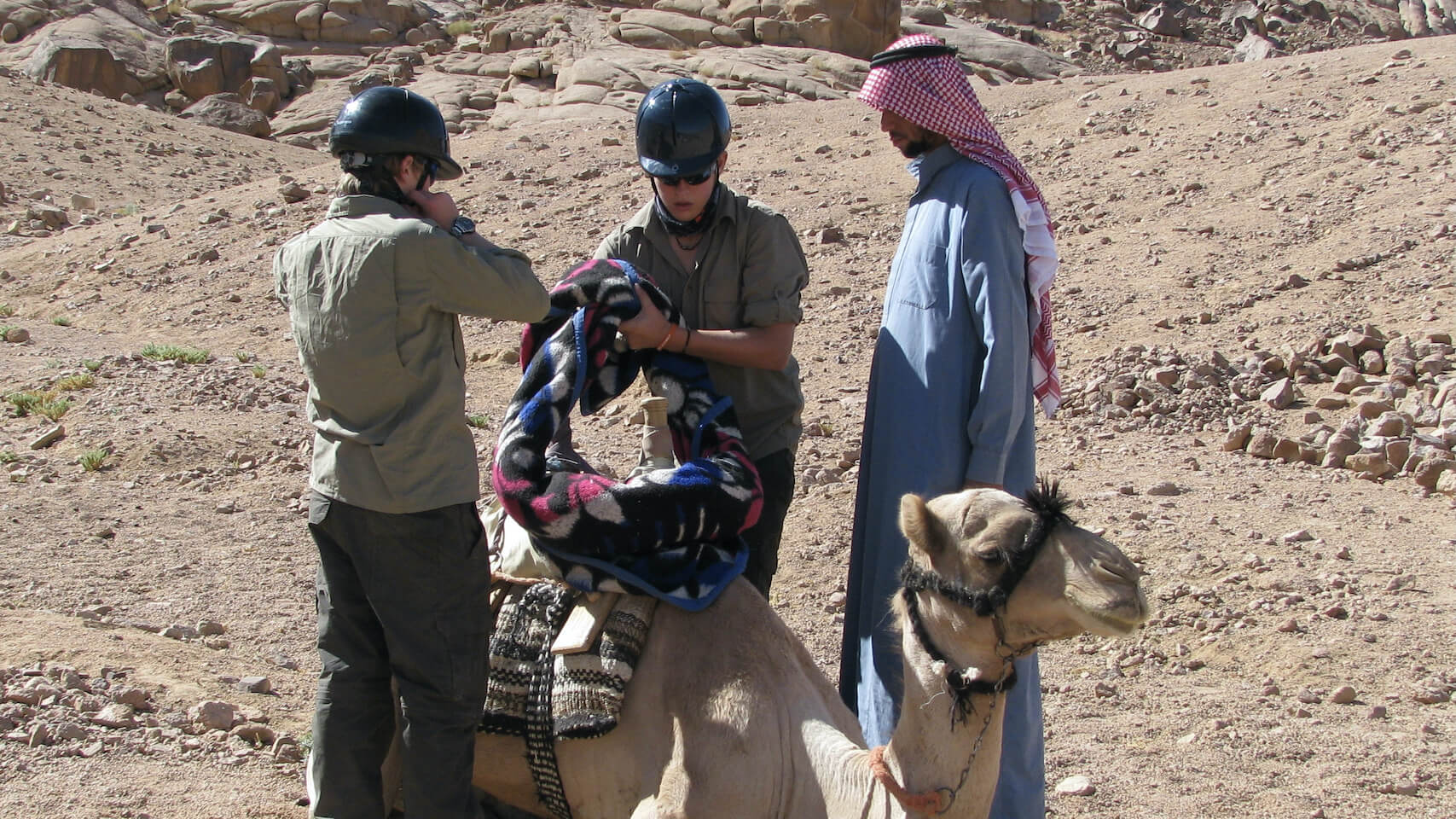
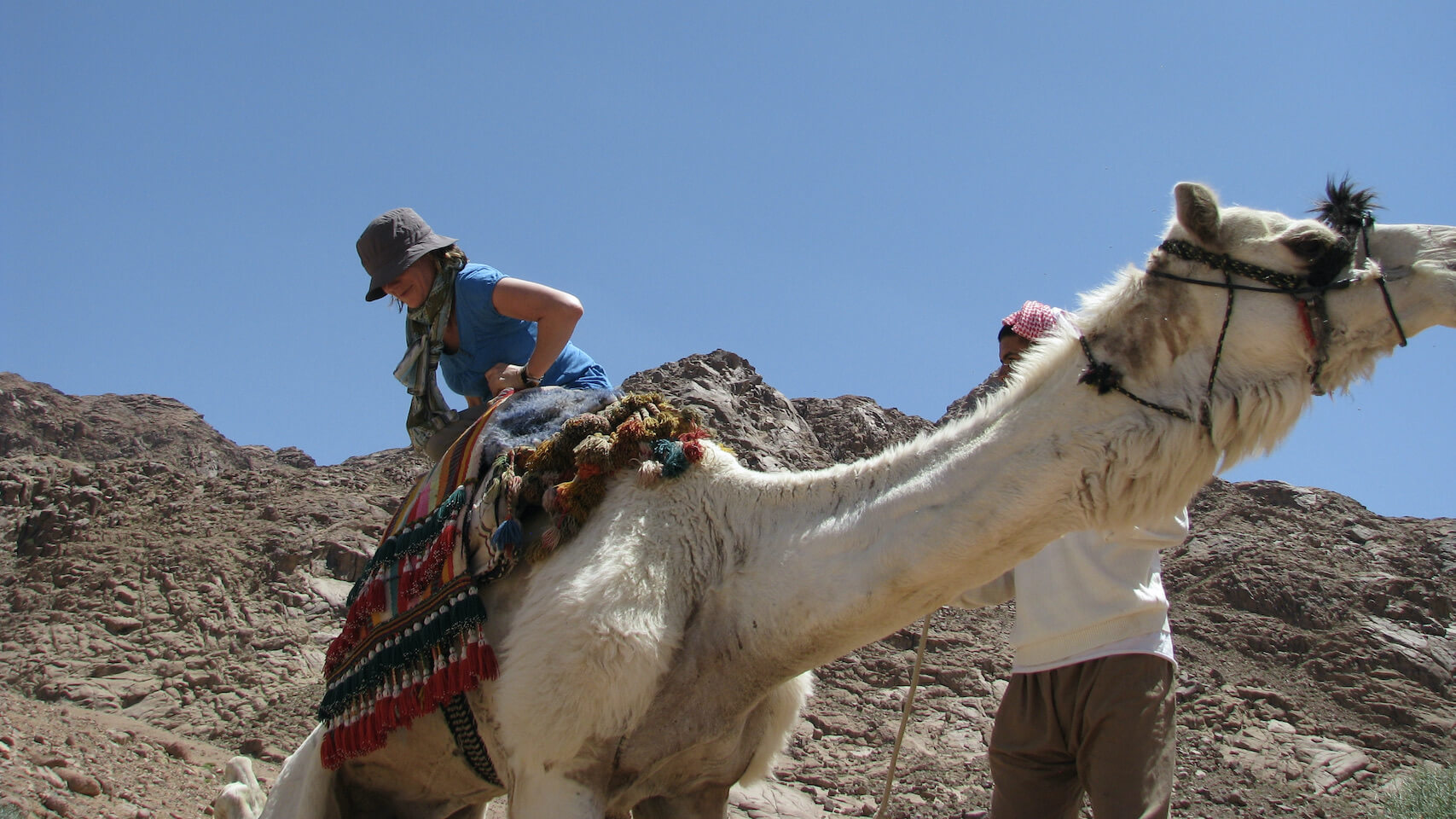
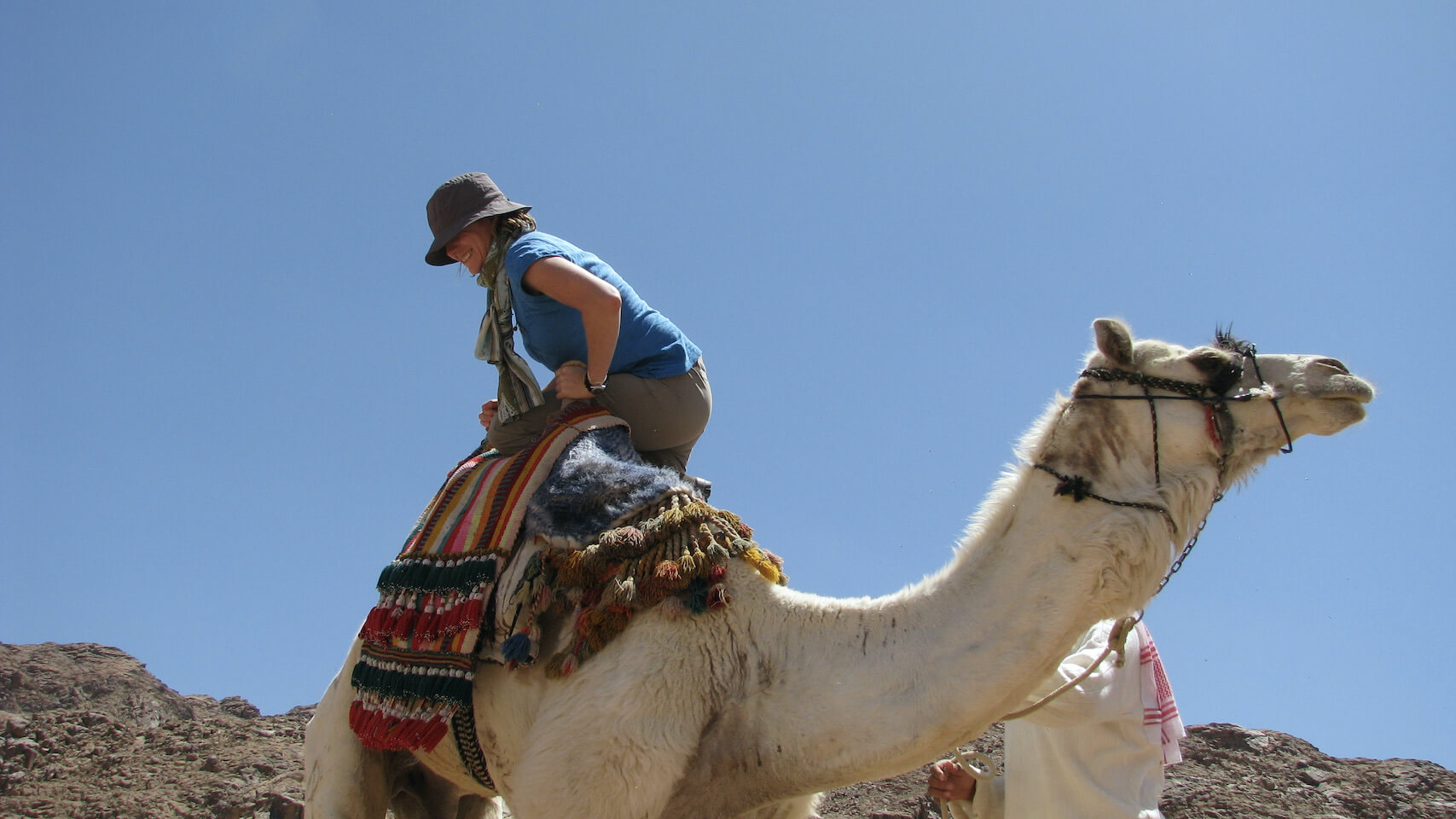

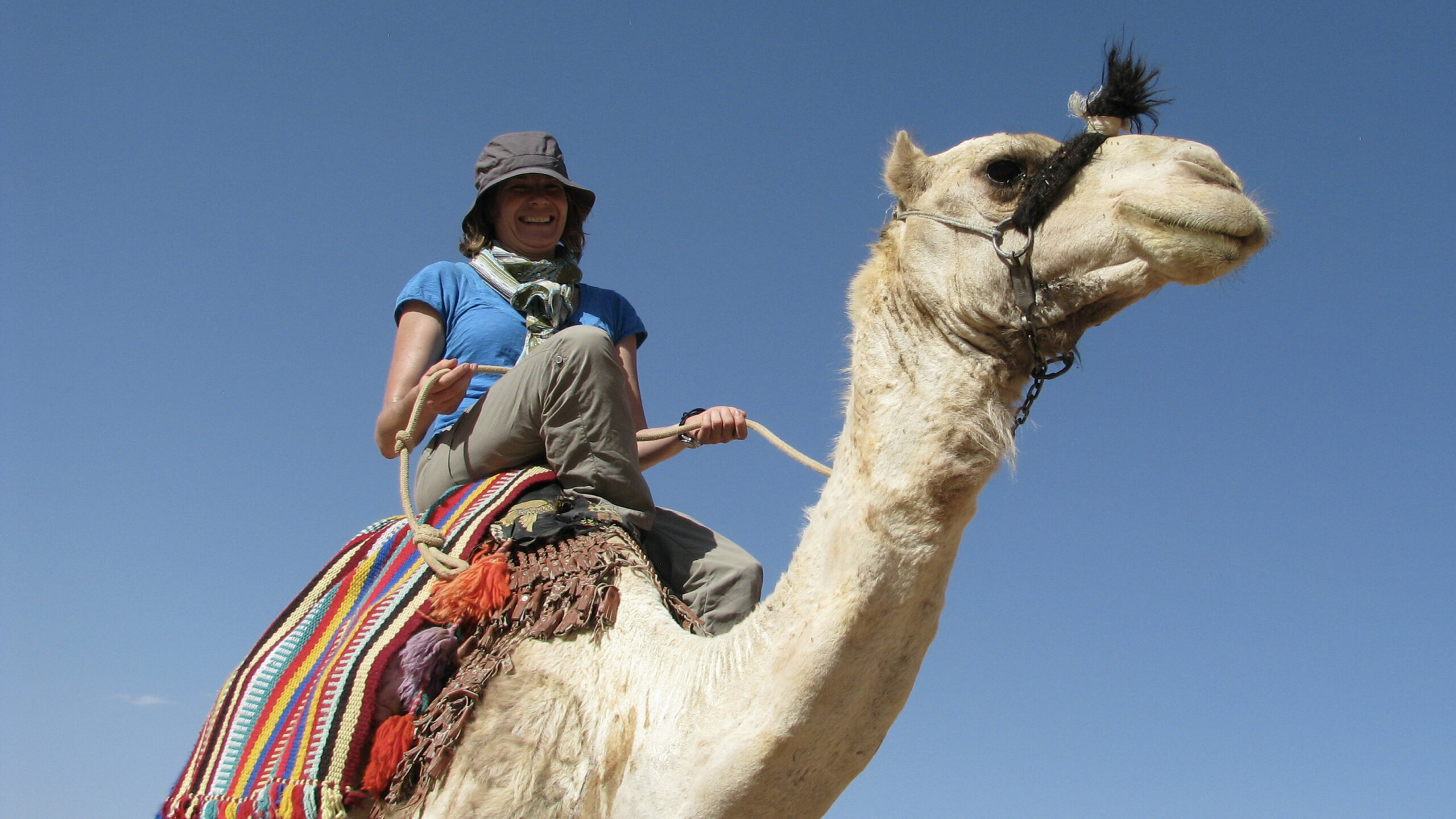
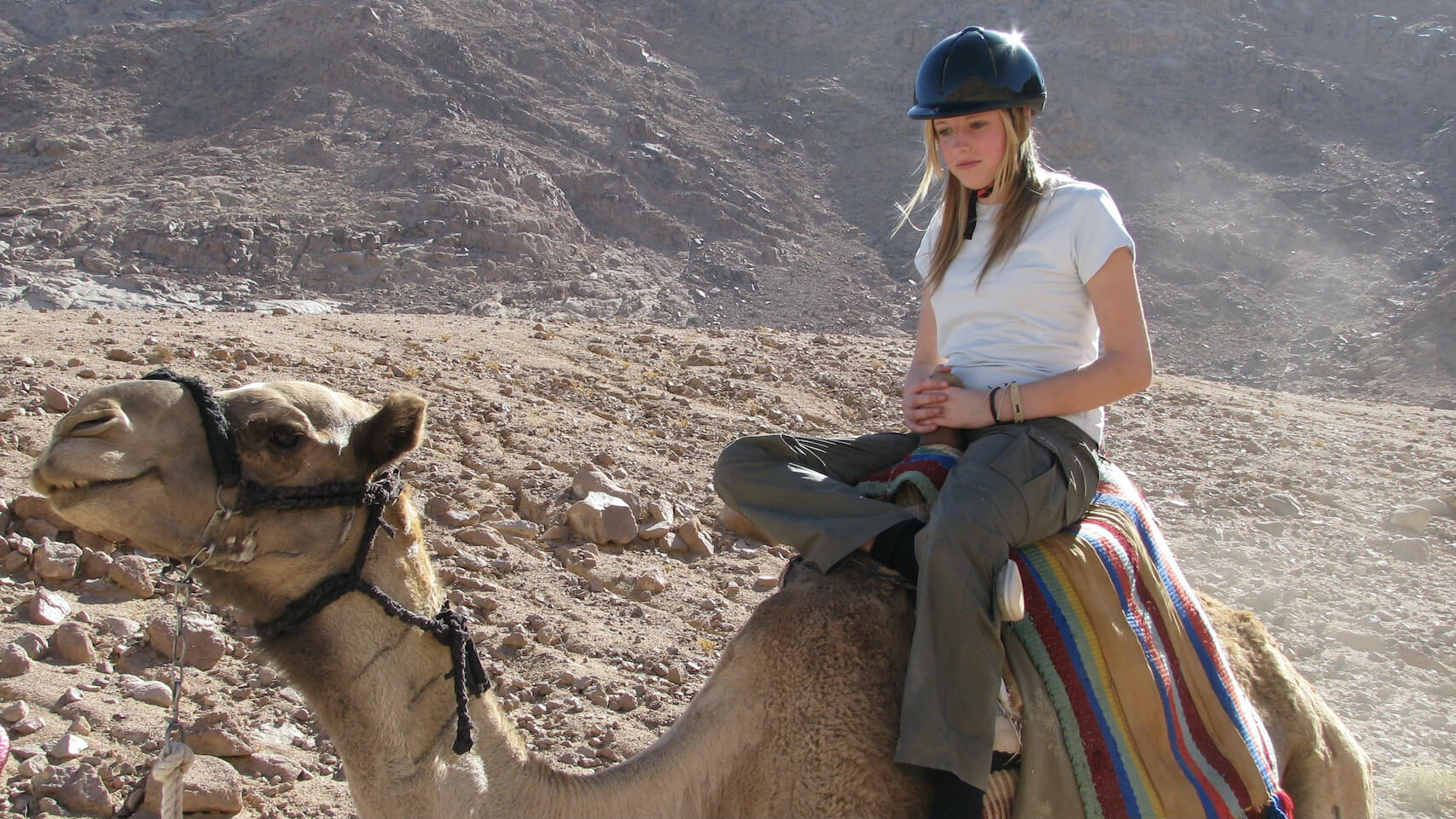
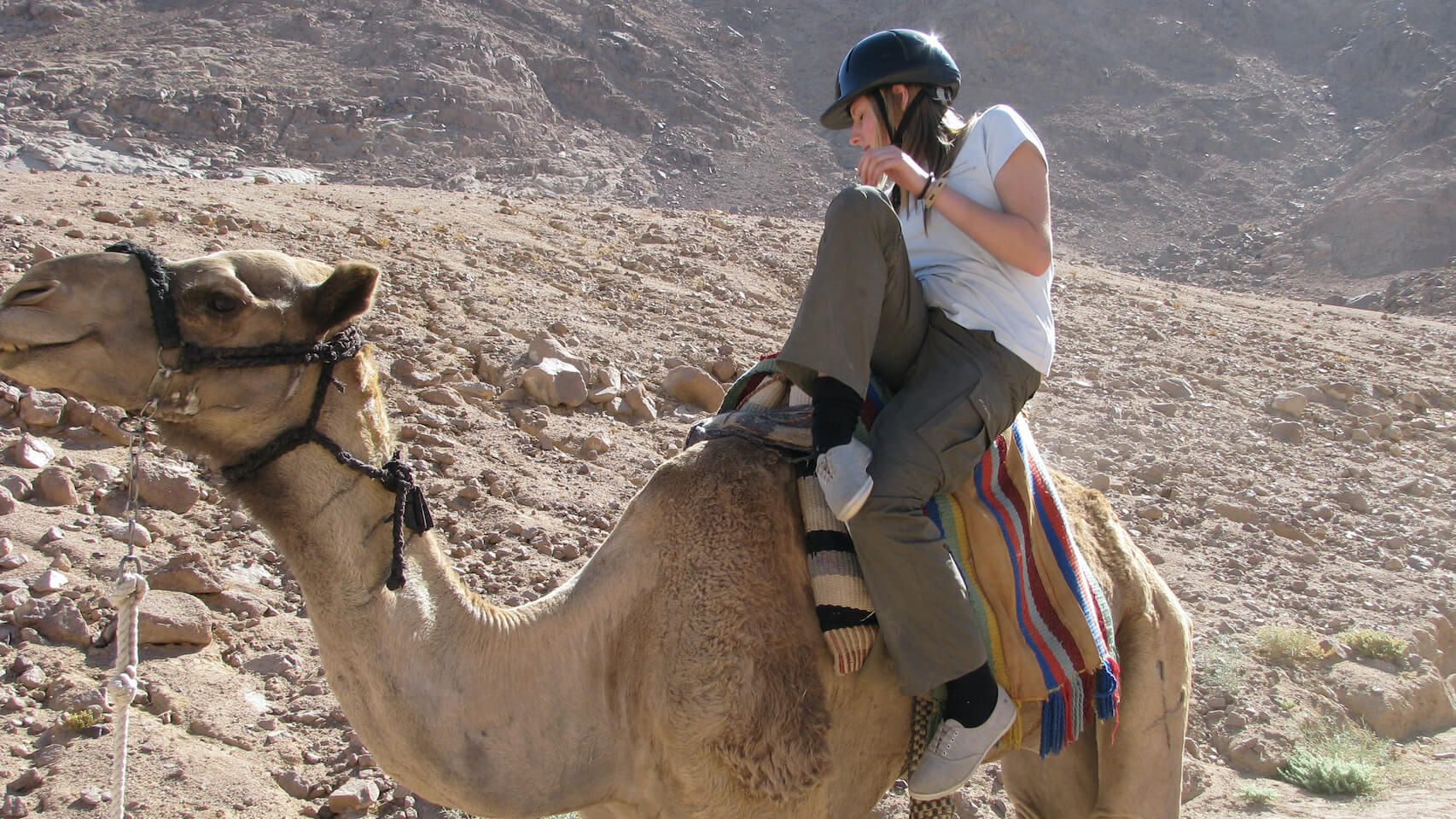
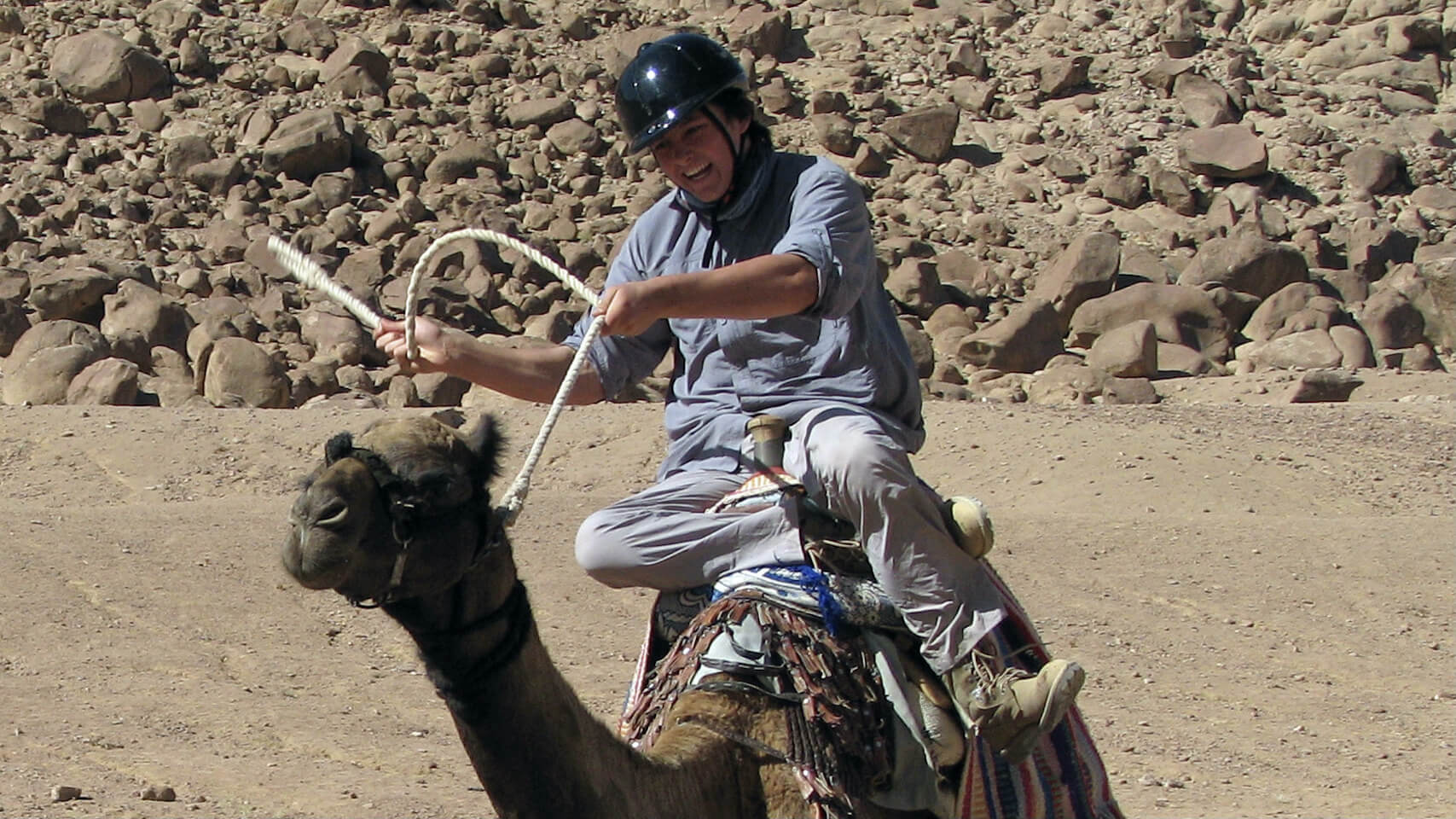
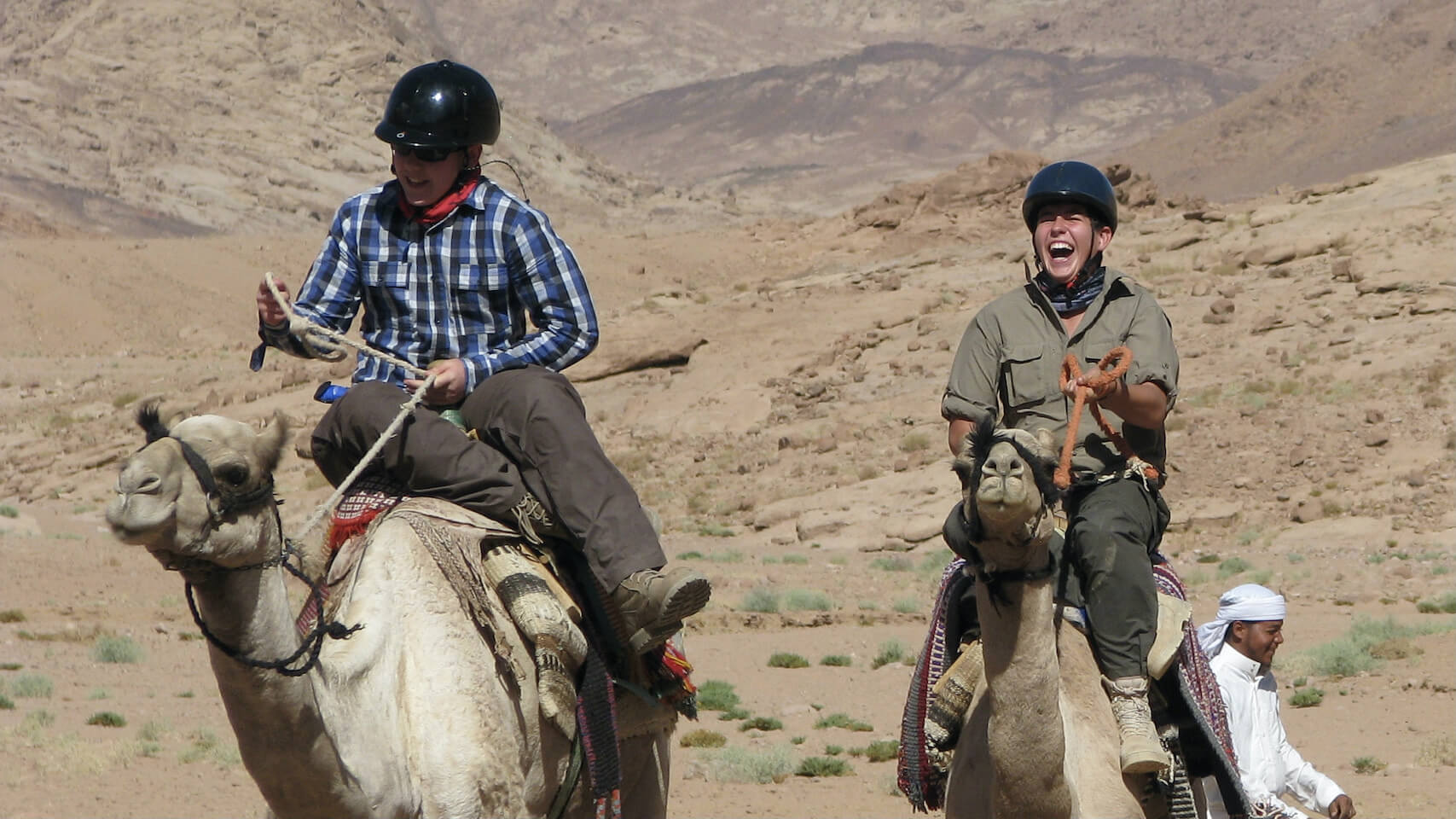
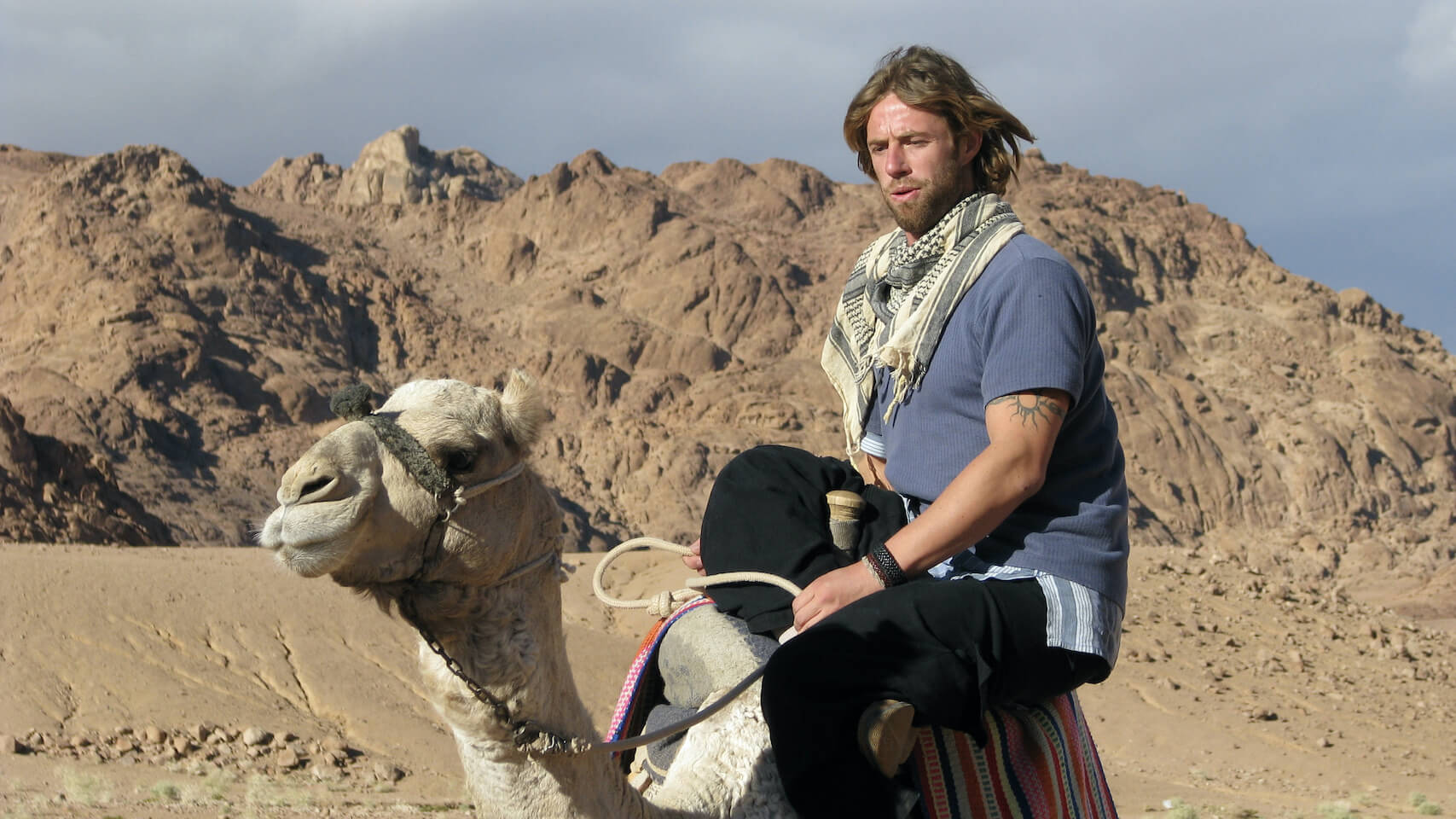
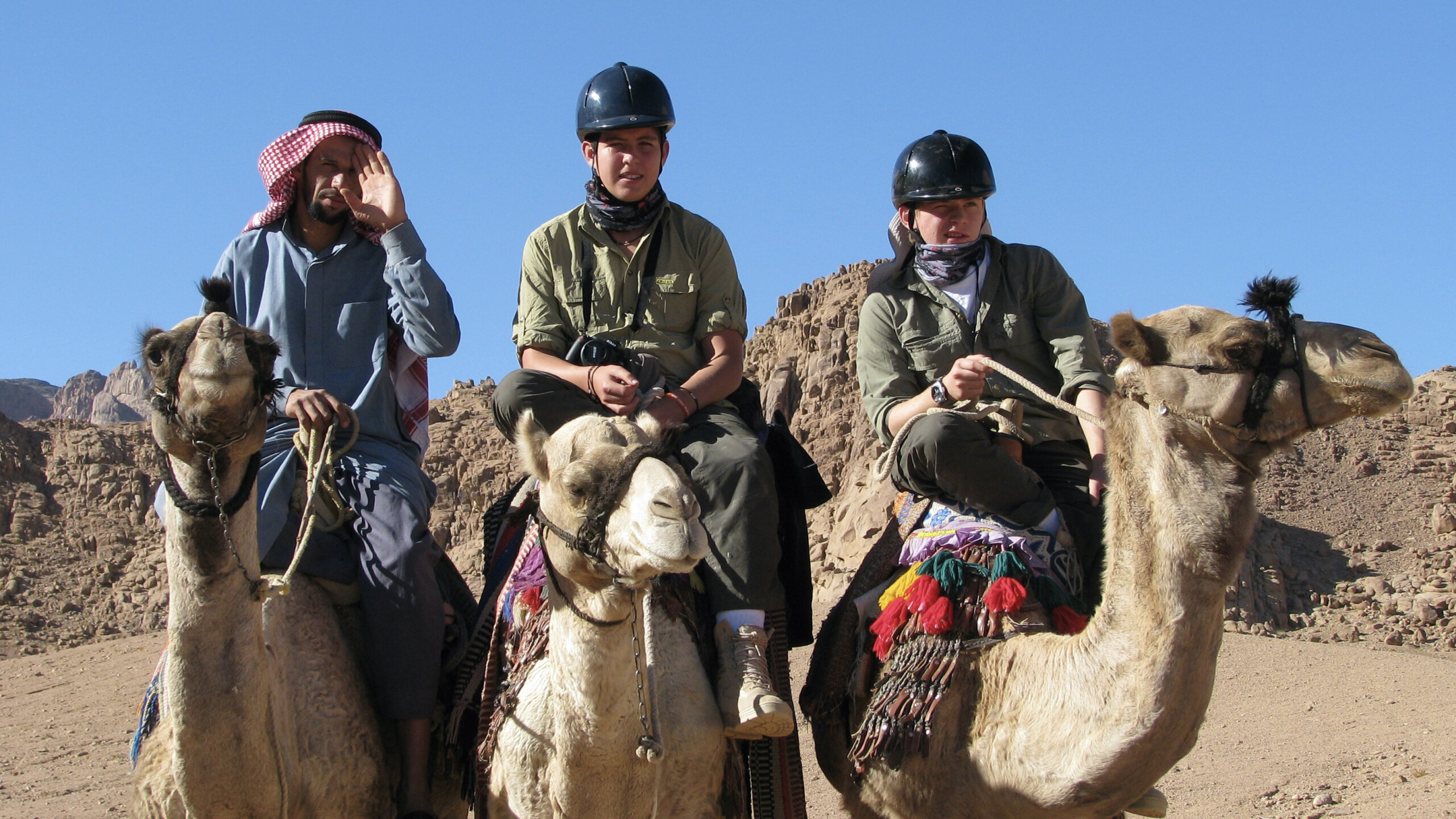

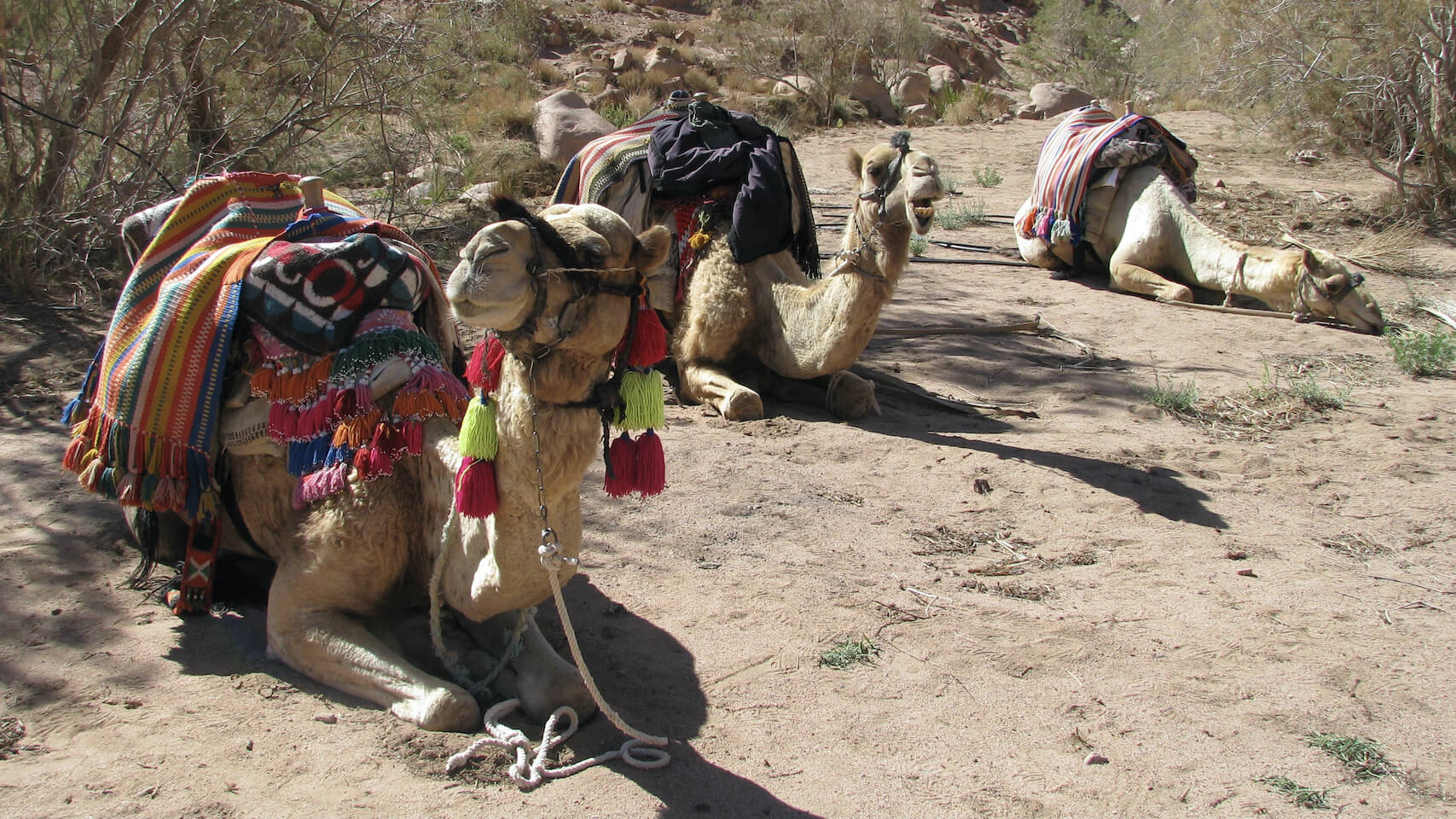
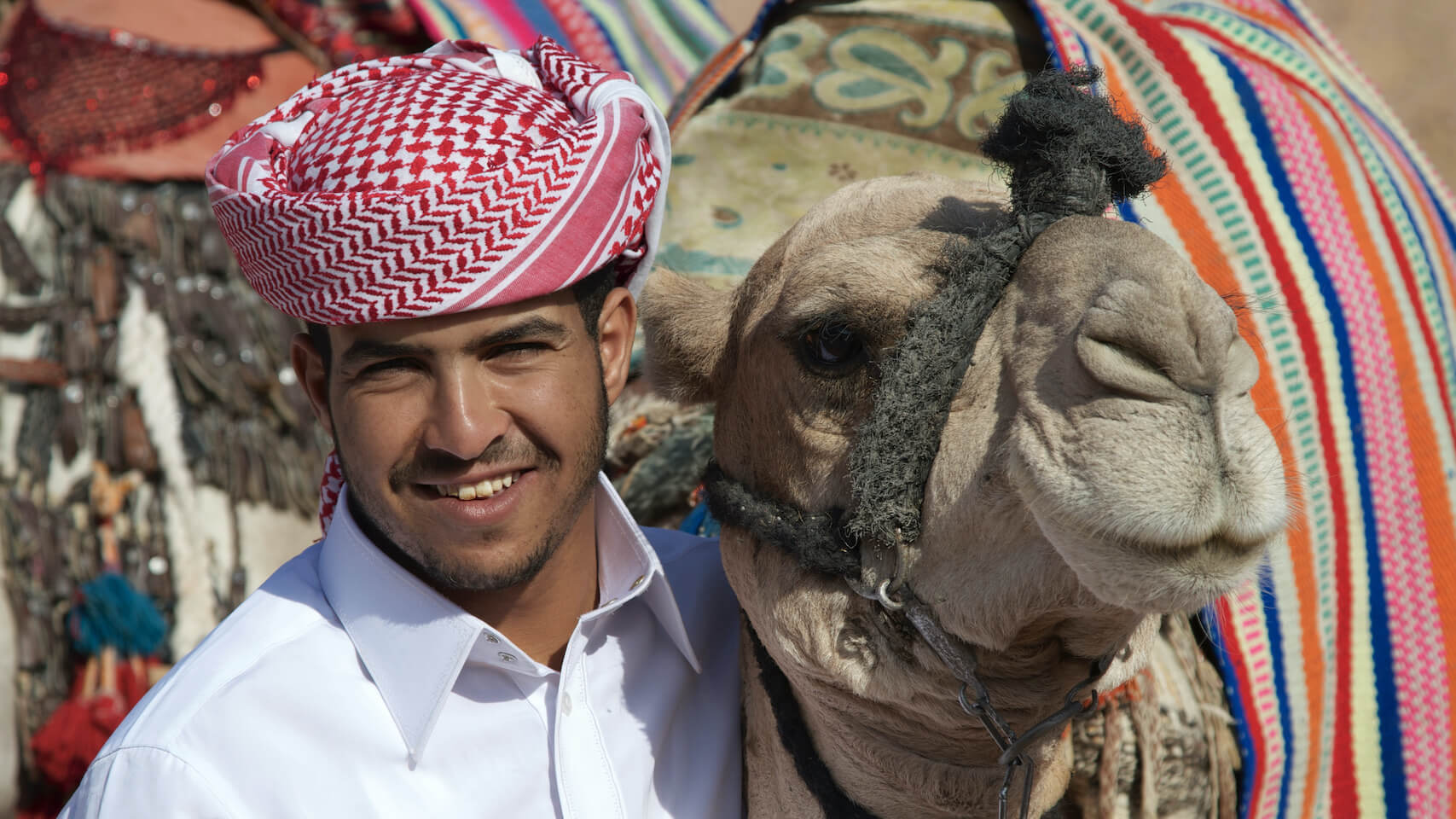
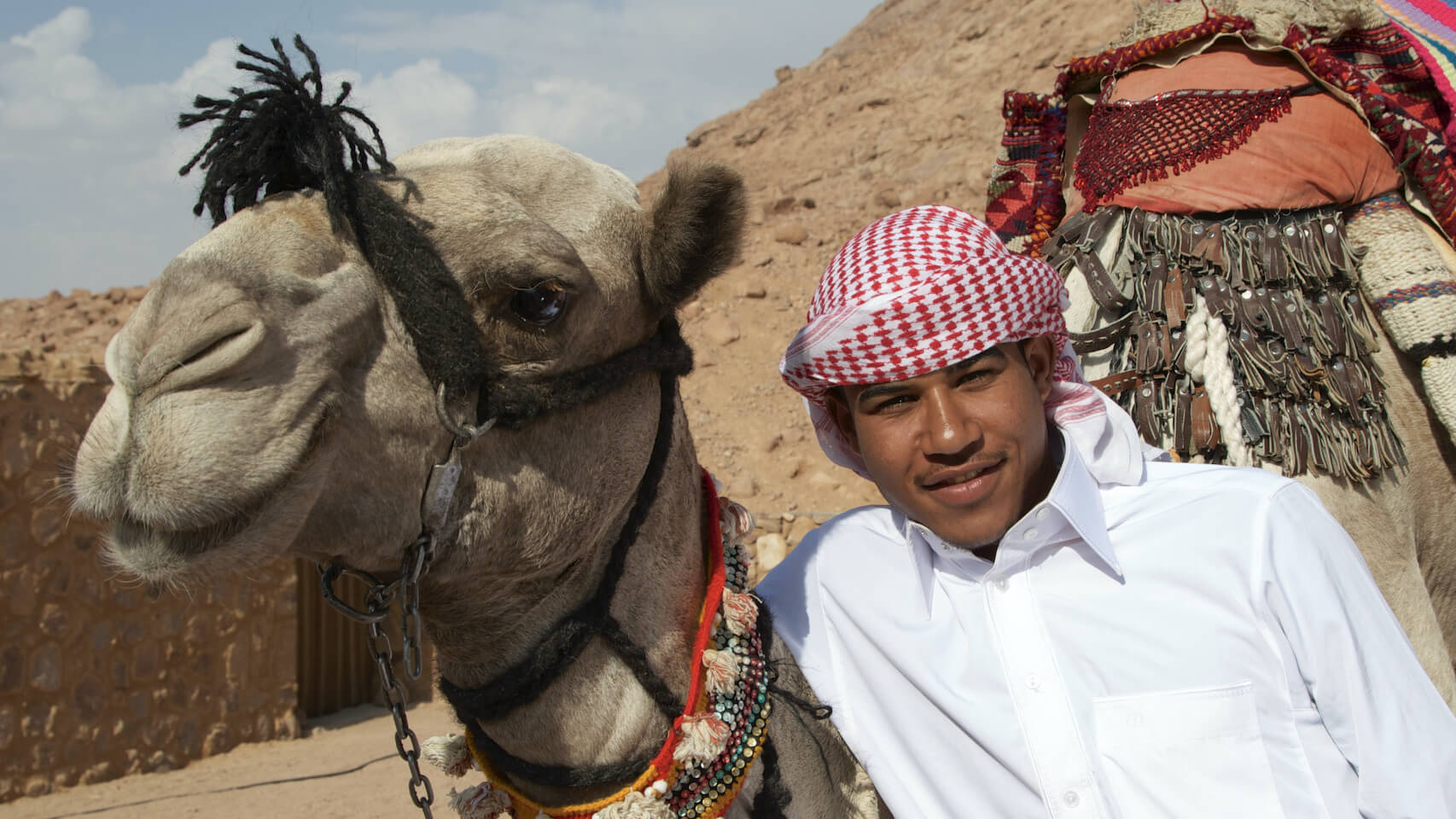

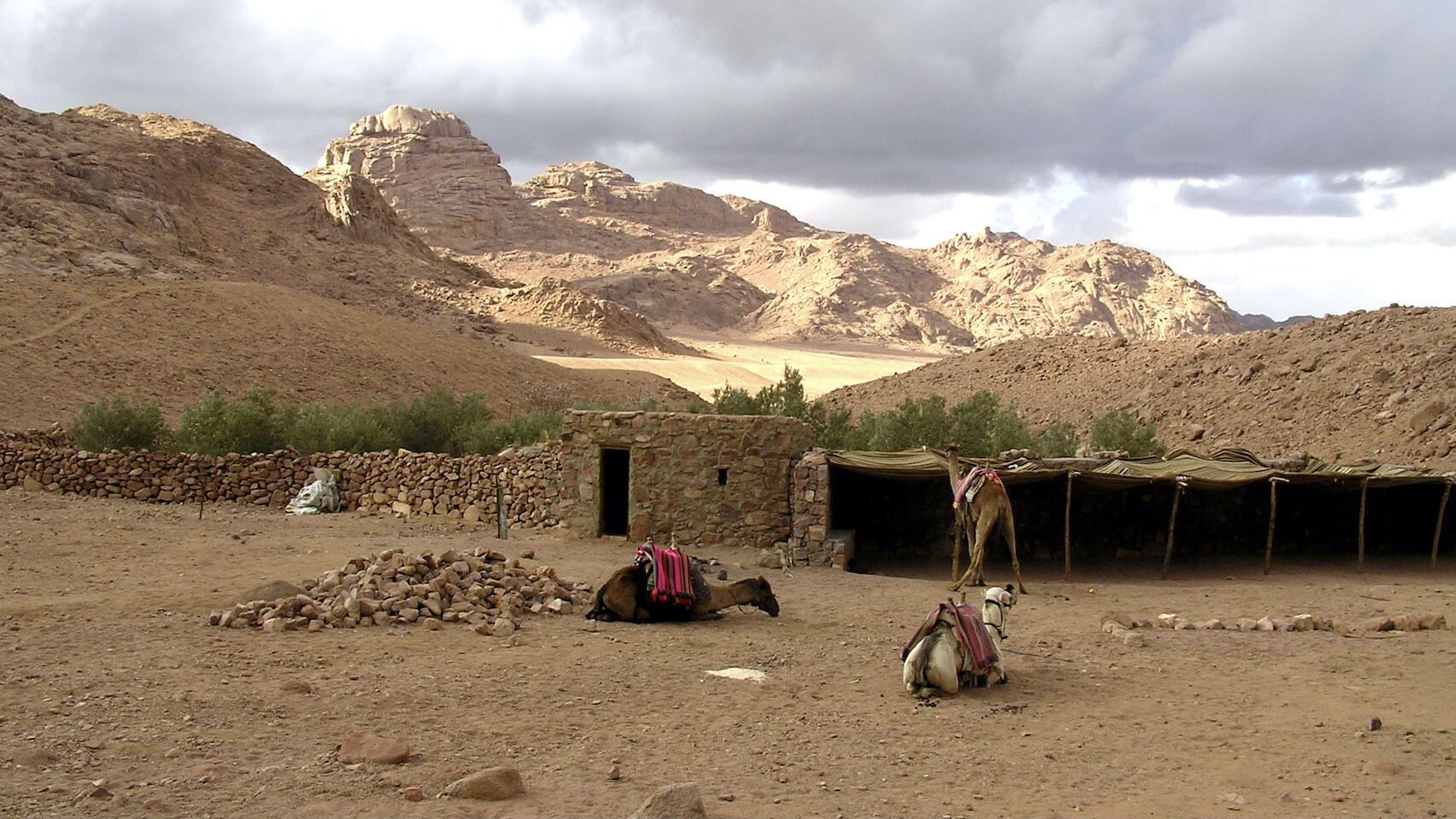
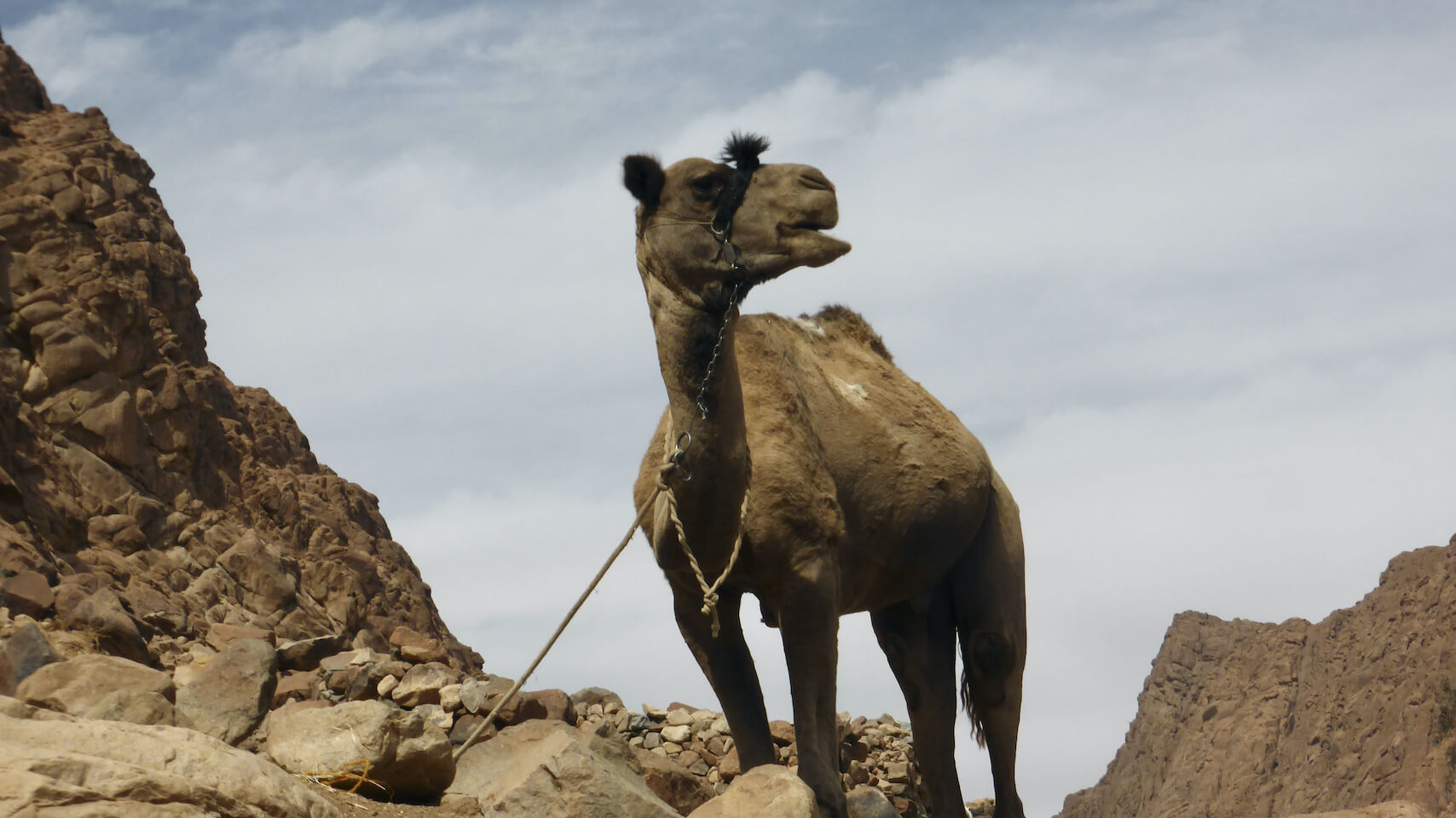
In a series of structured lessons you can learn the basics of riding a camel single day. One camel teacher is provided for every two pupils. This allows a trusting relationship to develop between the Bedouin and pupils.
Lesson 1: You first learn how to couch a camel, hobble it and give it a hug. With the camel couched you then learn how to mount it and dismount. Having mastered this you then free the camel from its hobble, make it stand up and practice mounting and dismounting a standing camel.
Lesson 2: You now learn how to saddle a camel and make adjustments for comfort. You then practice sitting properly on the camel and directing it with the single rein. Most importantly, you learn how to stop the camel in its tracks with two hands on the rein and your legs round the pommel.
Lesson 3: Once you have gained confidence in handling a camel you then learn how to speed it up and change its gait and practice all your skills in a wonderful two hour trek to the remains of an ancient monastic community, returning to the camp at sunset.
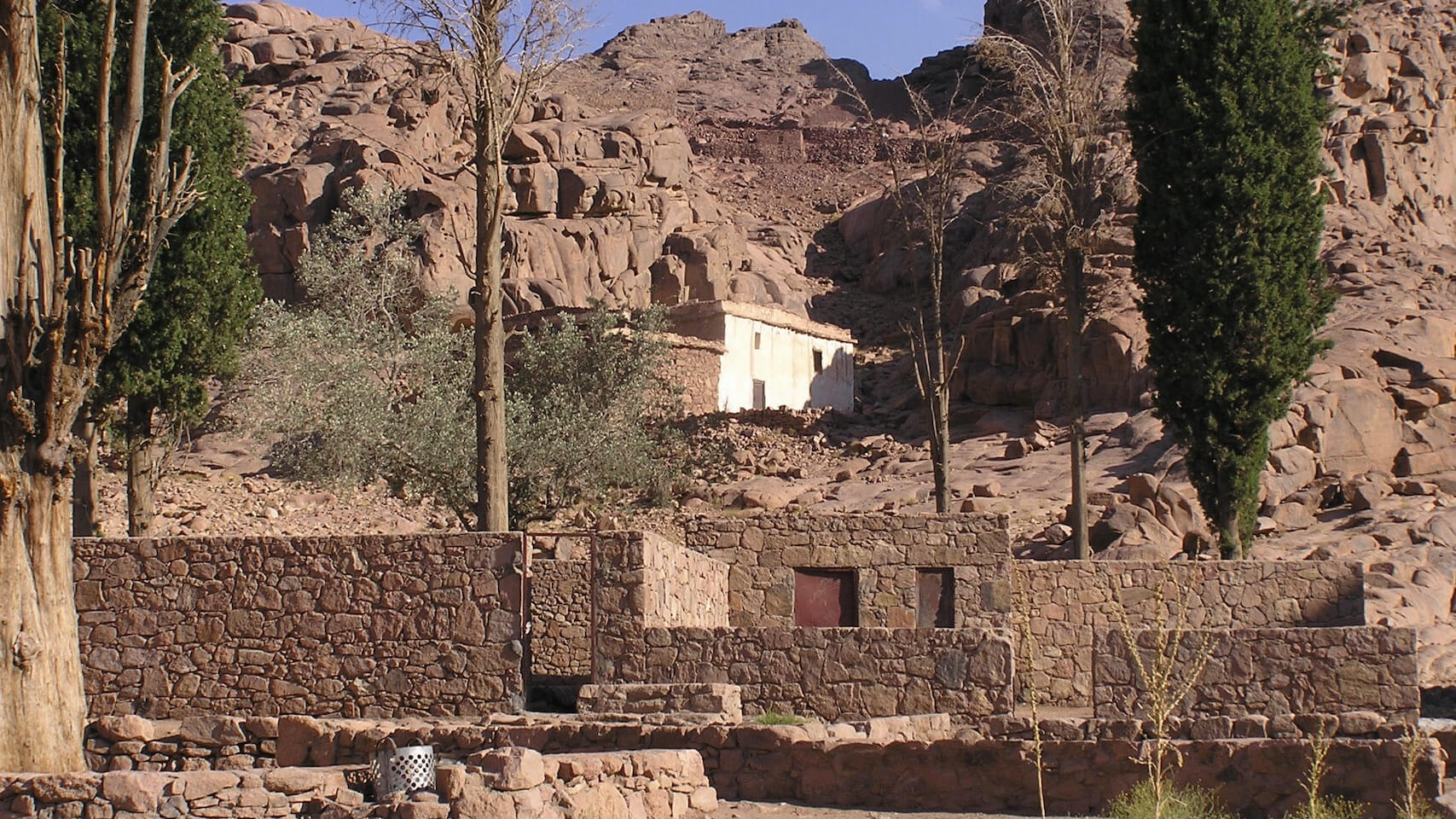
Tea breaks and a campfire lunch are provided in the garden of the Camel School. If you wish to learn more about camels, you can stay several days and overnight in the garden which has tents, stone rooms, sun shelters and a bathroom.
Camel trekking
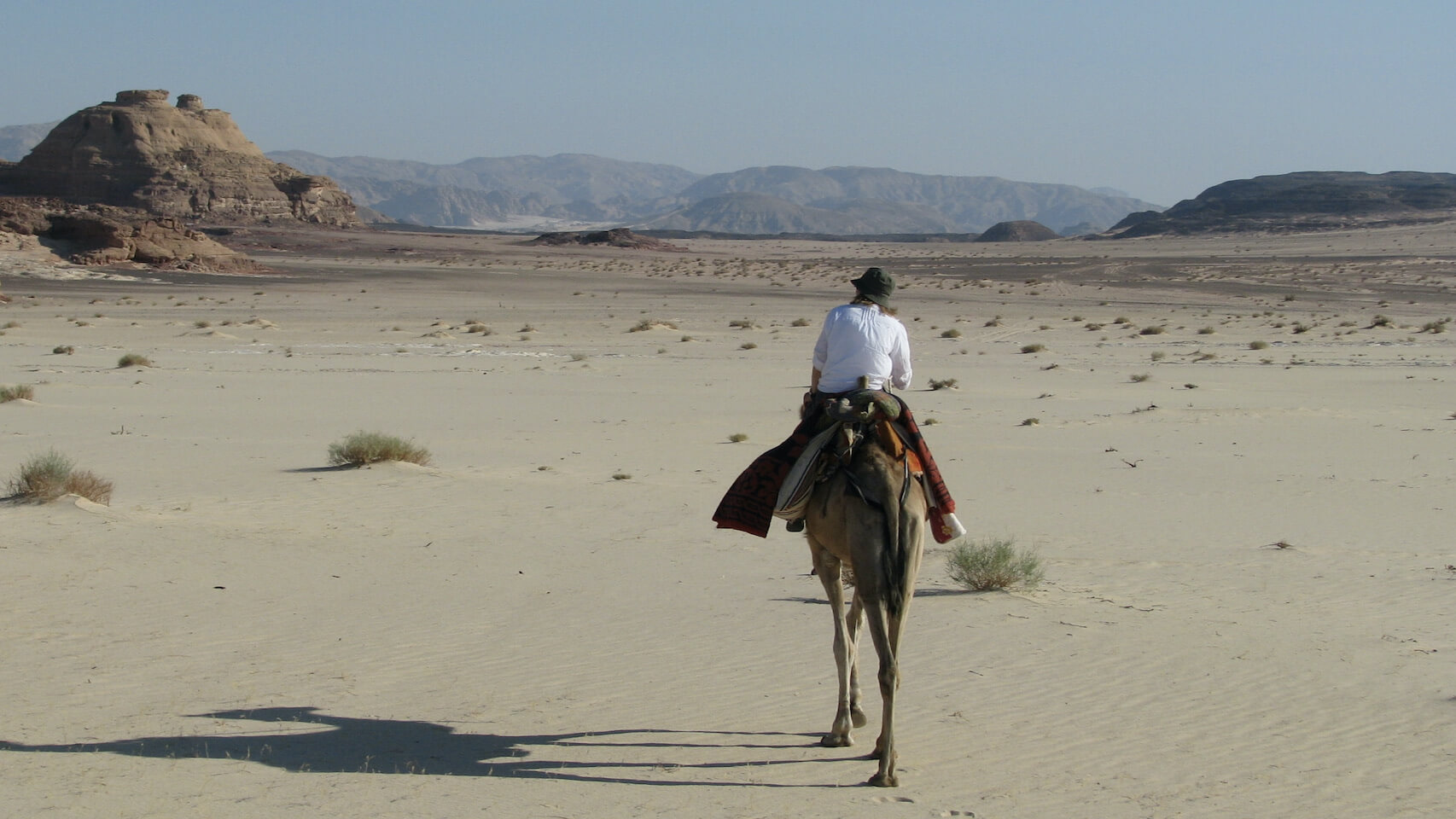
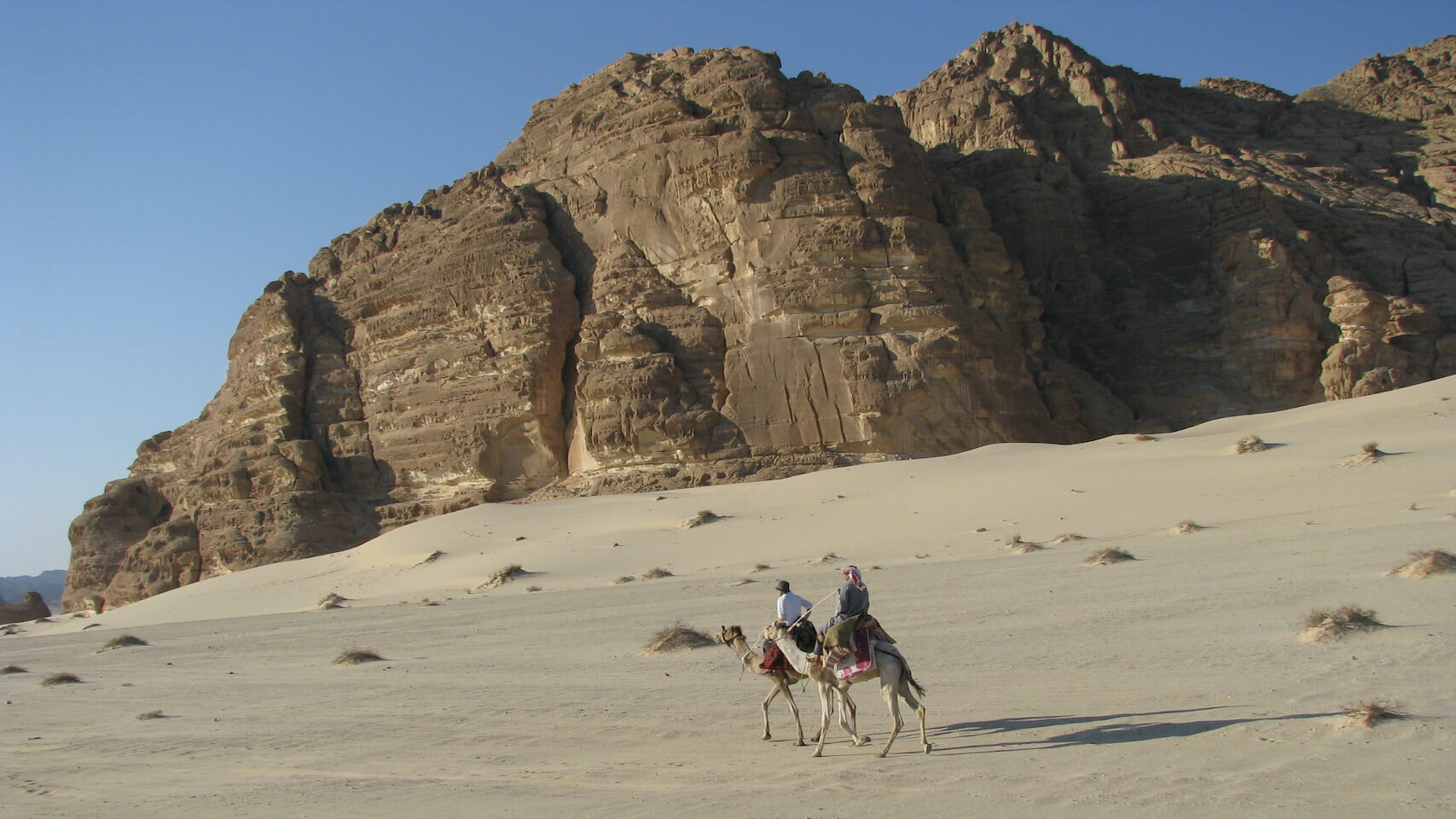
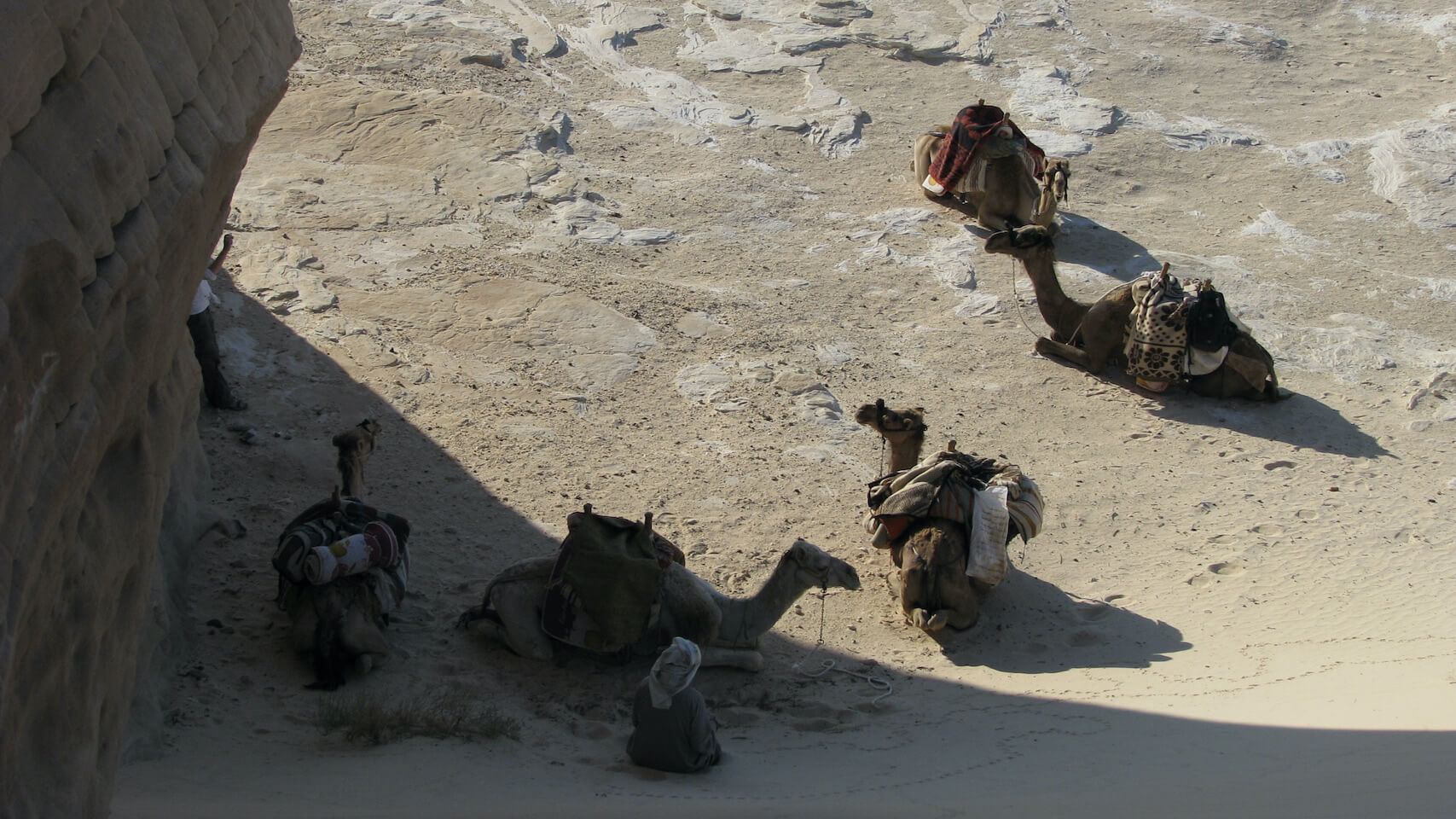
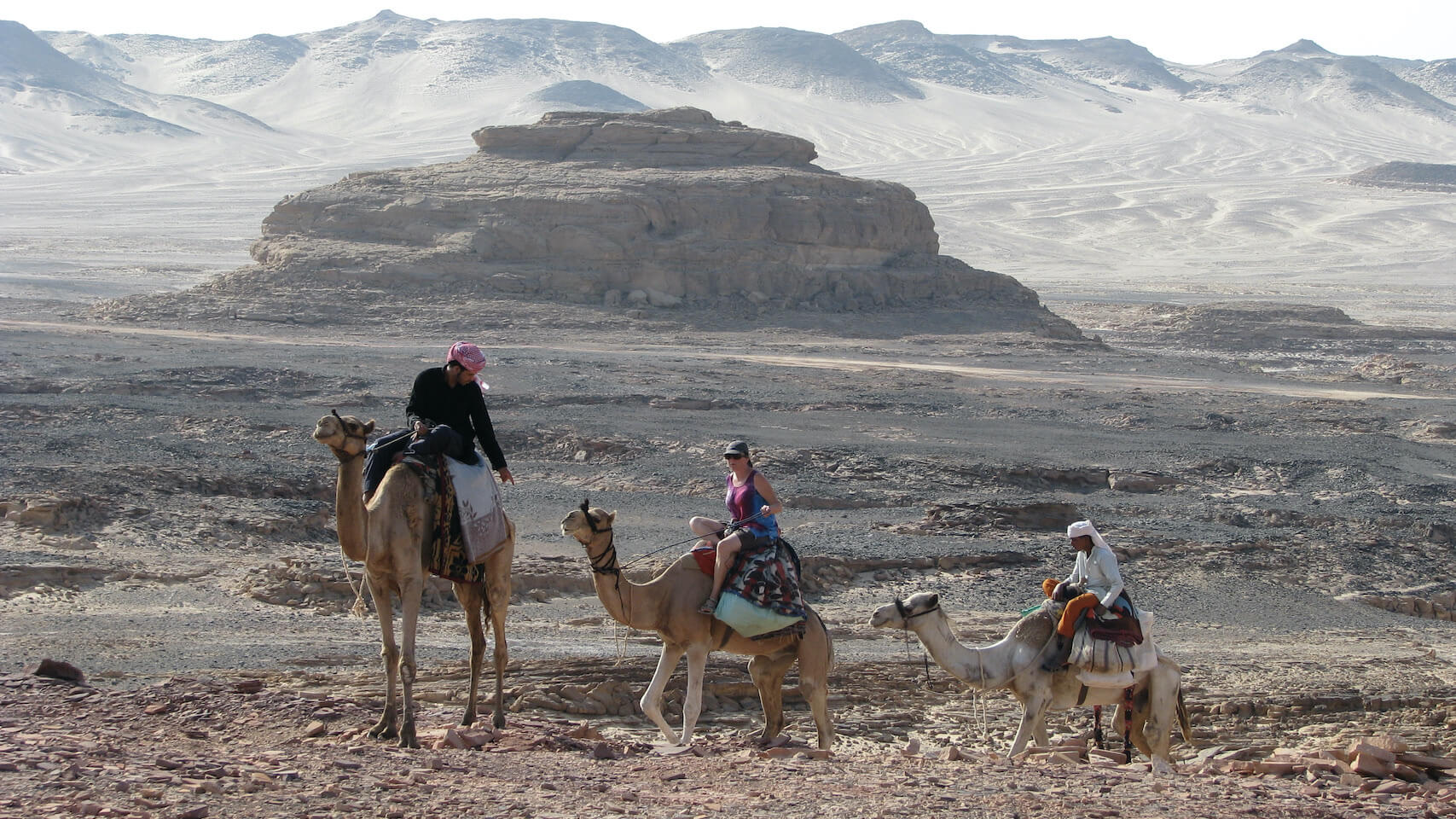
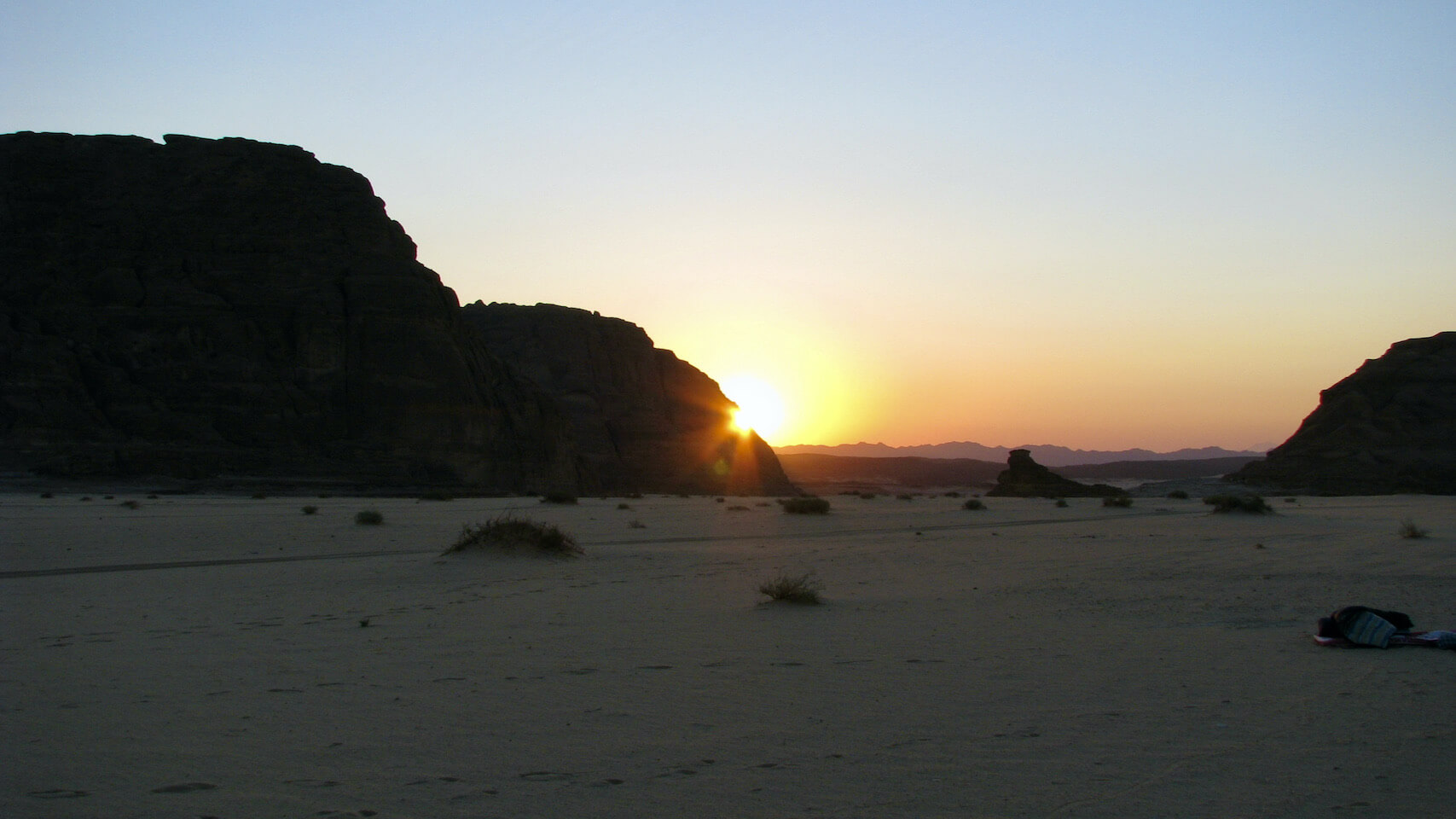

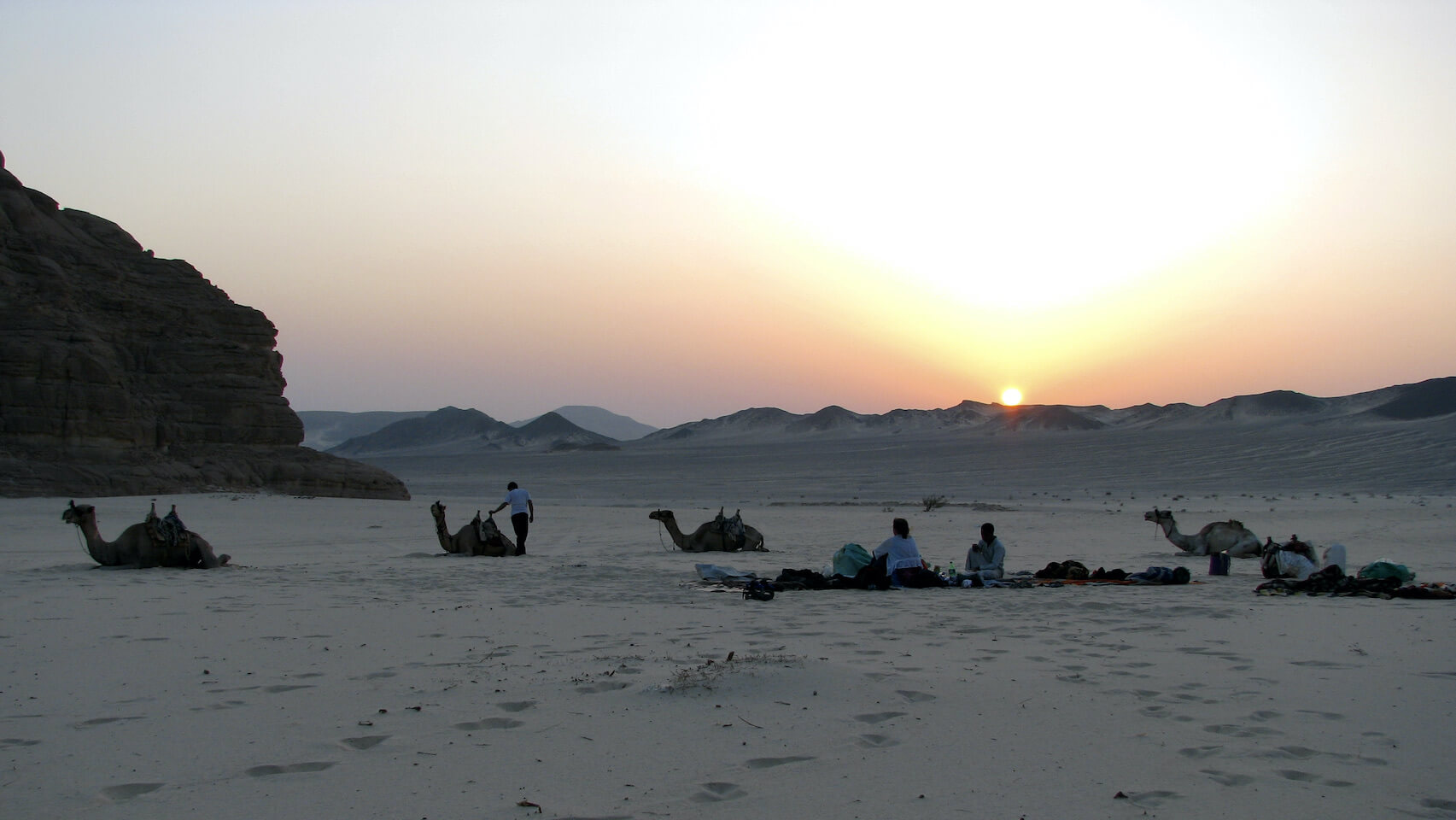

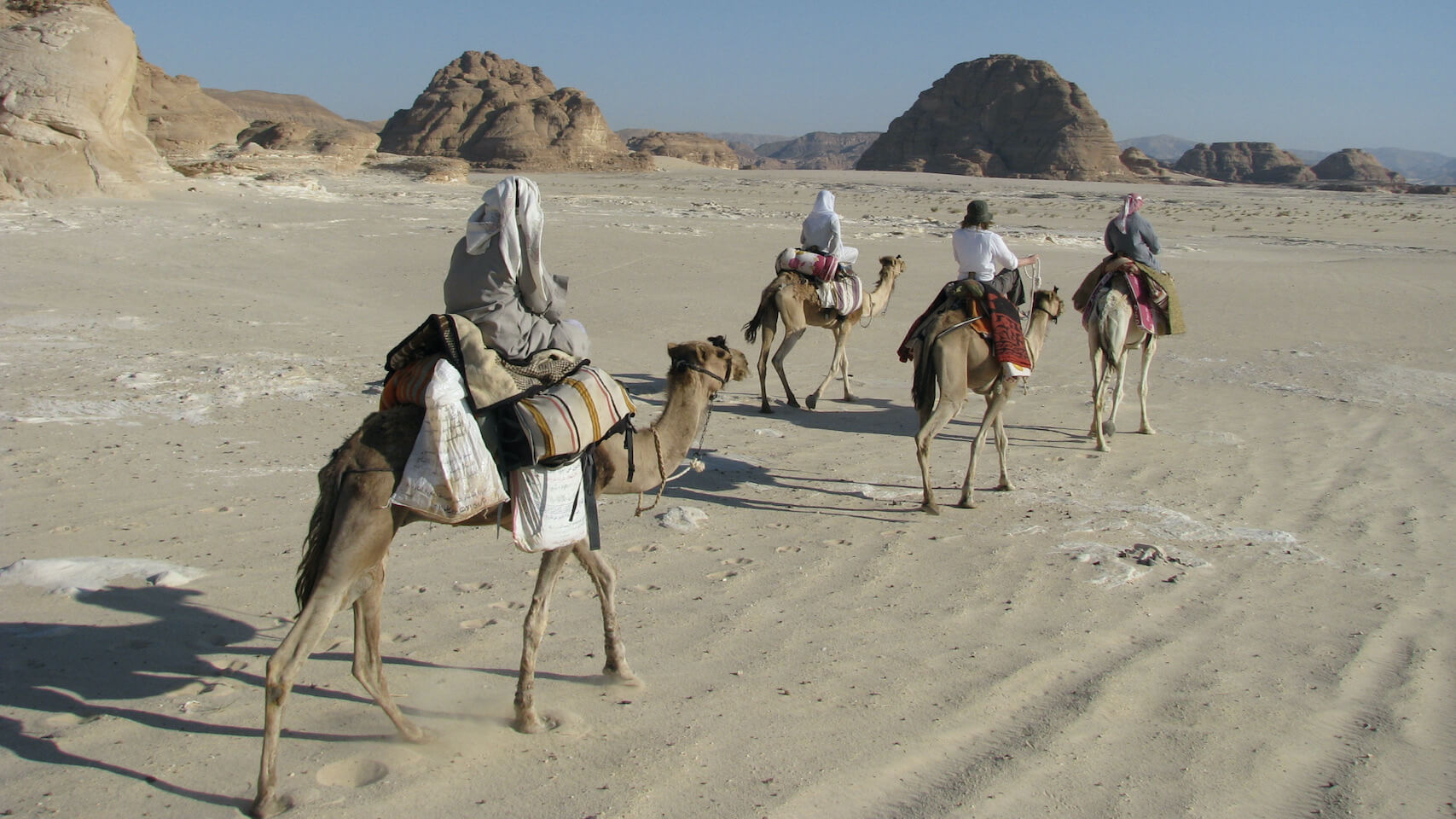
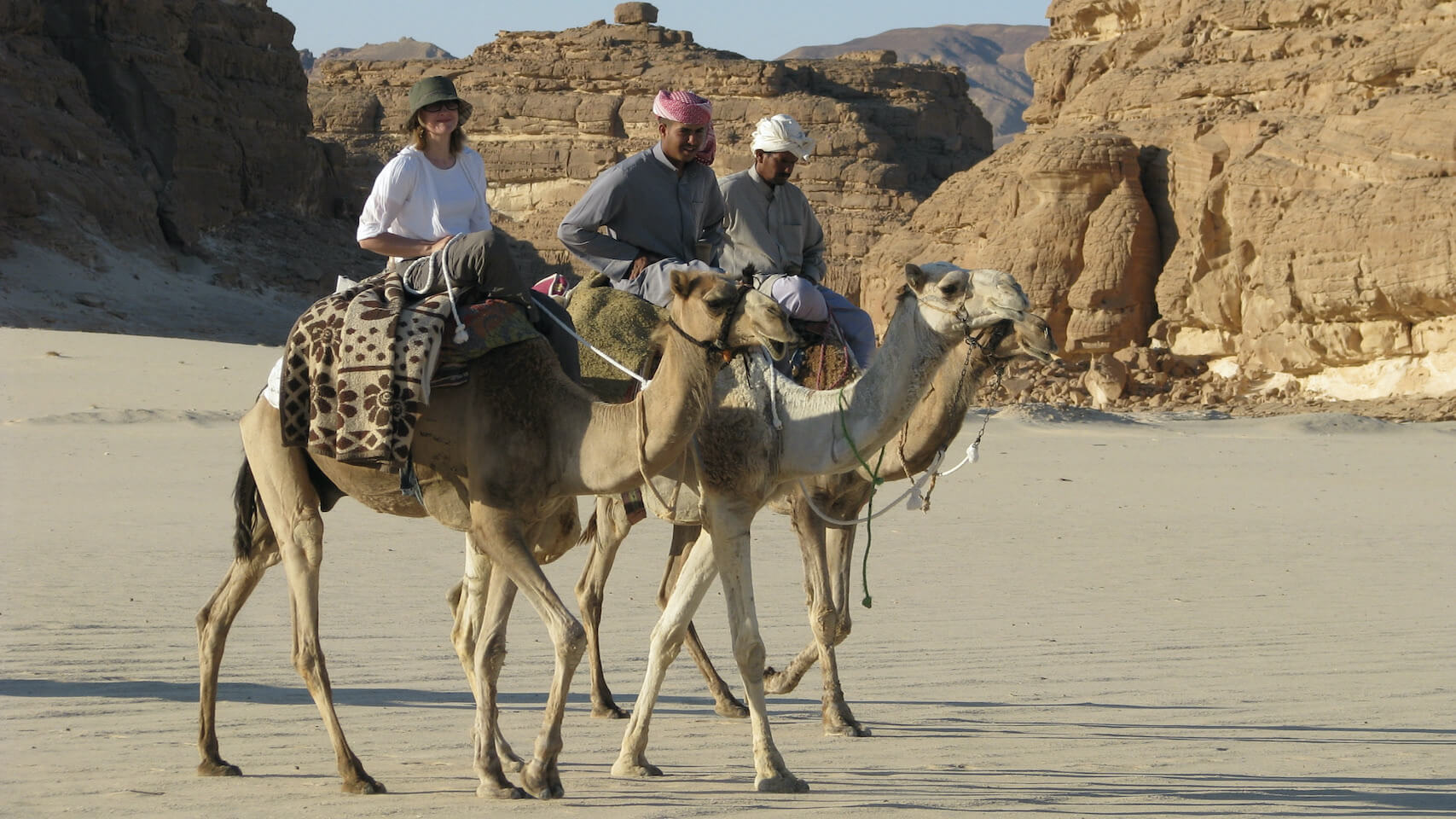

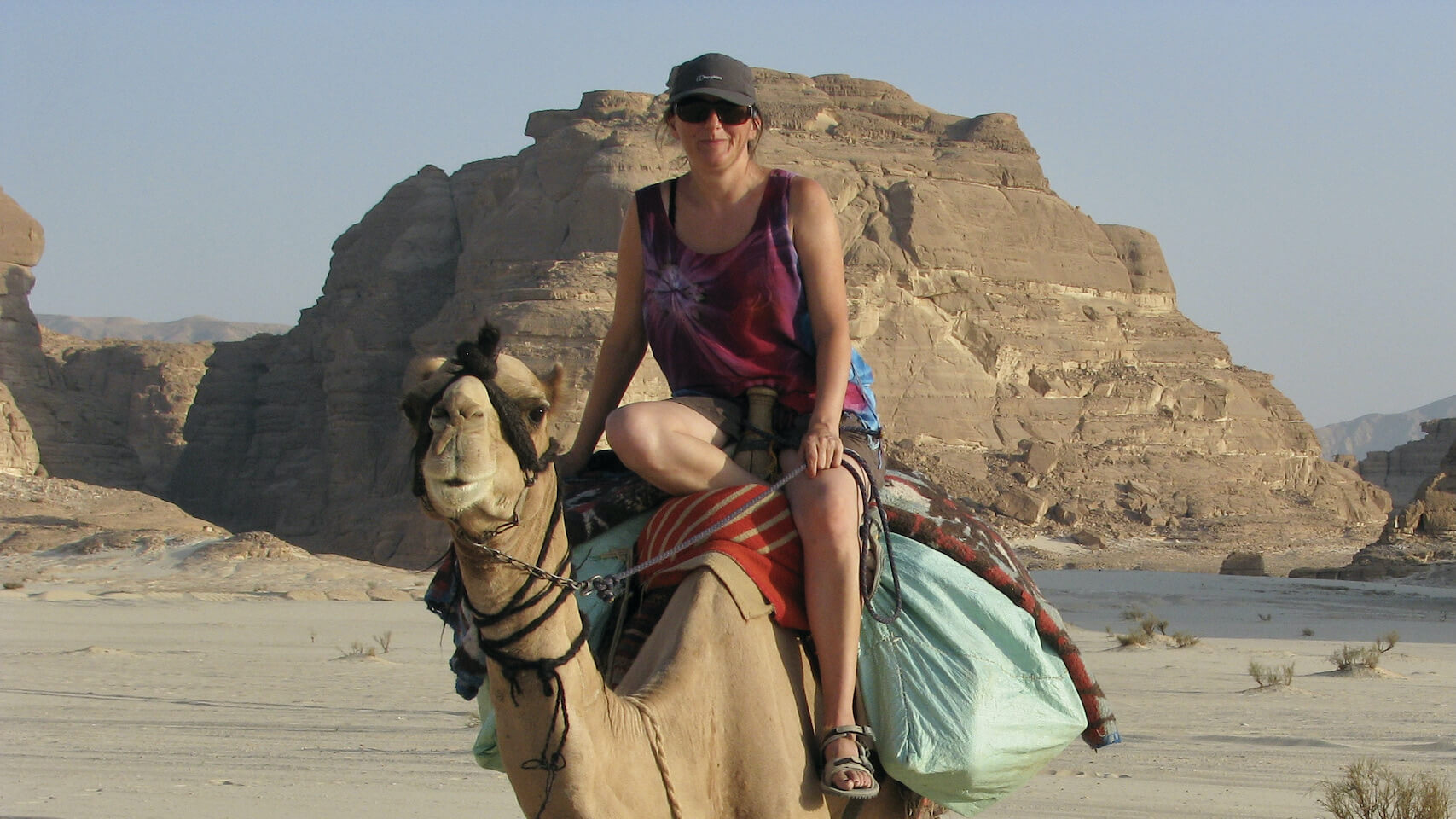
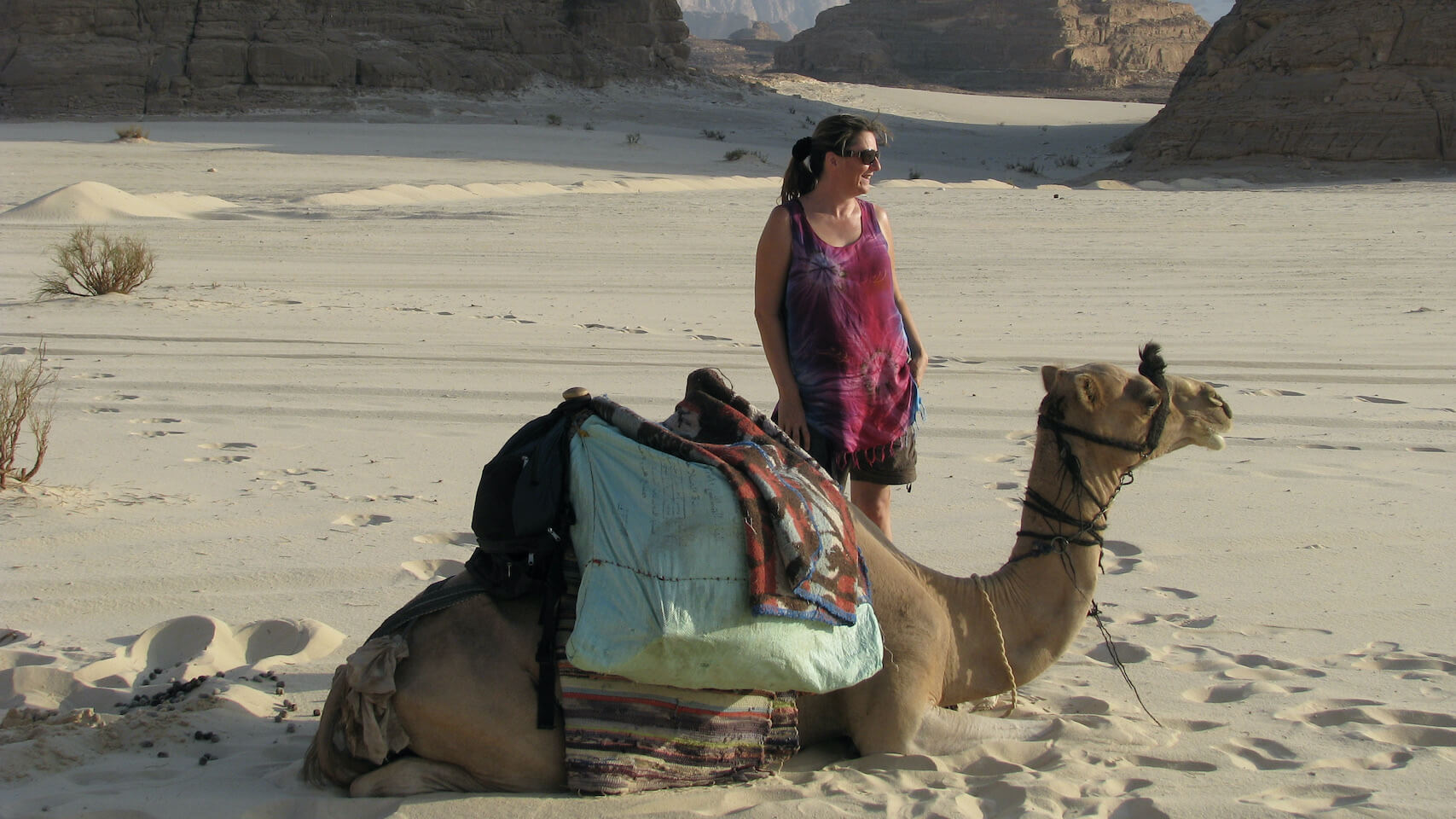
Many tour operators in Sinai offer camel trekking but the camels are always used as pack animals and Bedouin are walking. You may be invited to sit on the camel but you are not taught to ride them, Anyway, a heavily loaded camel is not much fun to ride.
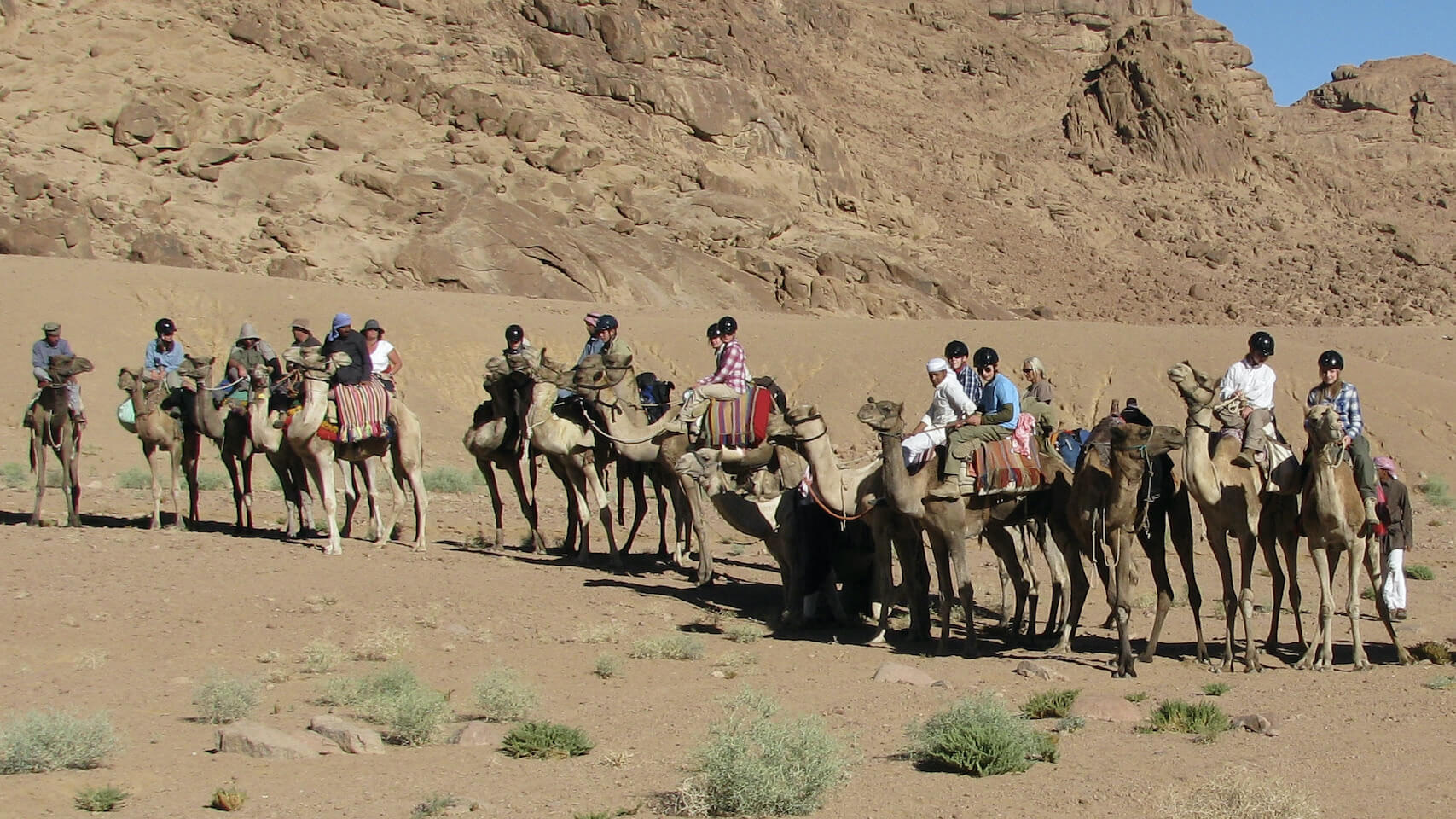
We are doing something else. We encourage our guests to spend a day or two in our Camel Riding School to learn how to manage a camel. We then accompany them on light camel safaris where everyone is mounted and moving quickly through the desert.
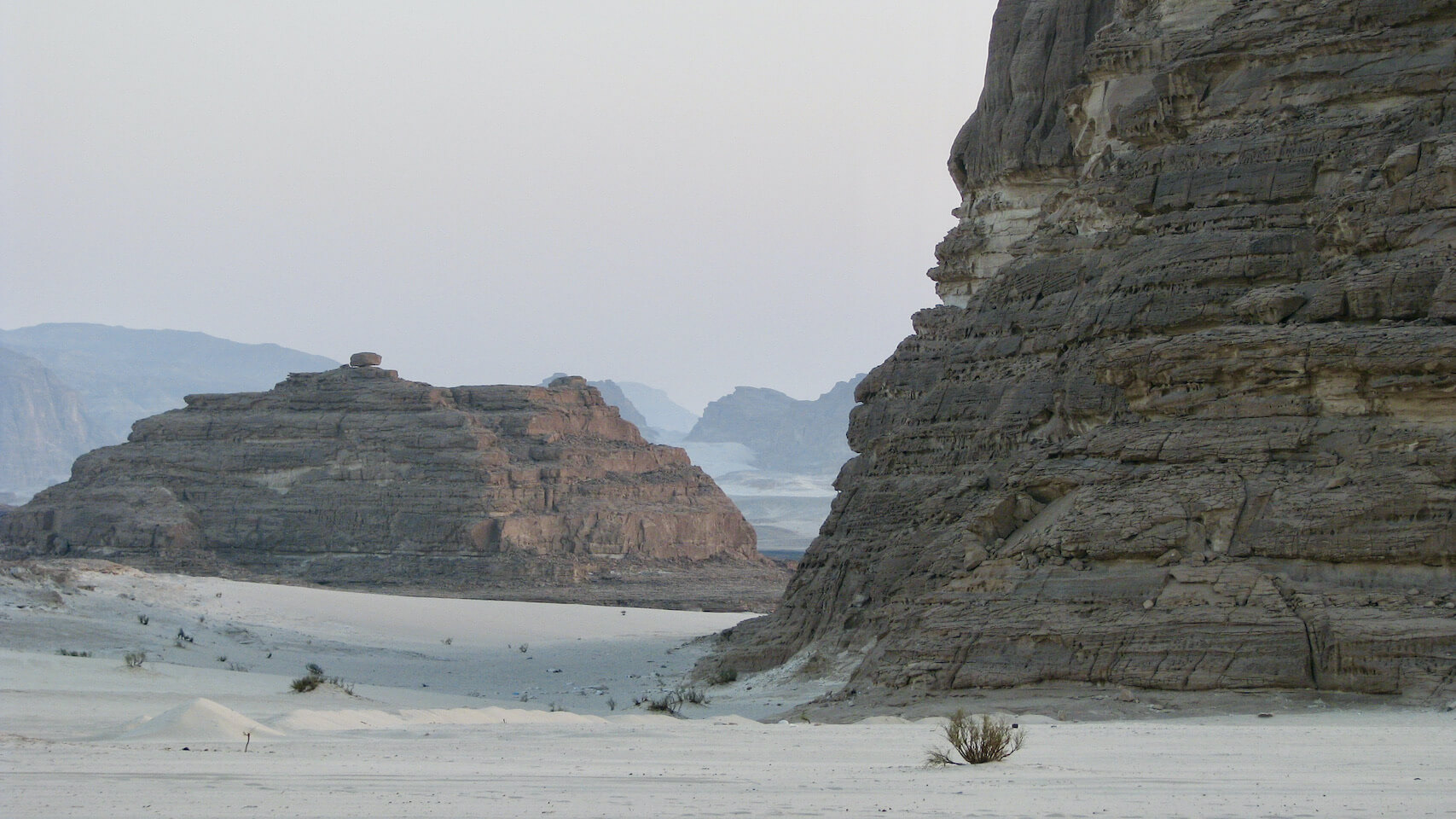
This provides an opportunity to discover the magnificent scale and beauty of the Sinai deserts.
Monastery of St Catherine
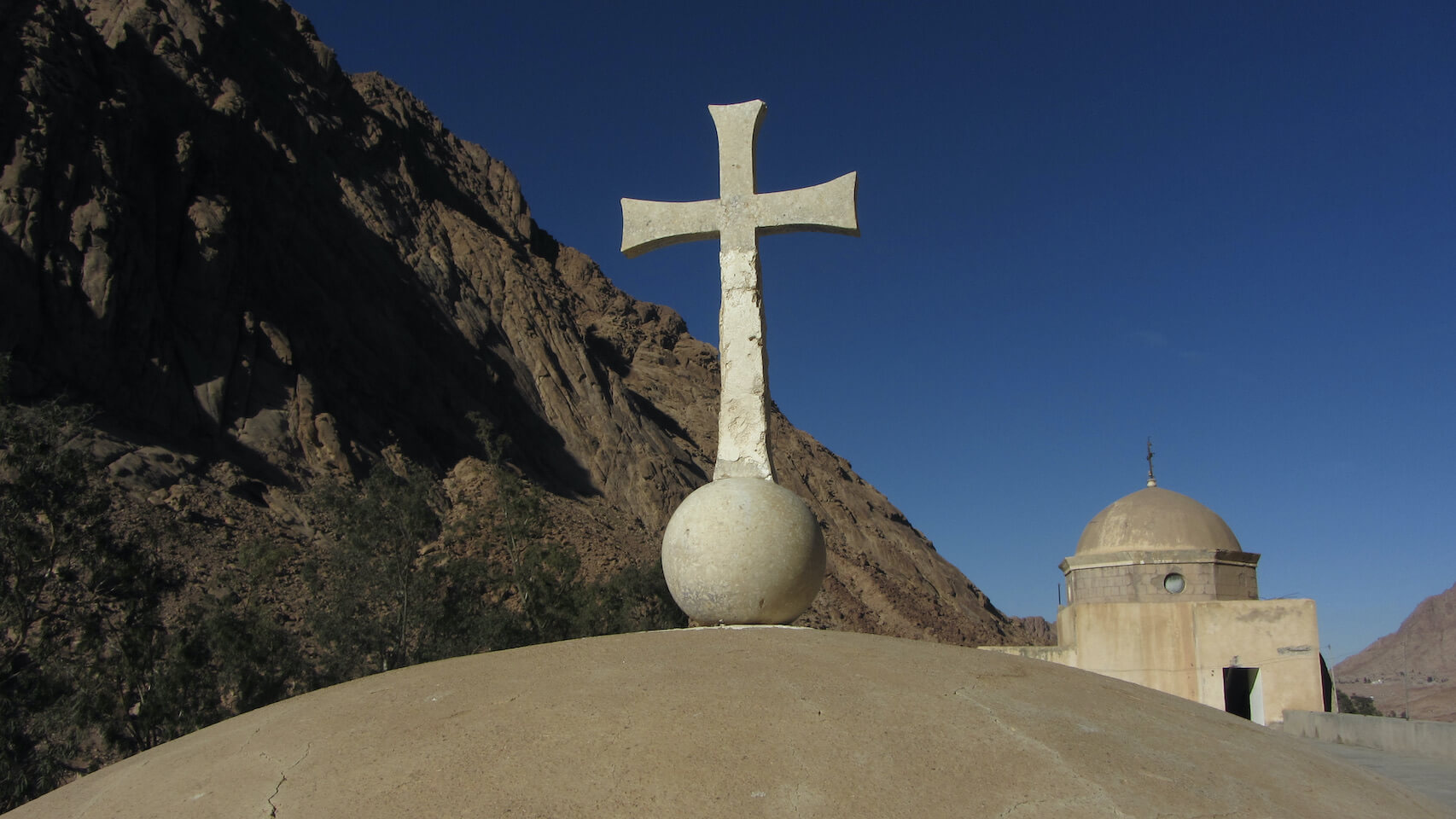
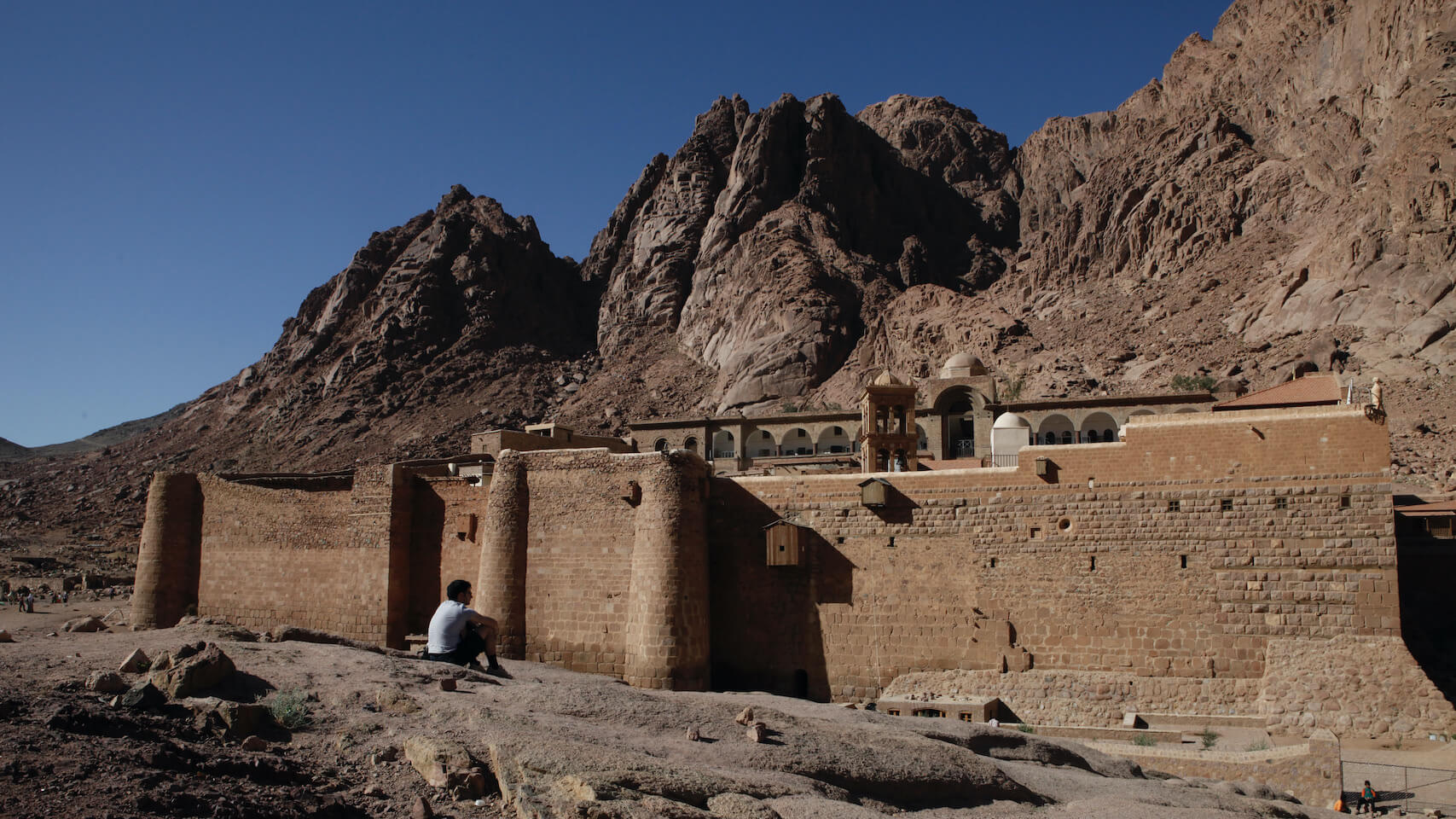
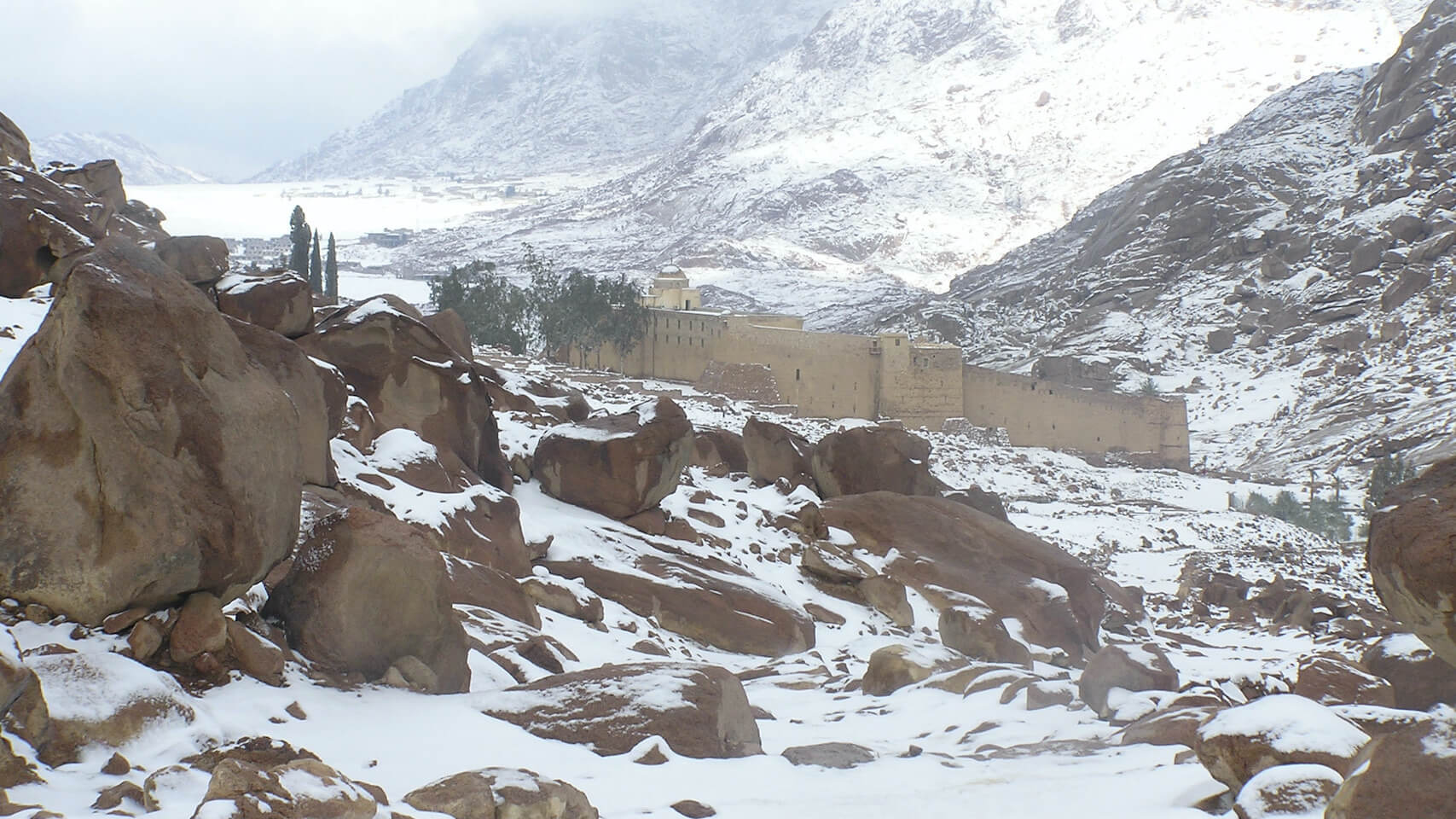
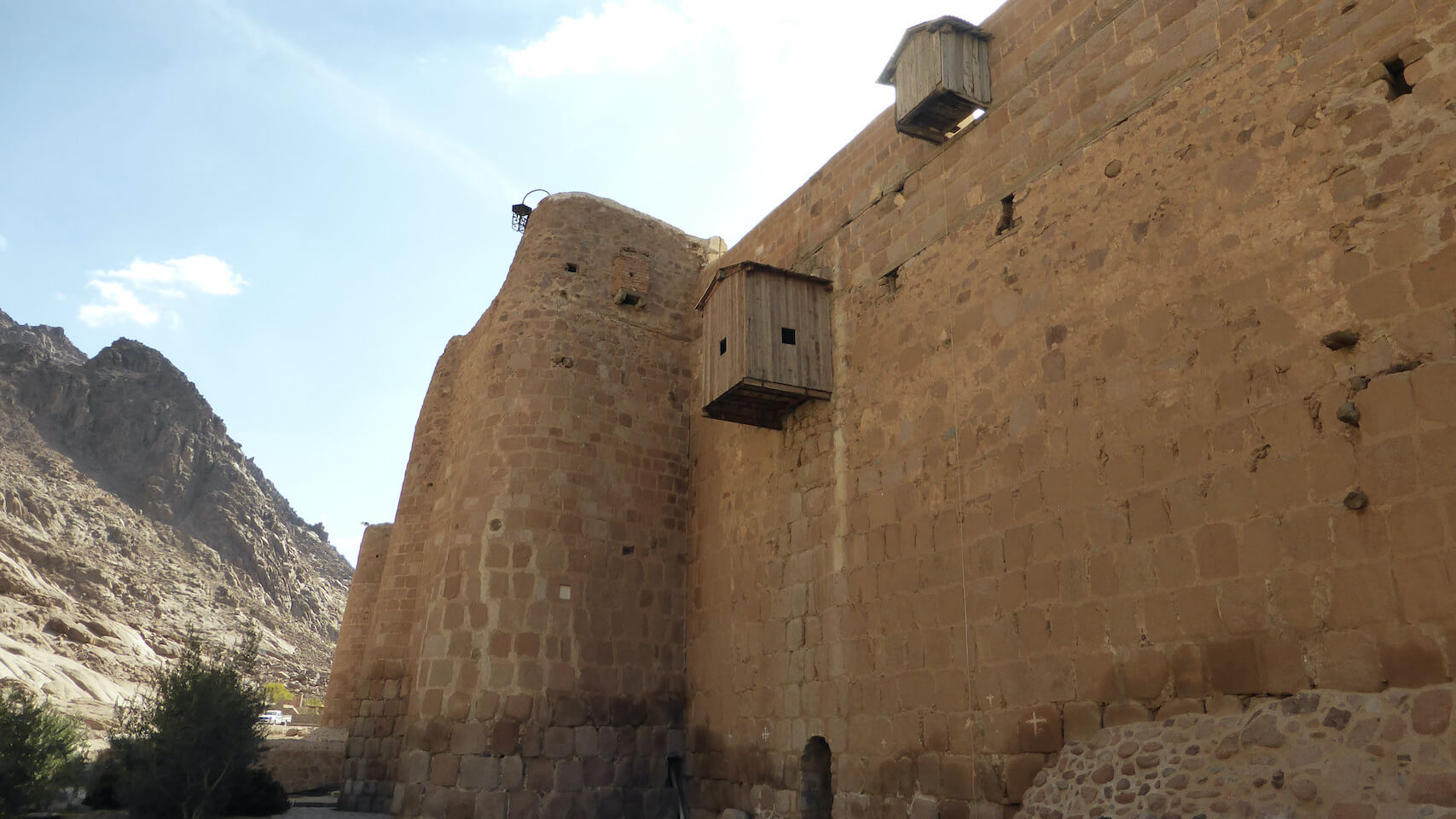
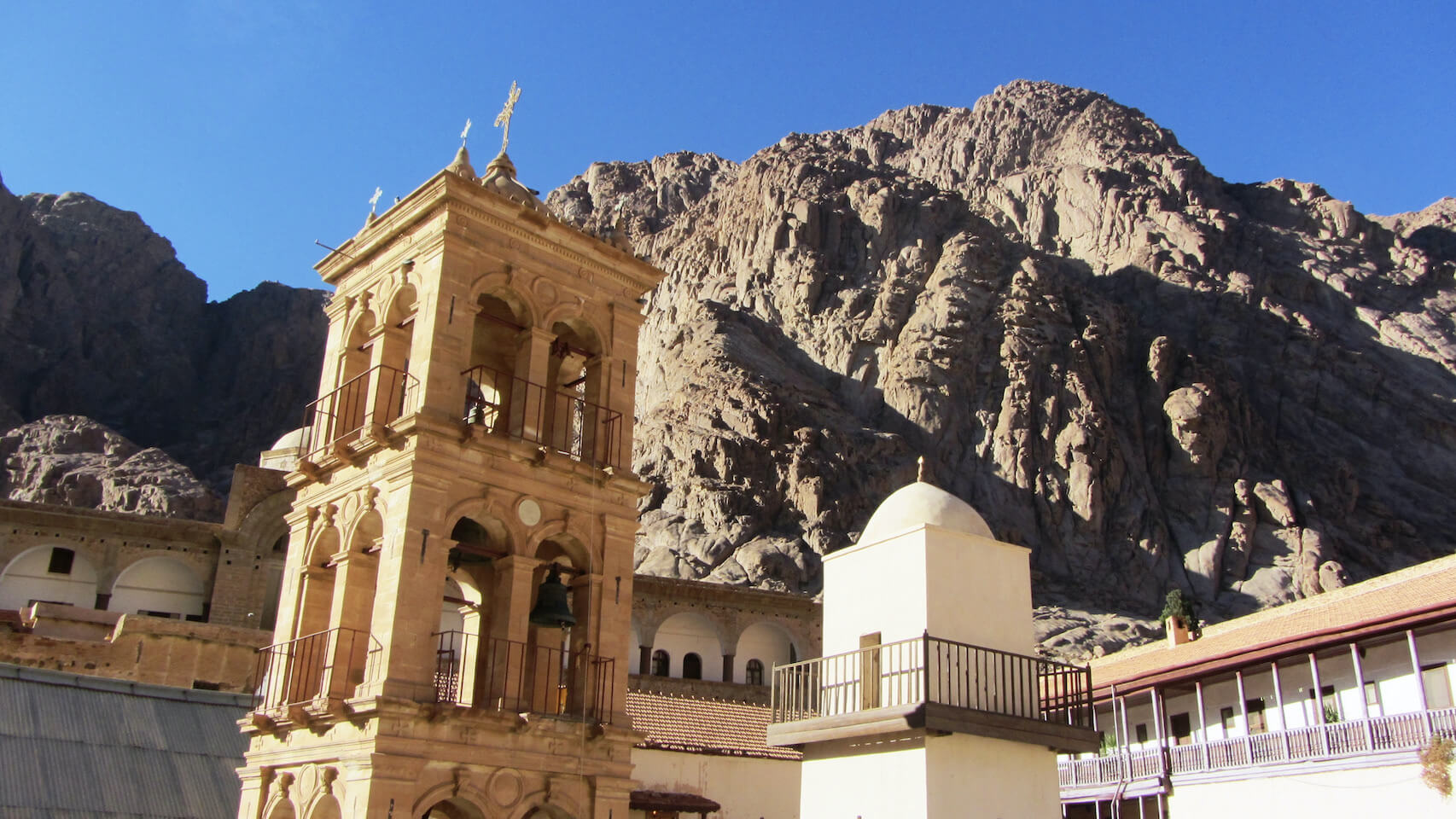
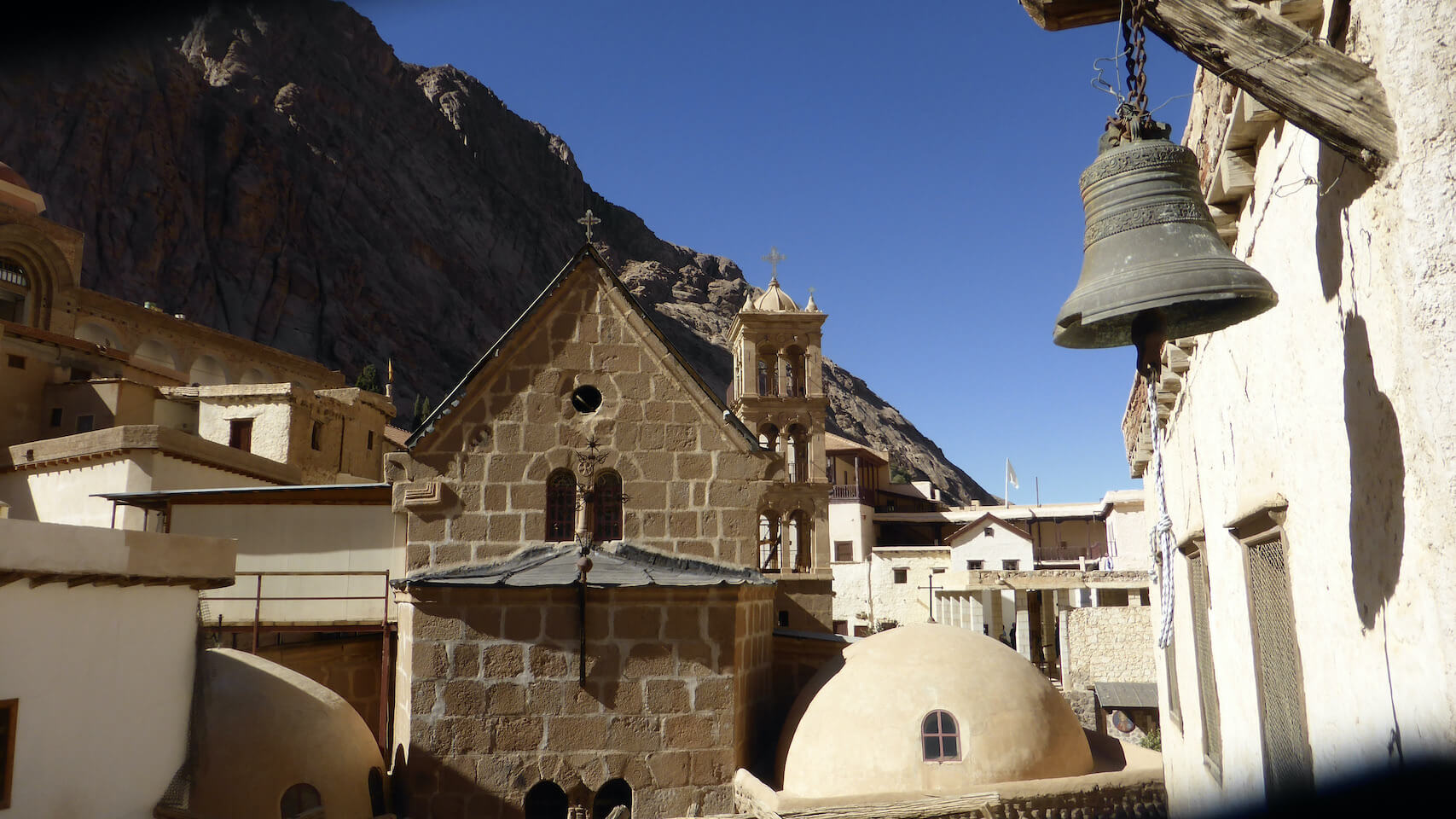
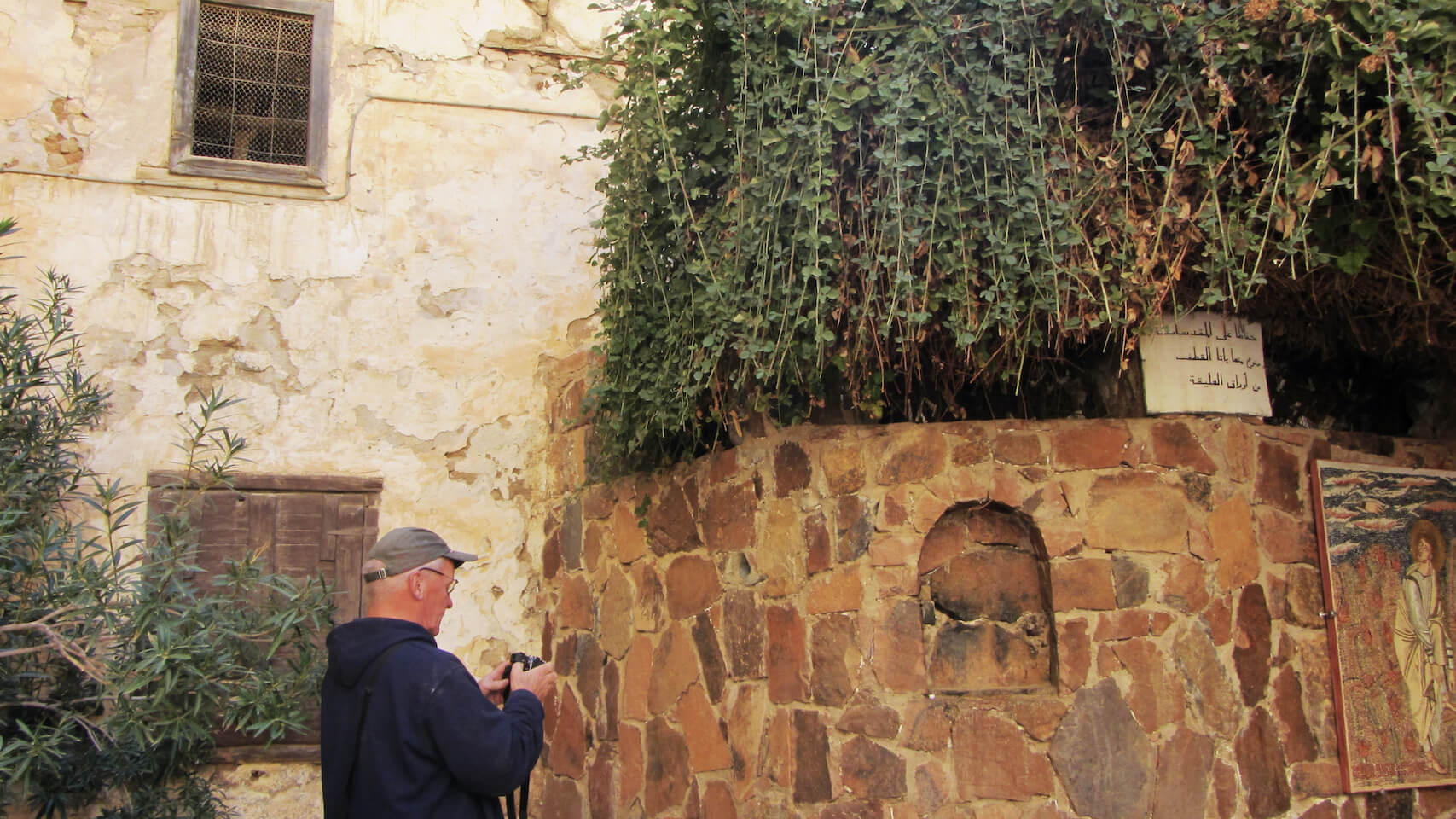
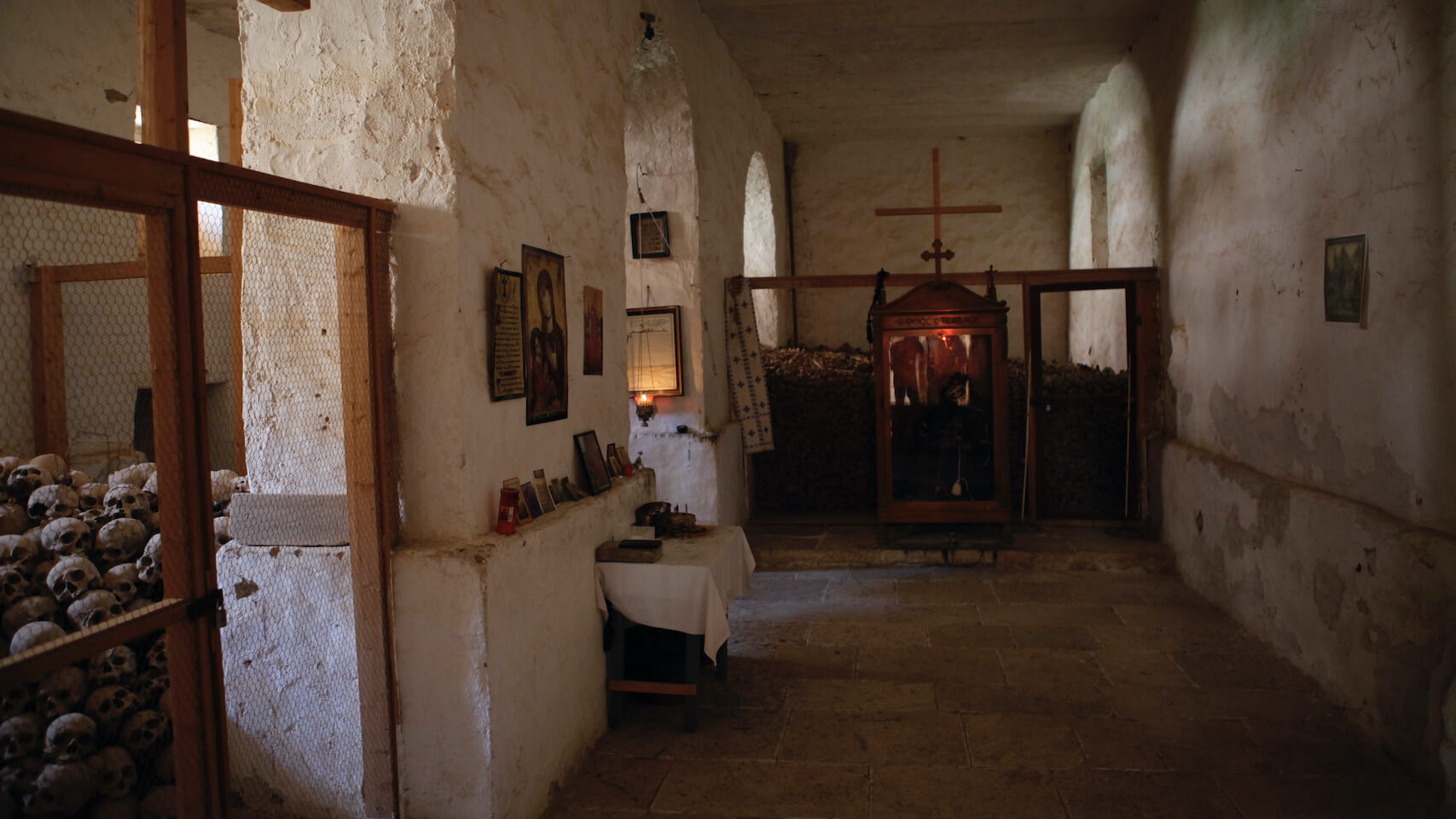
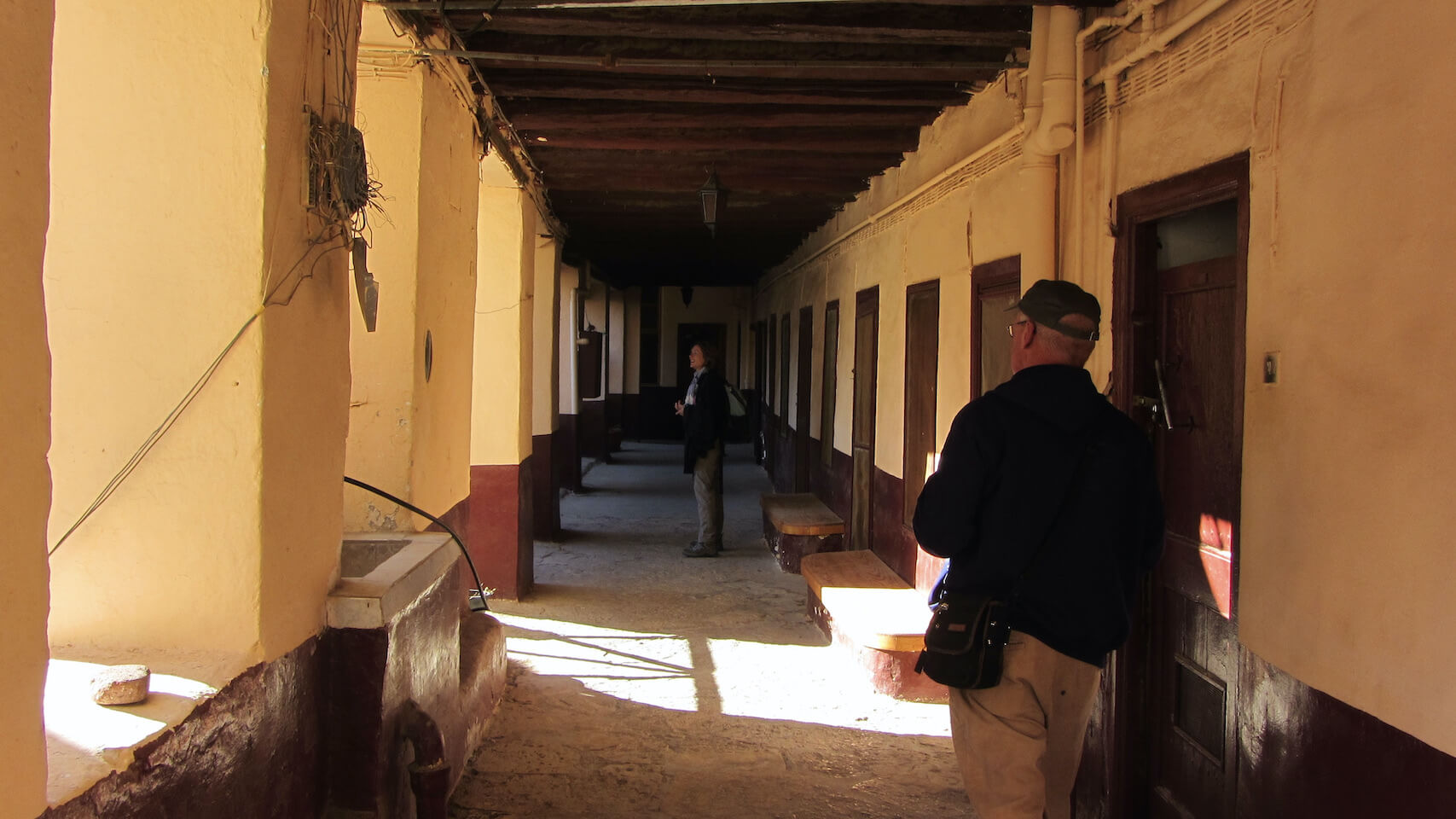

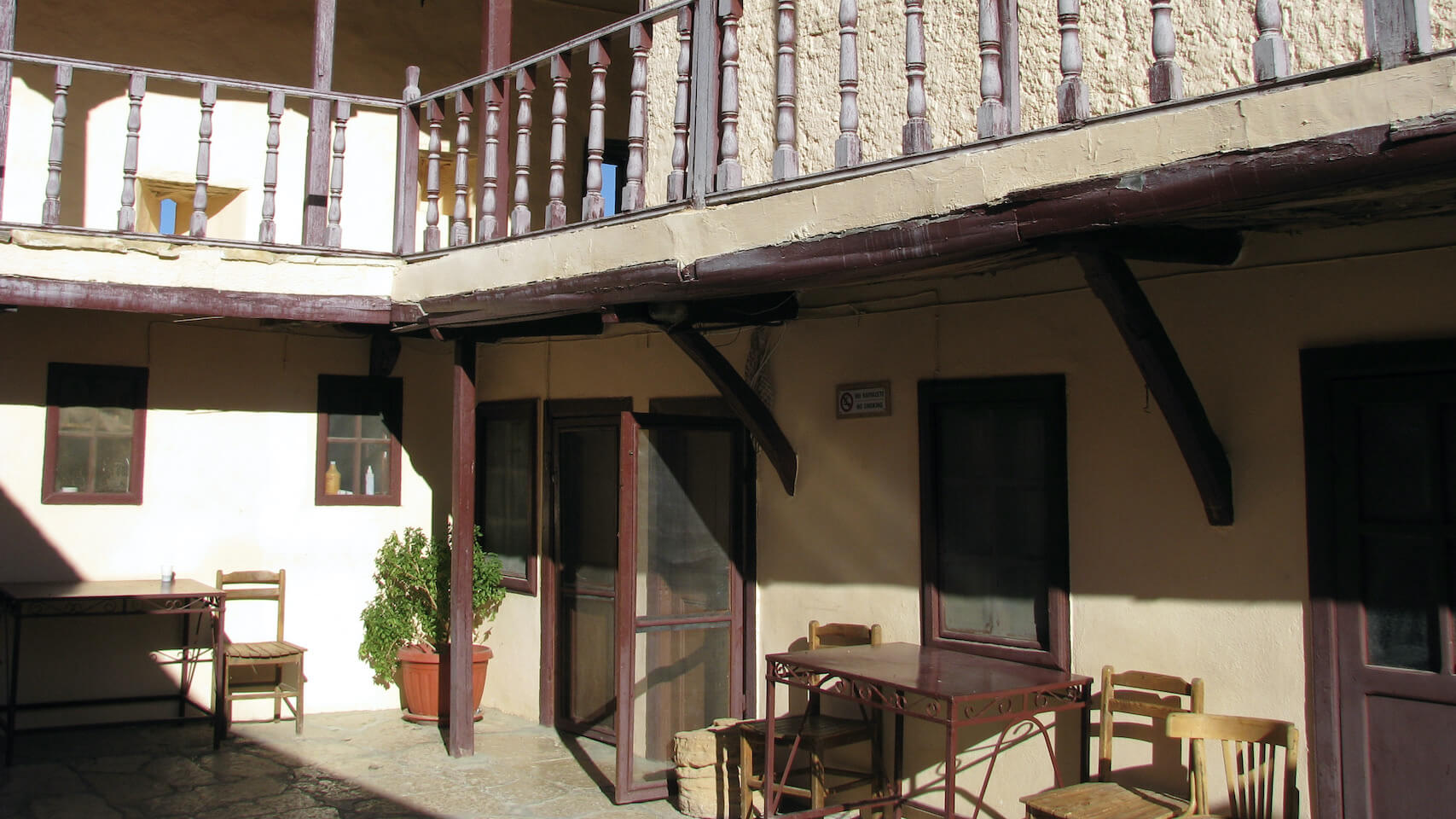

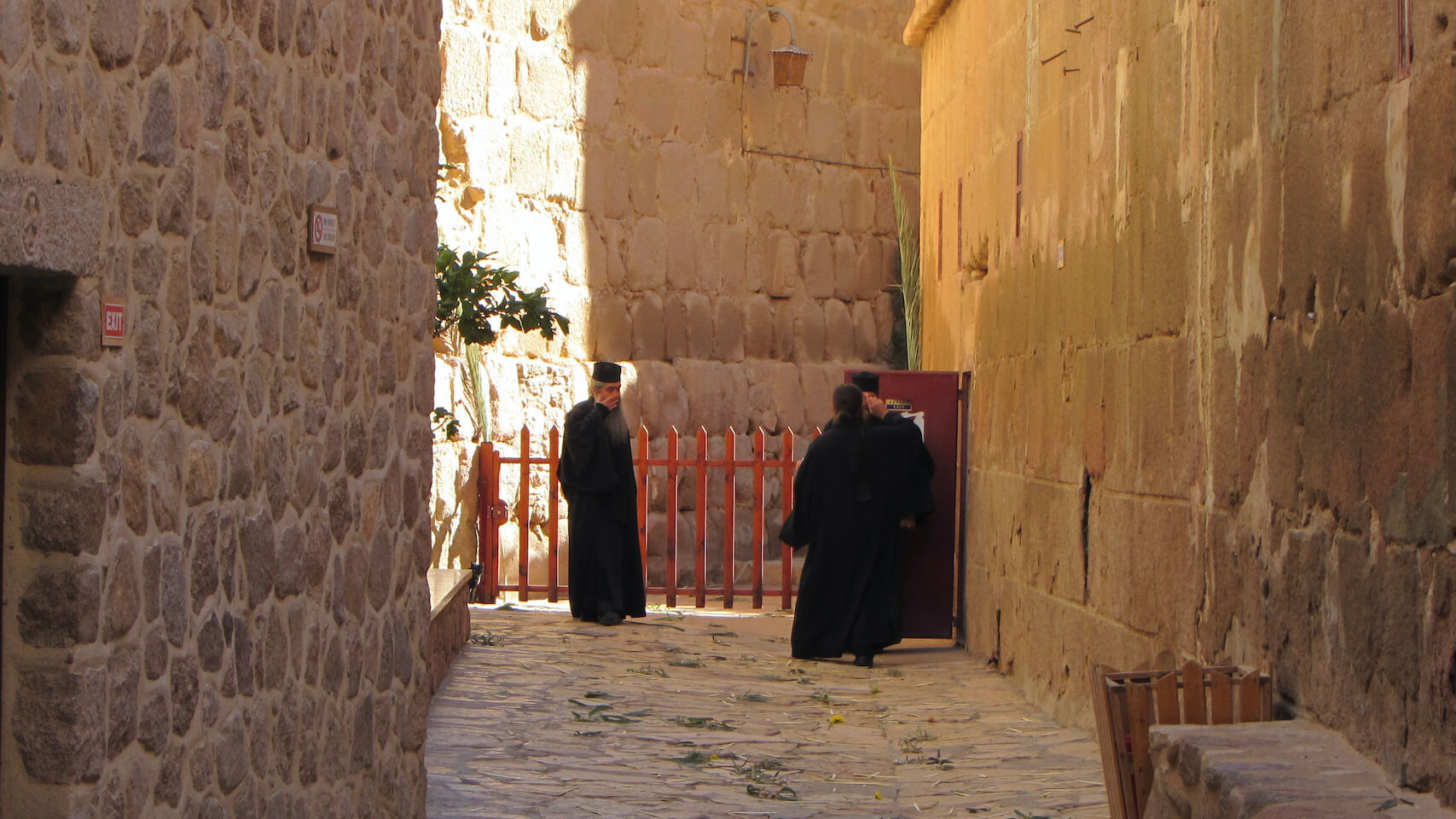
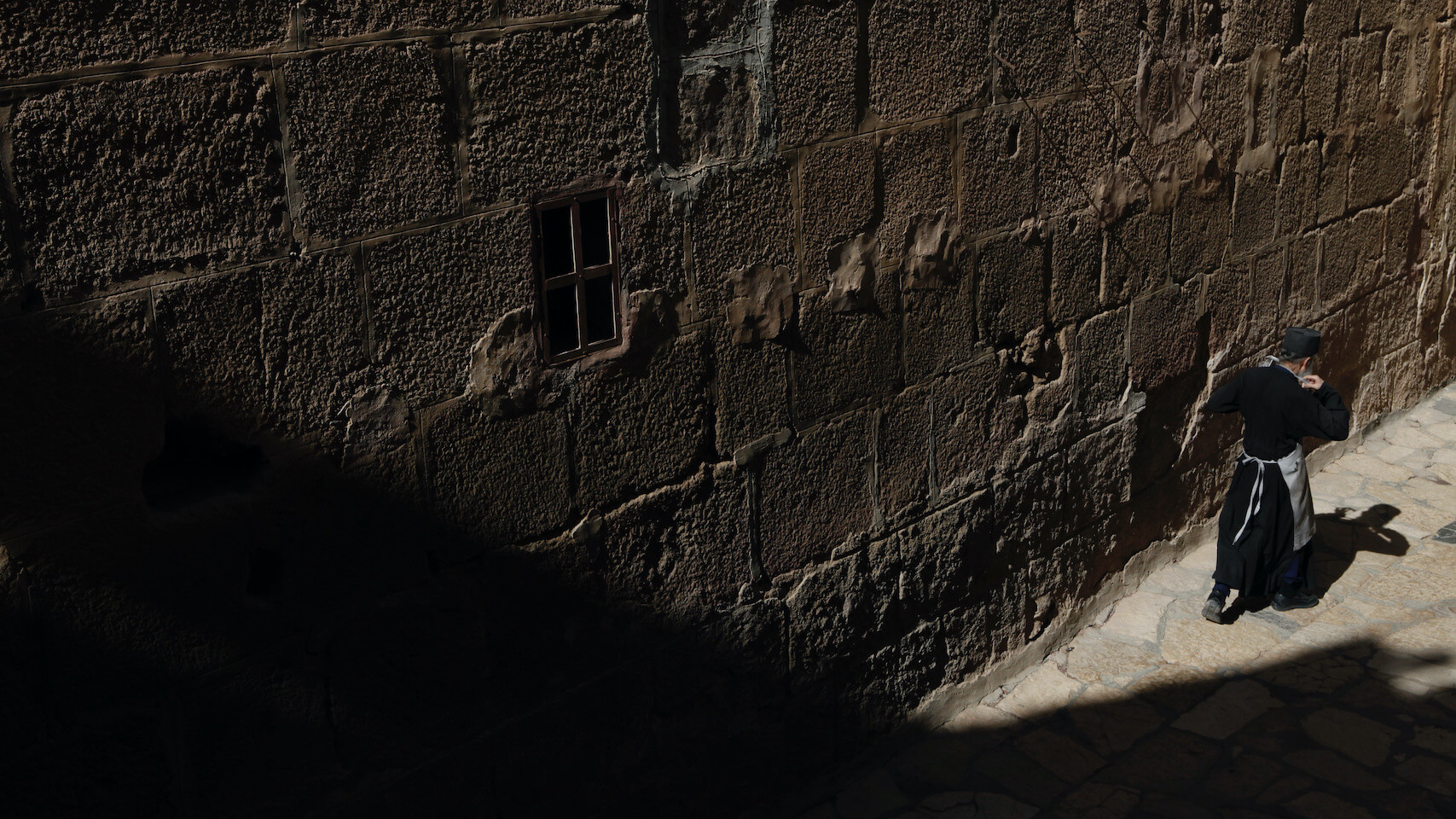
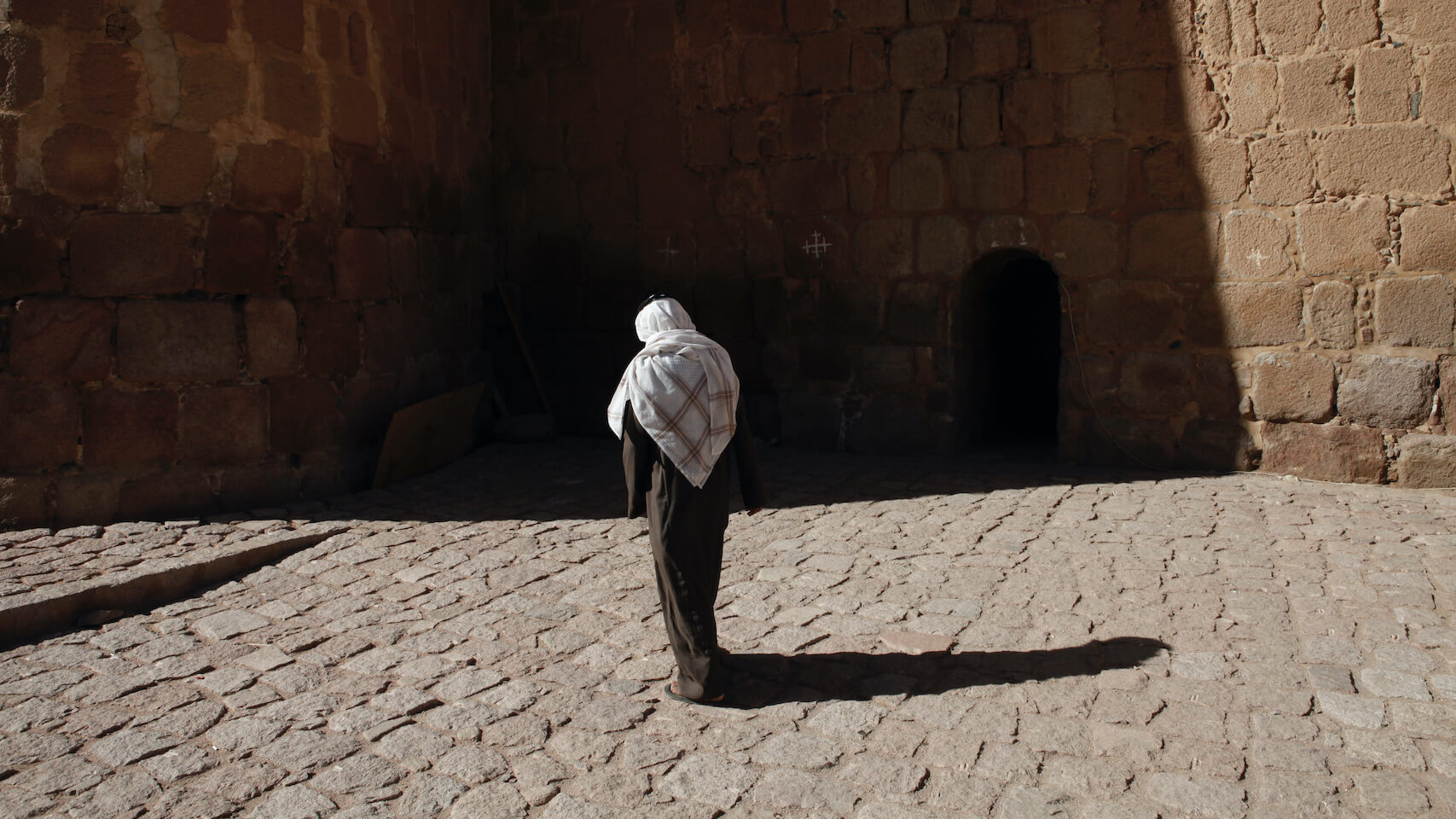

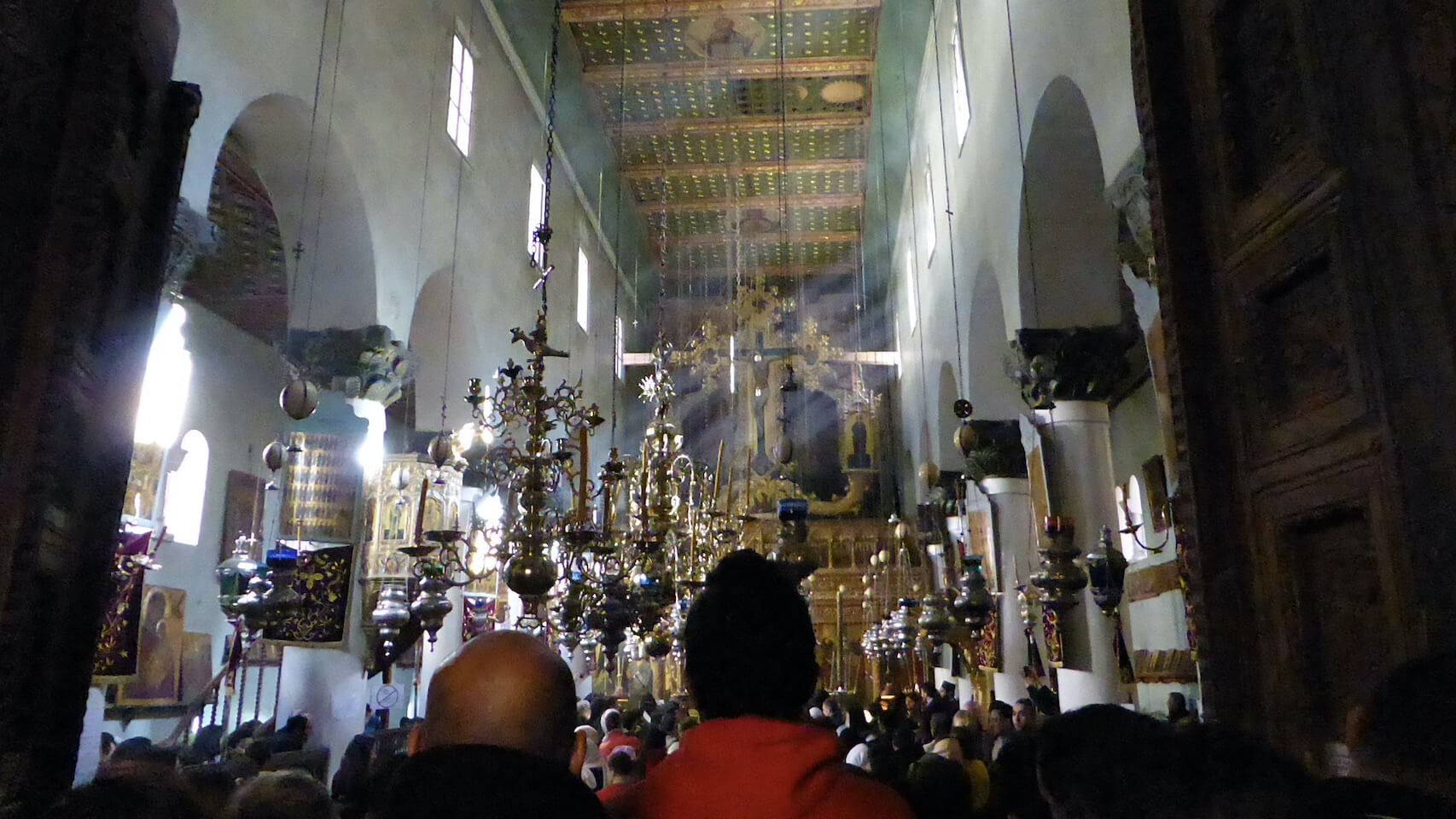
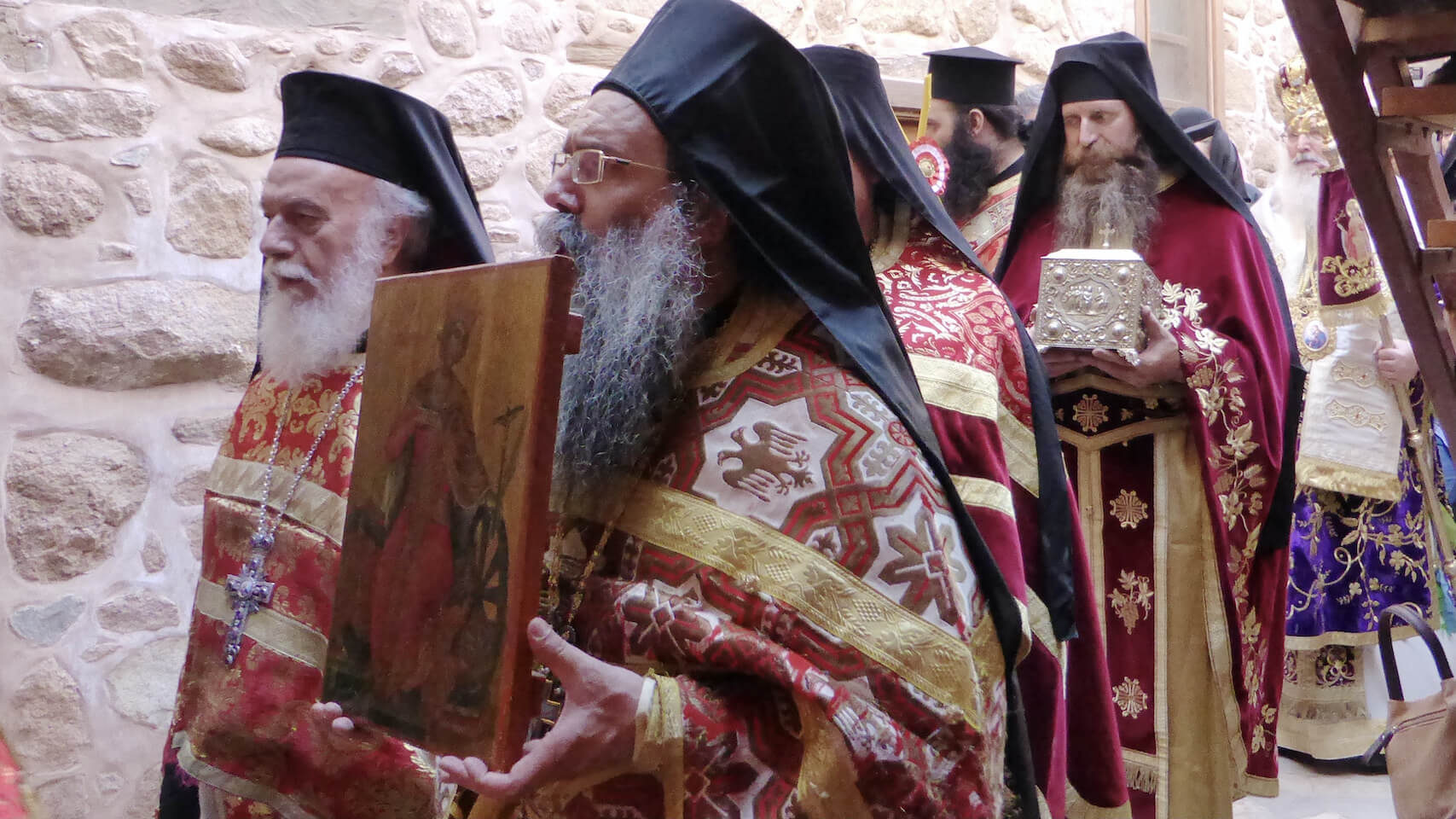
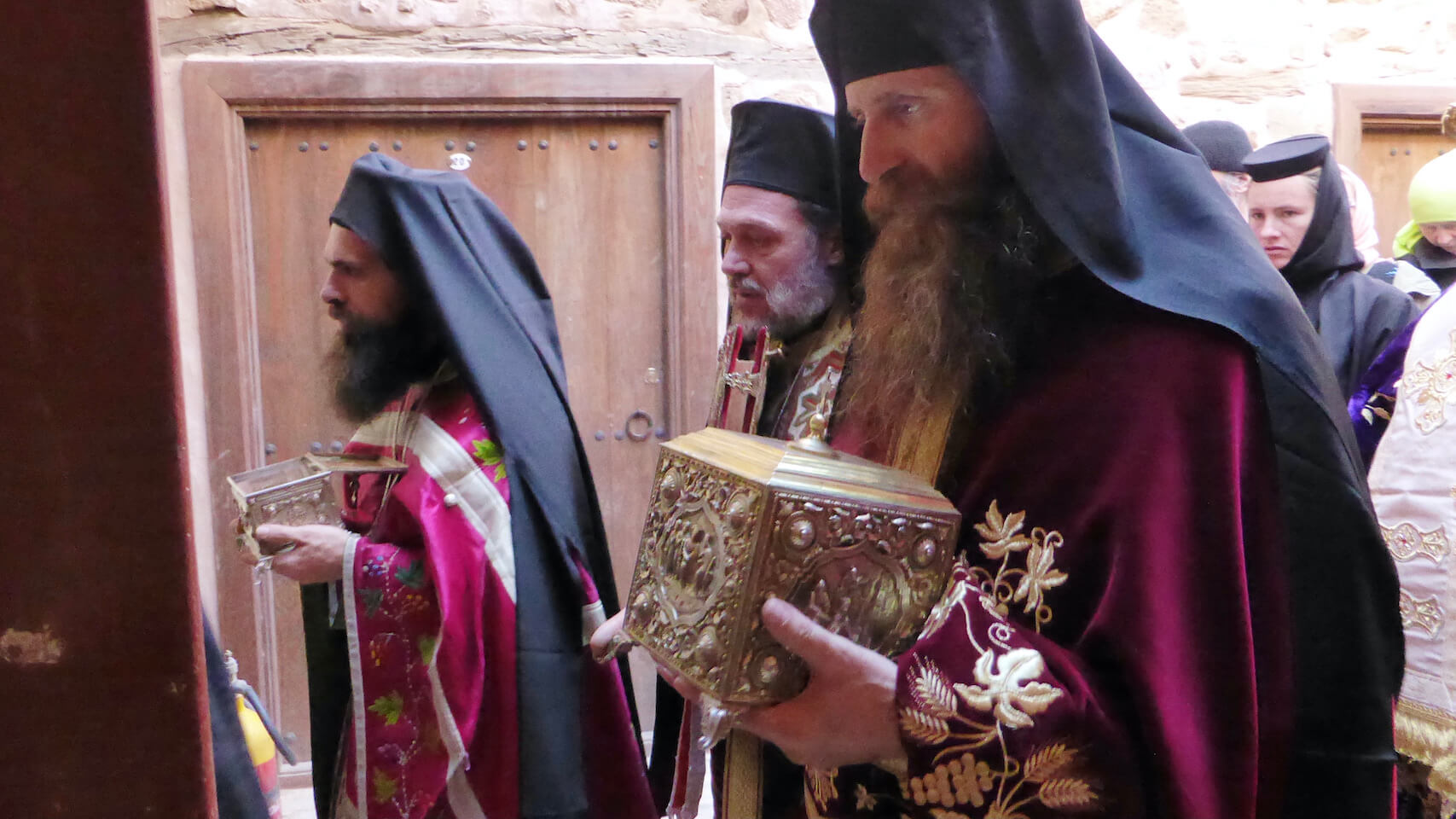
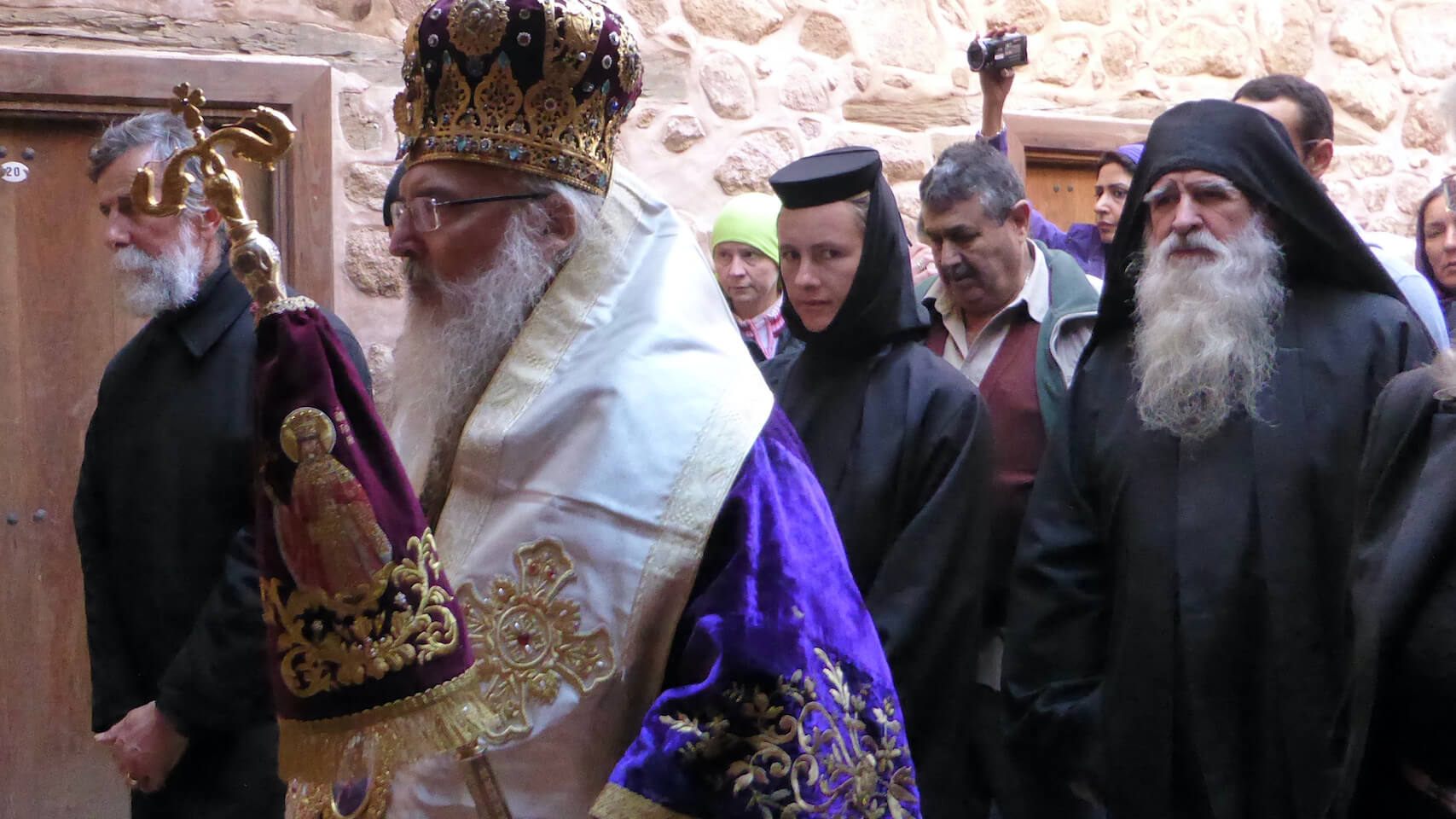

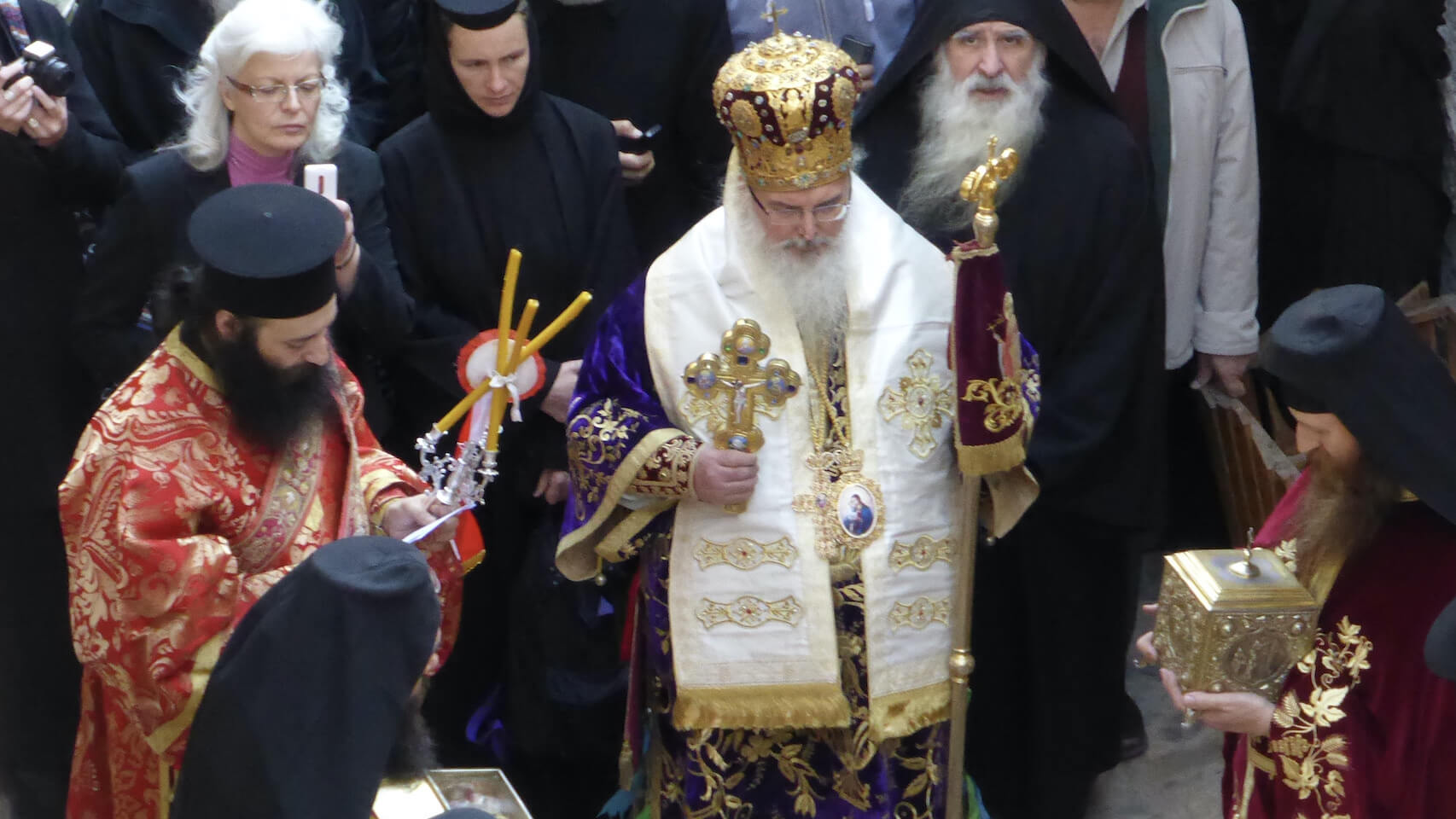

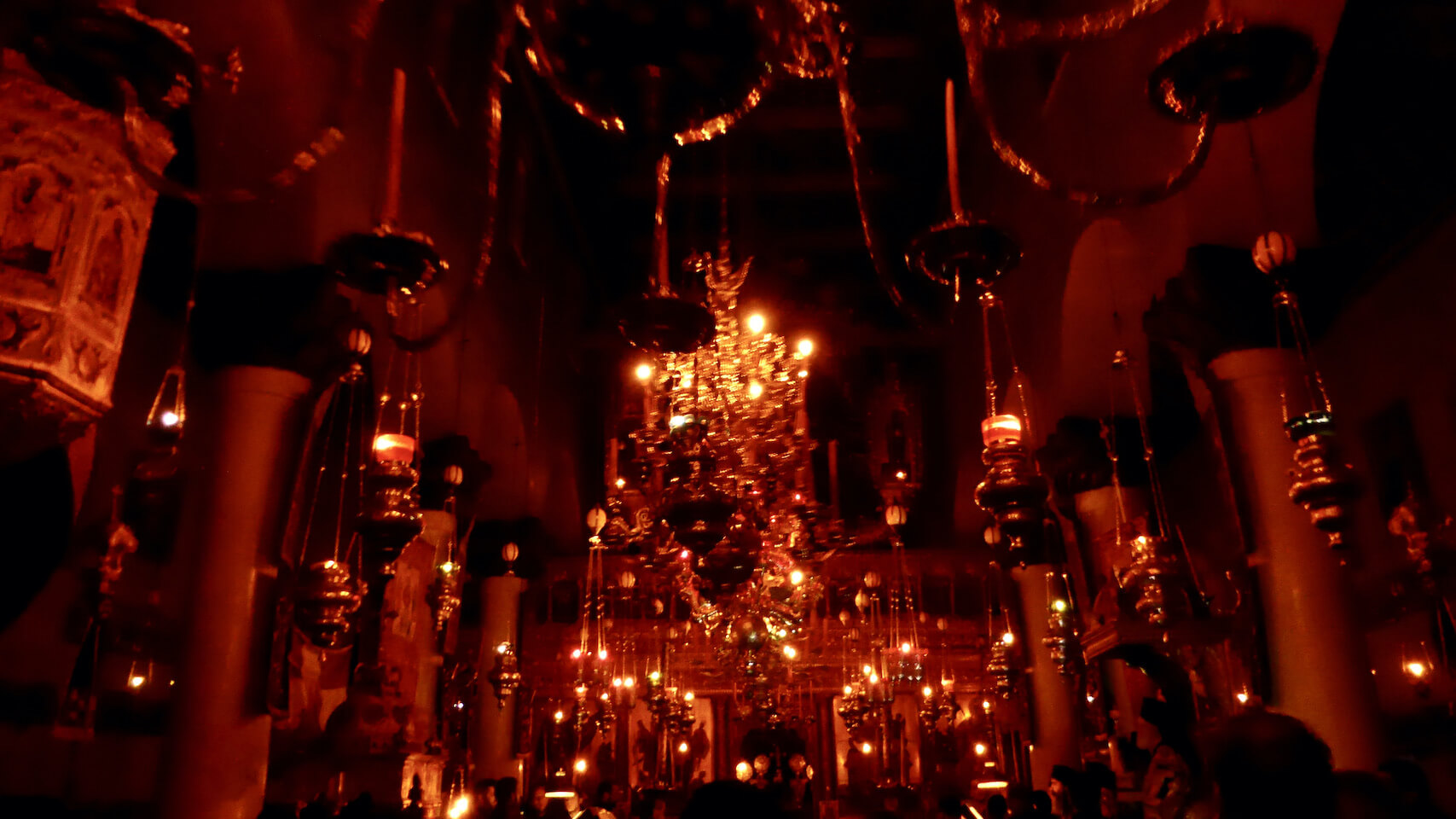
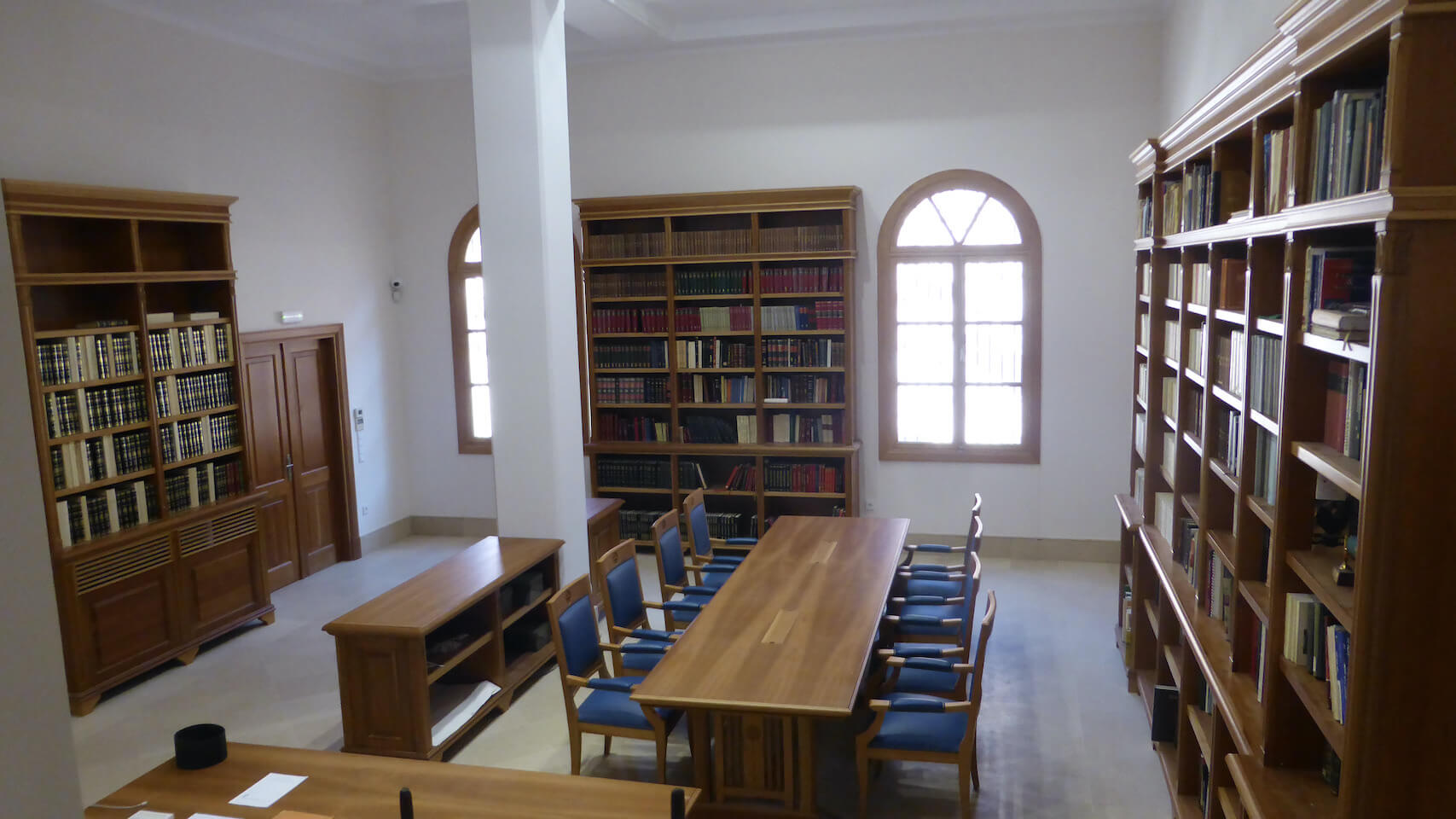

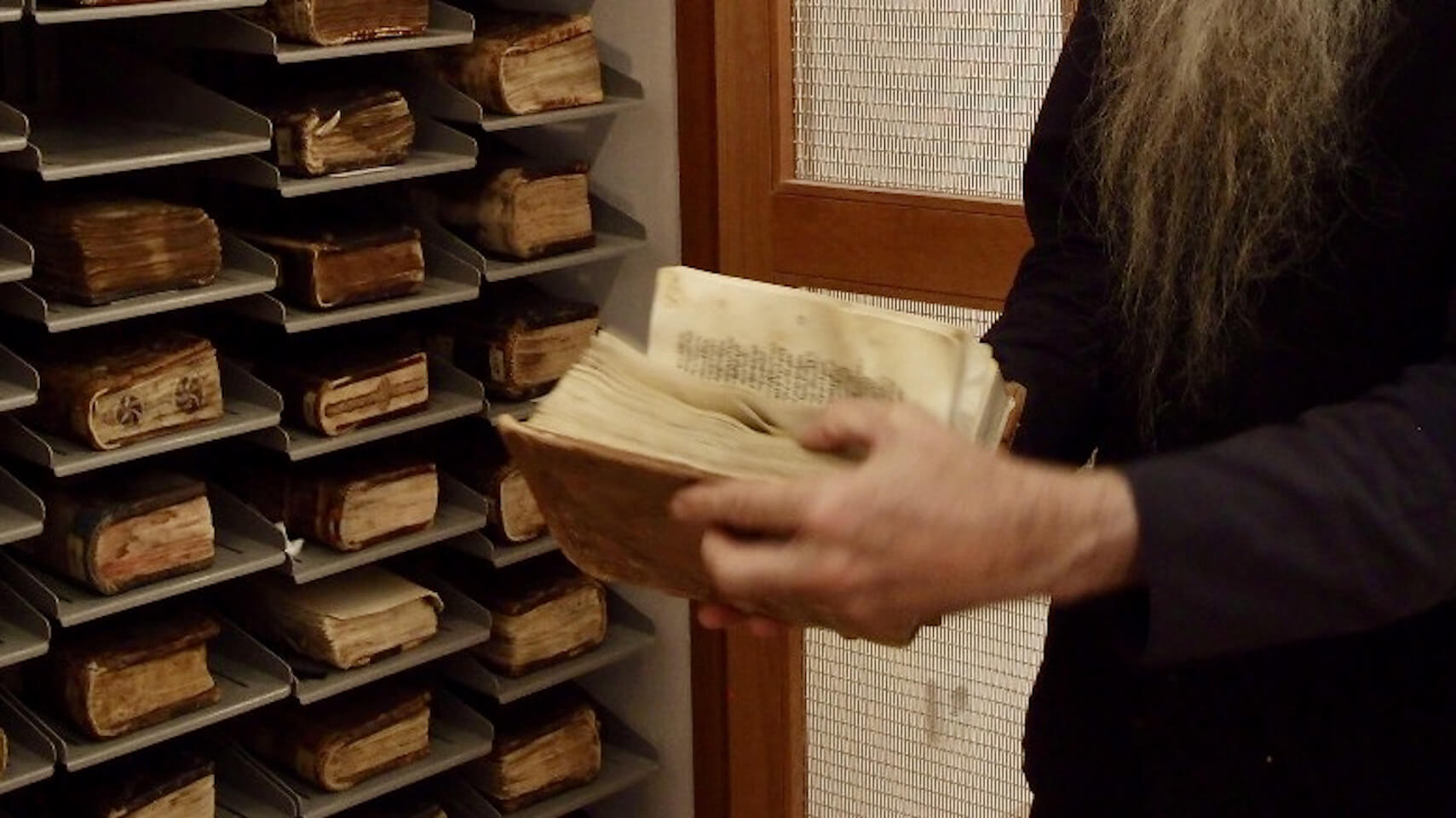
The Monastery of St Catherine stands as stunning testimony to two millennia of Christian history.
It was built as a fortress in the 6th Century by the Emperor Justinian to protect the Holy sites and shore up the Orthodox church in an empire under attack from barbarians in Italy, Spain and North Africa and a rebellious church in Egypt. When Napoleon conquered Egypt at the end of the 18th Century, he sent his general Kleber to construct two new bastions to the fortifications.
Faced by conquest of the Middle East in the 7th Century by Islam, a religion zealous in its rejection of images, Christendom descended into a civil war over its own use of images. Only in St Catherine’s monastery did a few icons survive the destructive fury. Only here can we view the oldest icons in Christendom.
When relics became a potent mystical and economic force in the 10th Century, a miracle gave the monastery the bones of St Catherine who became one of the best loved saints of the Middle Ages with a sample of her oil held by the Kings of France in the Saint Chapelle of Paris. In the year 2000, Pope John Paul visited the monastery and prayed at the tomb of St Catherine in a gesture of reconciliation between the Roman and Orthodox churches.
When new biblical scholarship in the 19th Century forced a revaluation of history and scriptures, it was in the monastery of St Catherine that the oldest bible in the world was discovered. The monastery houses the finest collection of ancient texts outside the Vatican and current studies on palimpsests continues to make startling discoveries.
We can provide privileged tours of the monastery, icon gallery and library through the unique relationship that has been established between the Jabaleya Bedouin and the Orthodox monks.
Herbal Garden


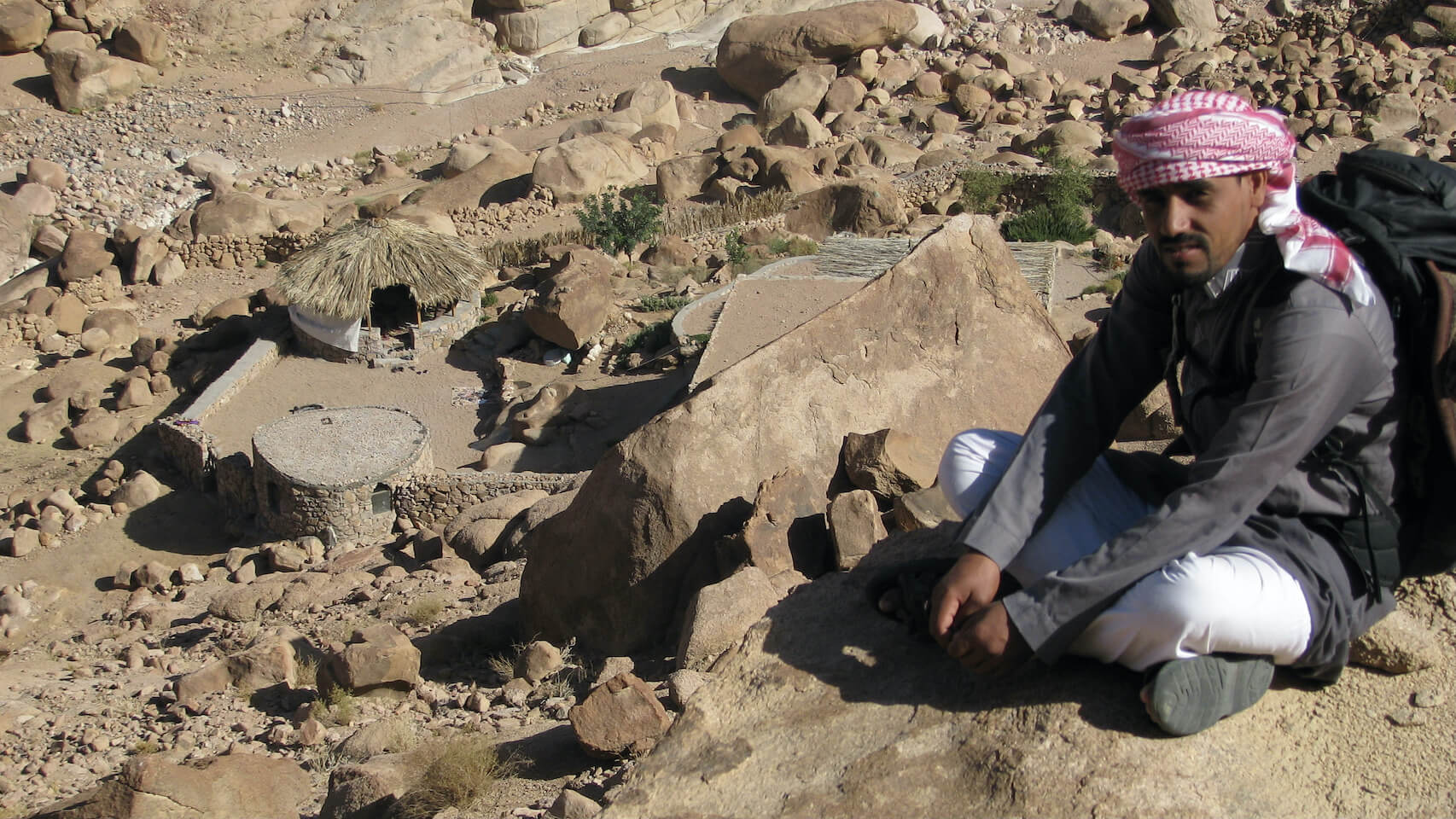

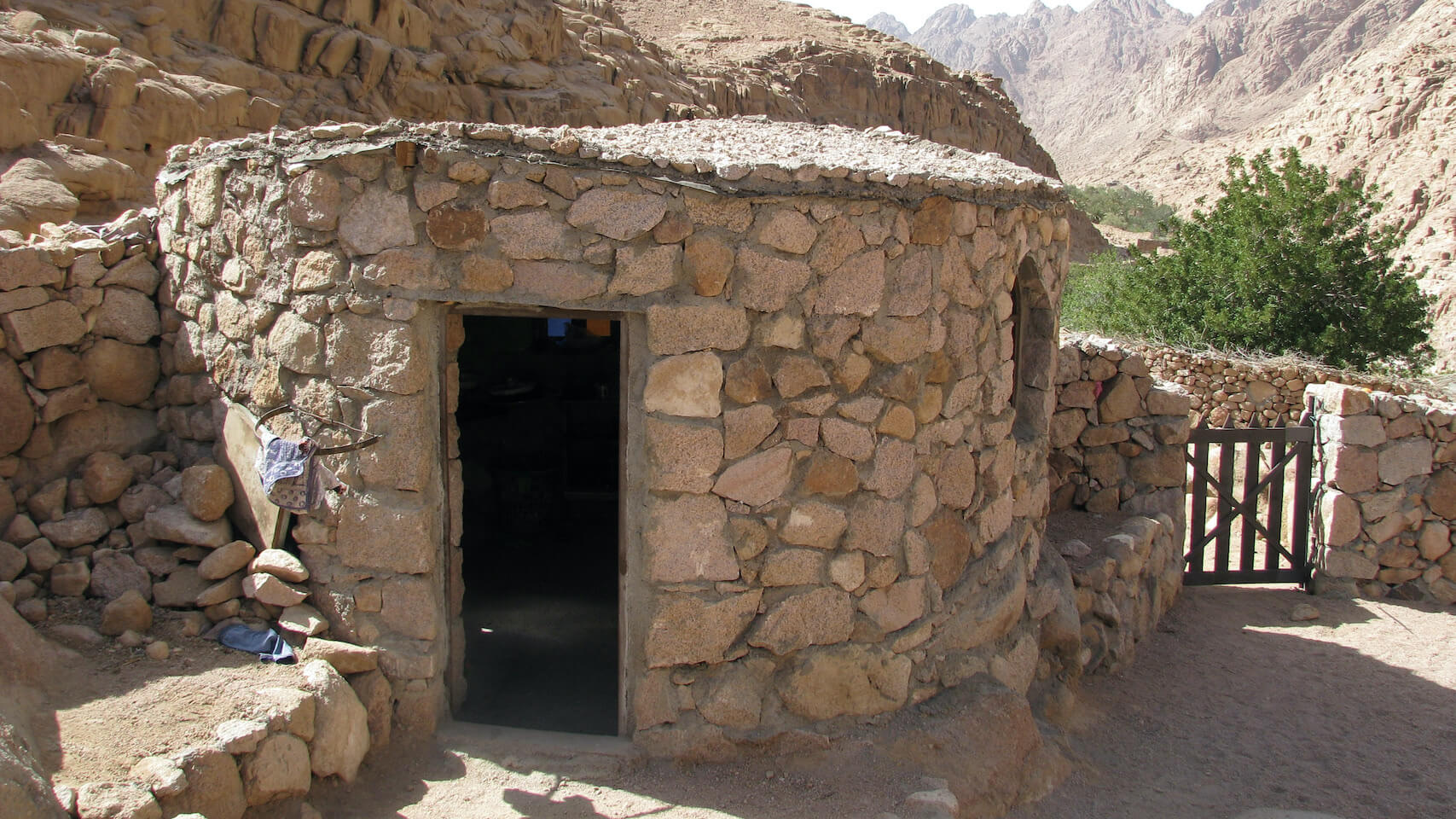

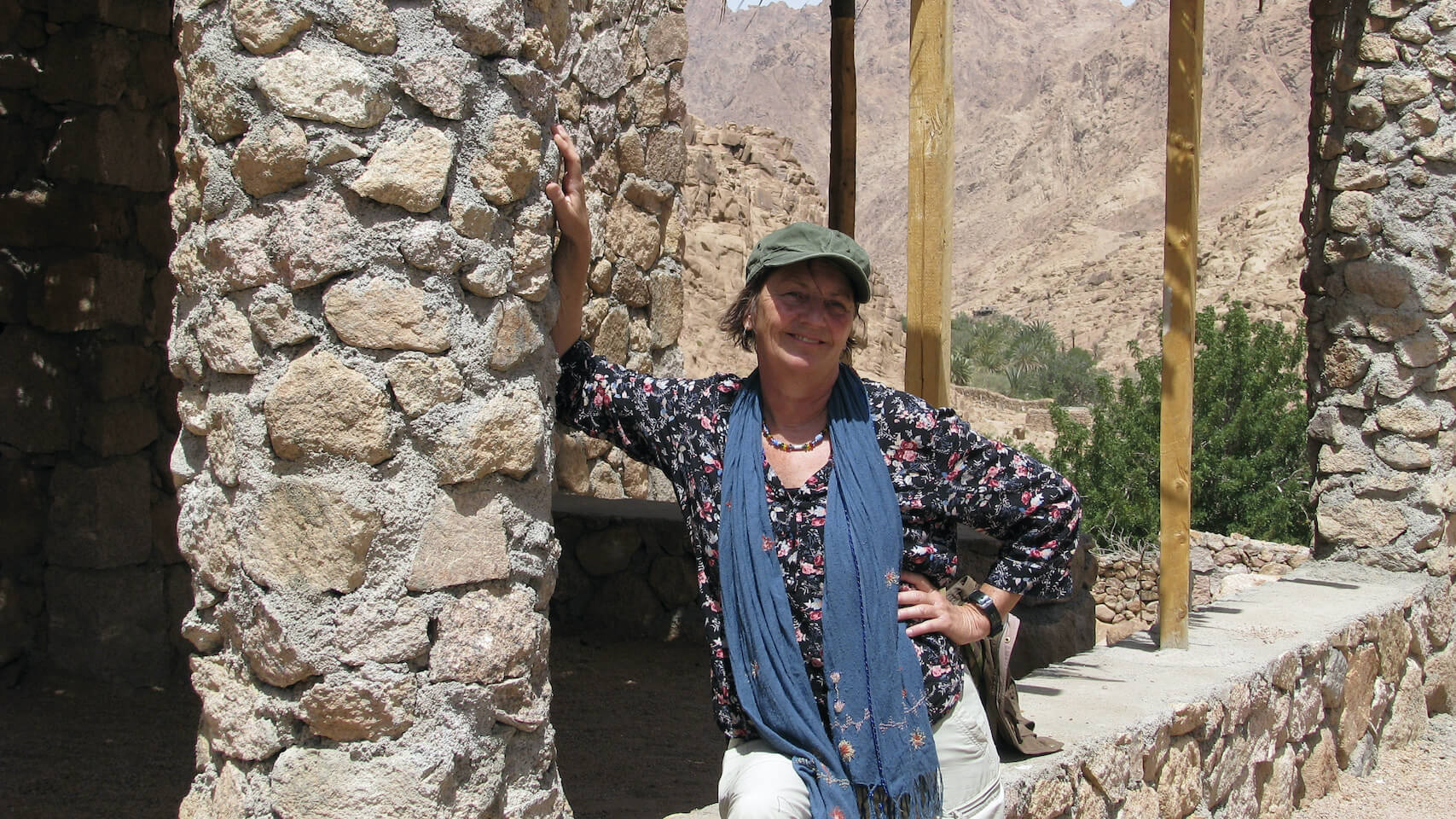
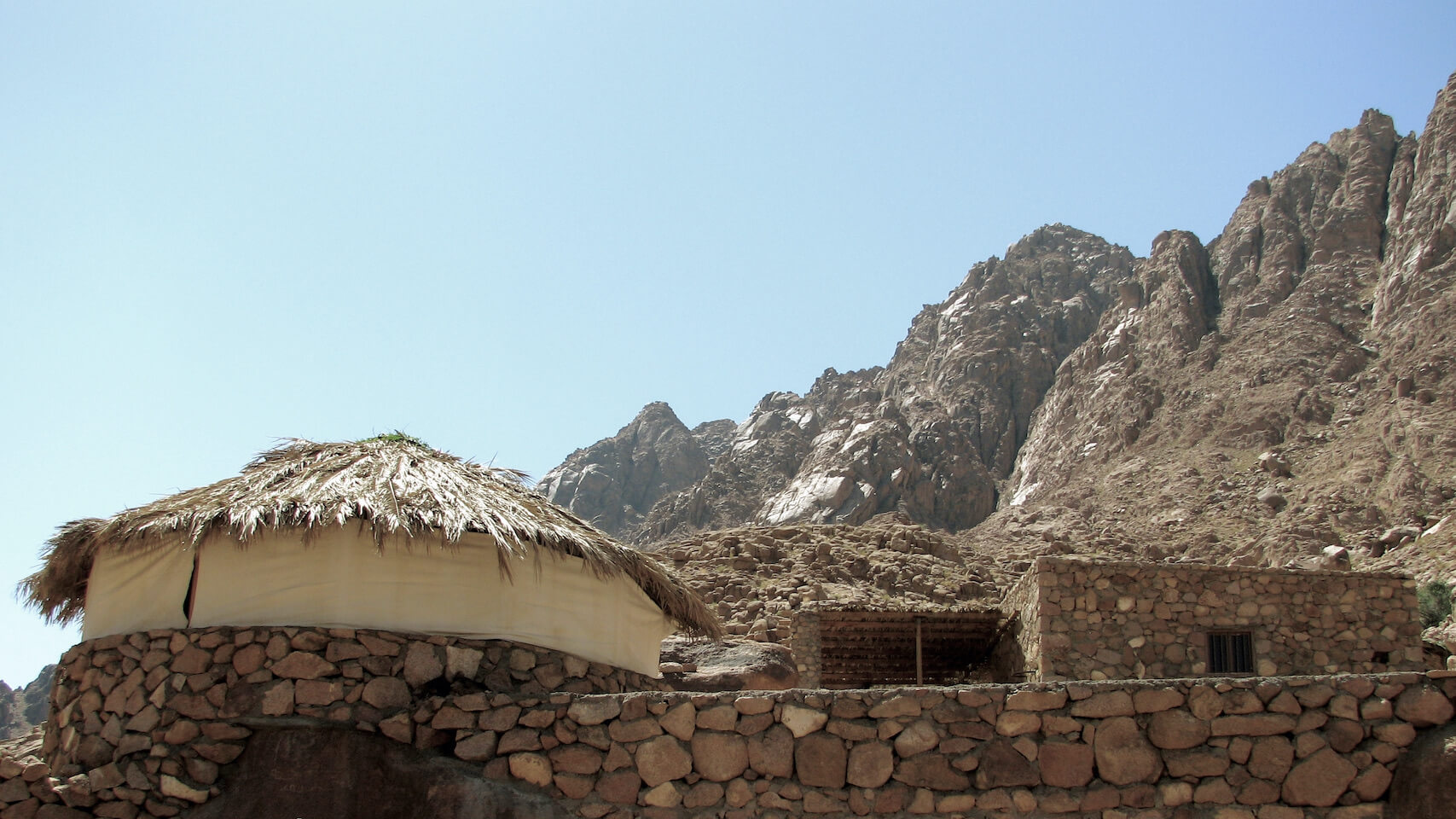
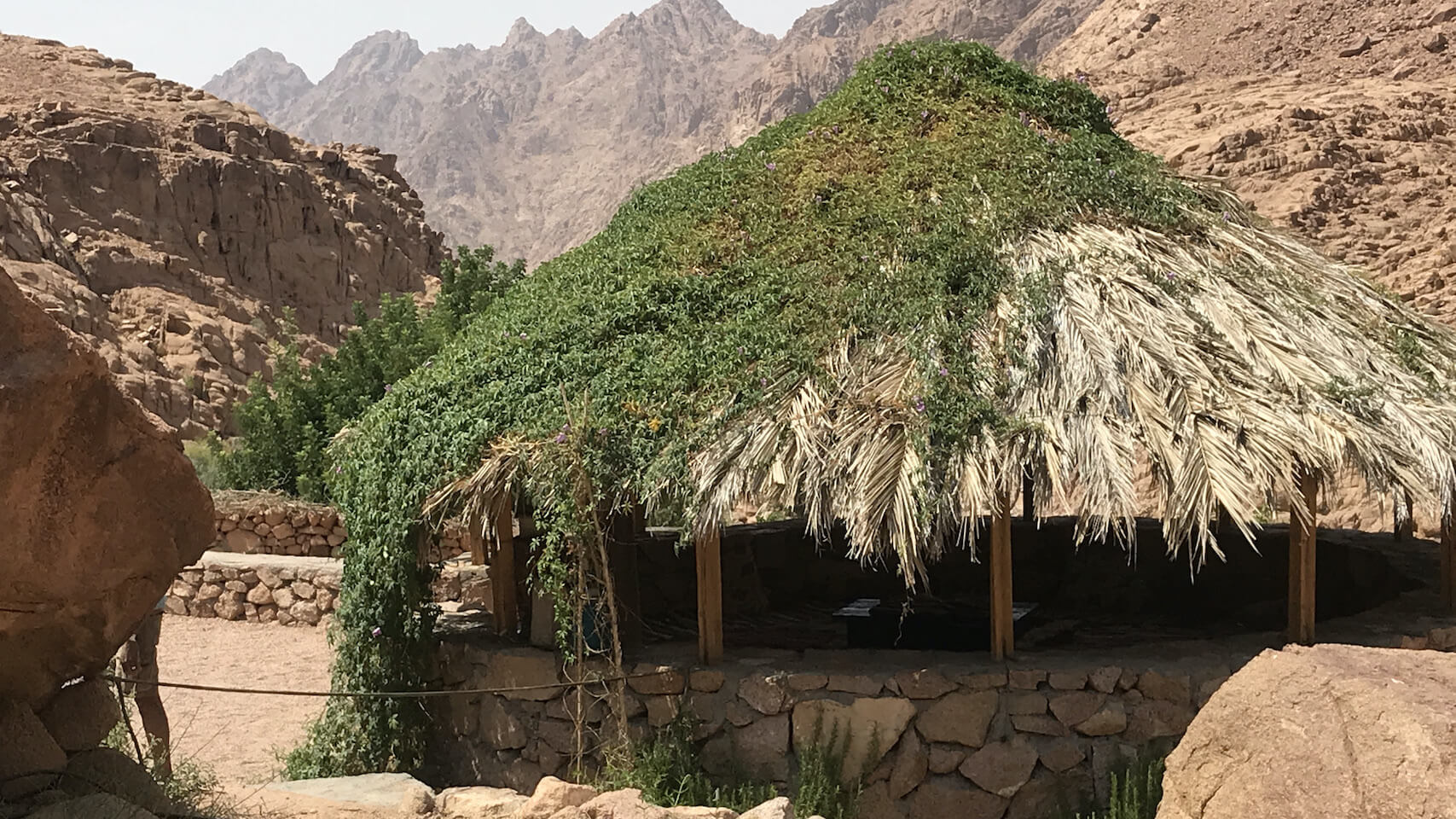
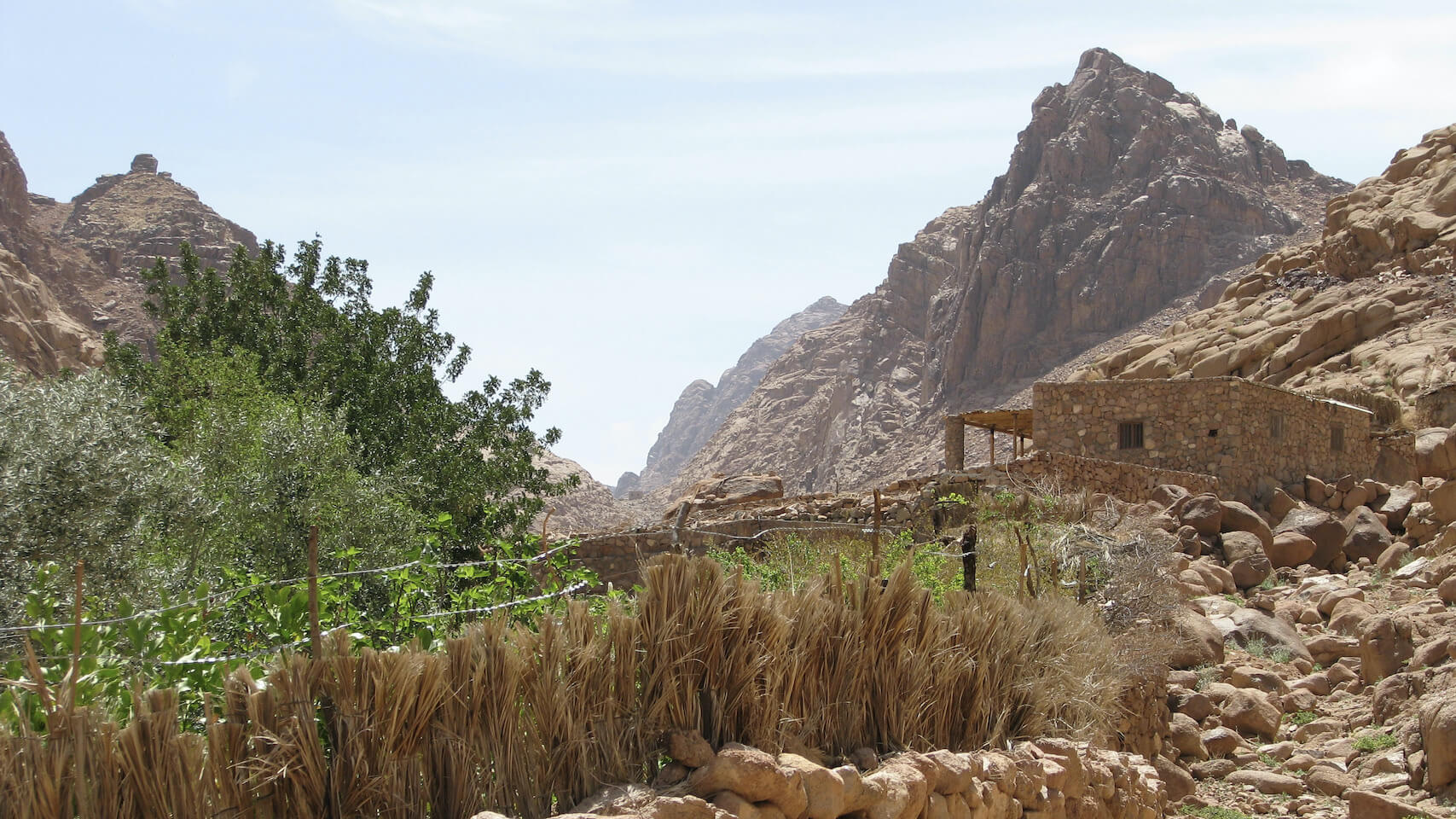


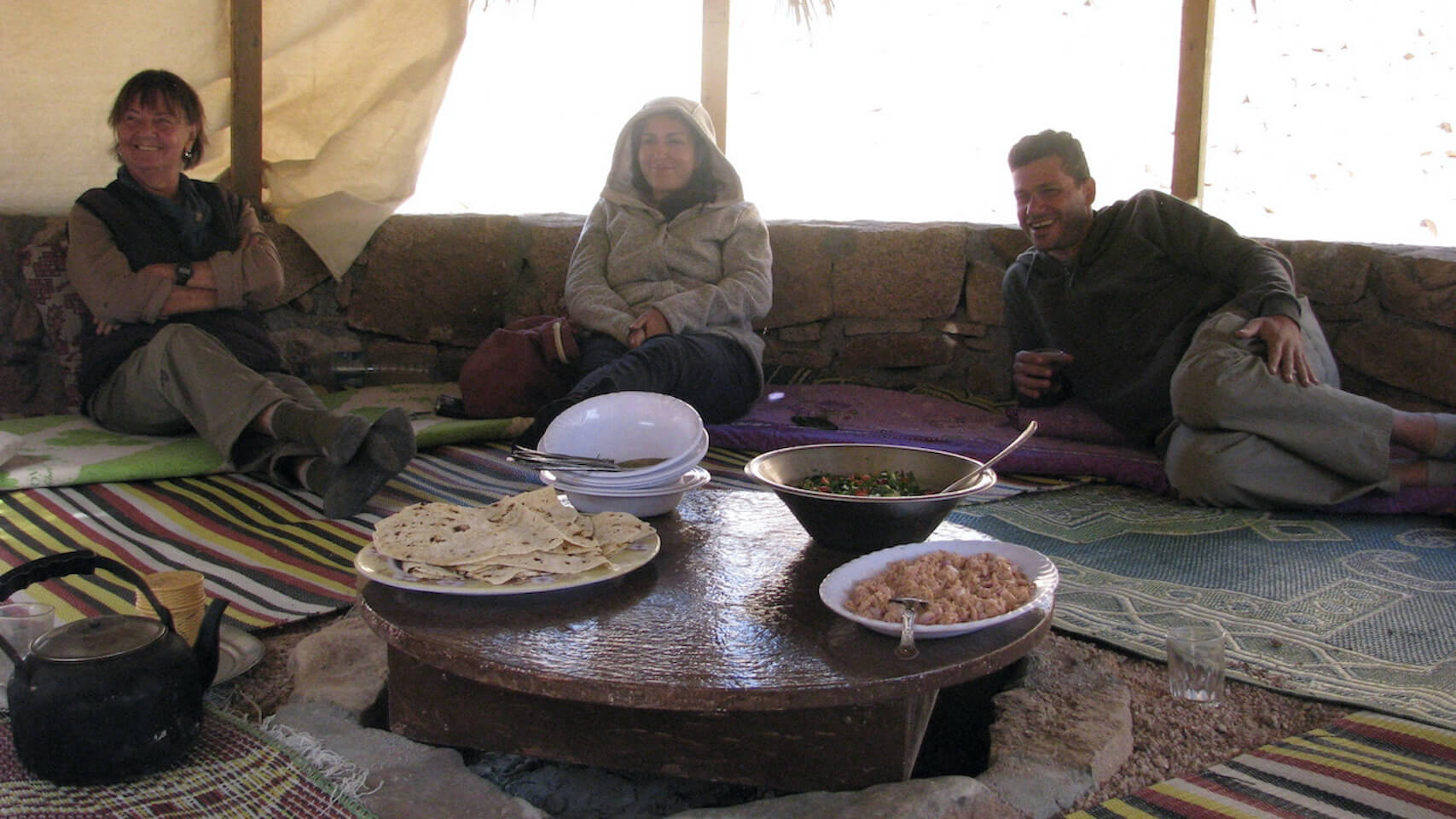
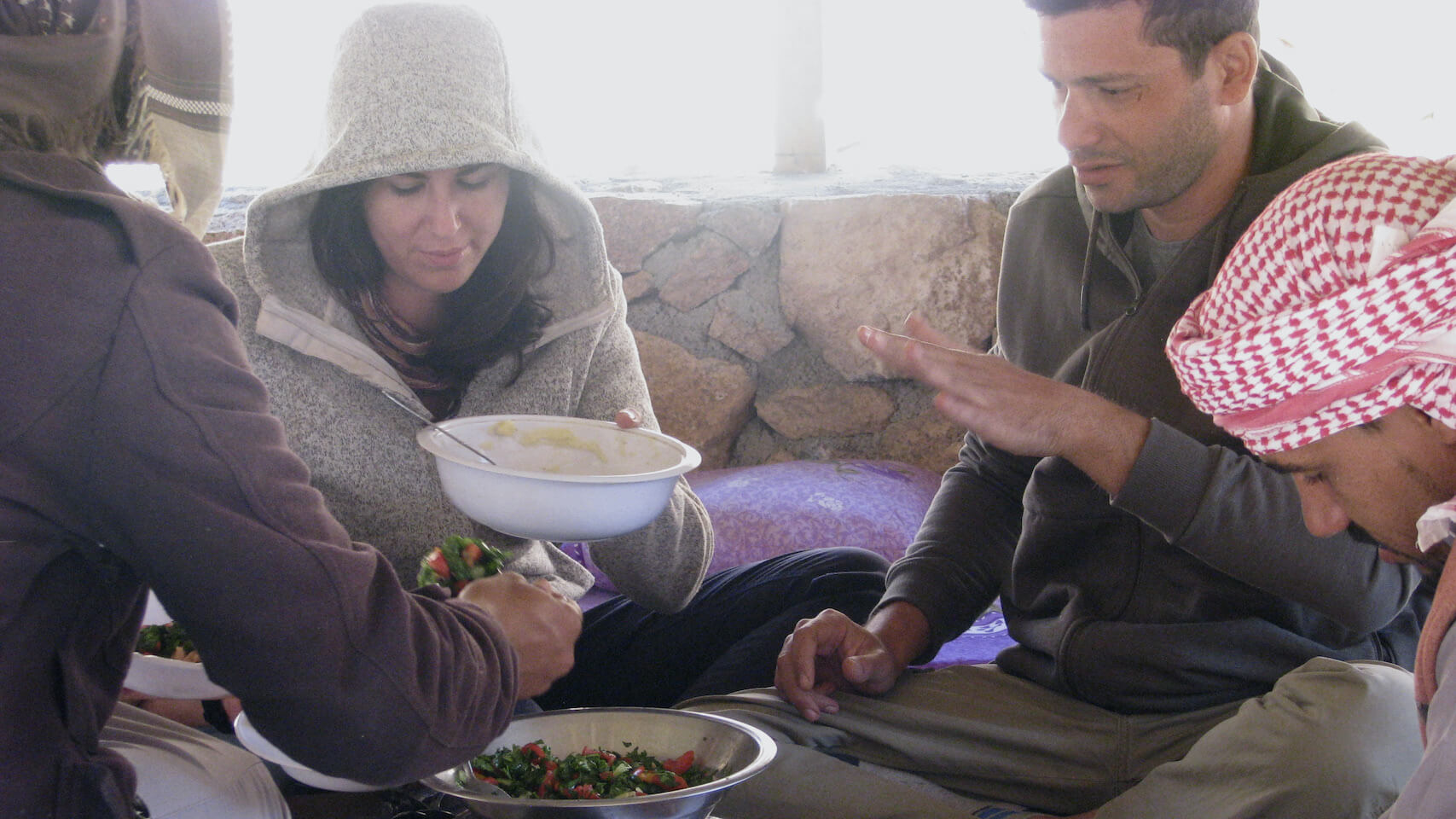
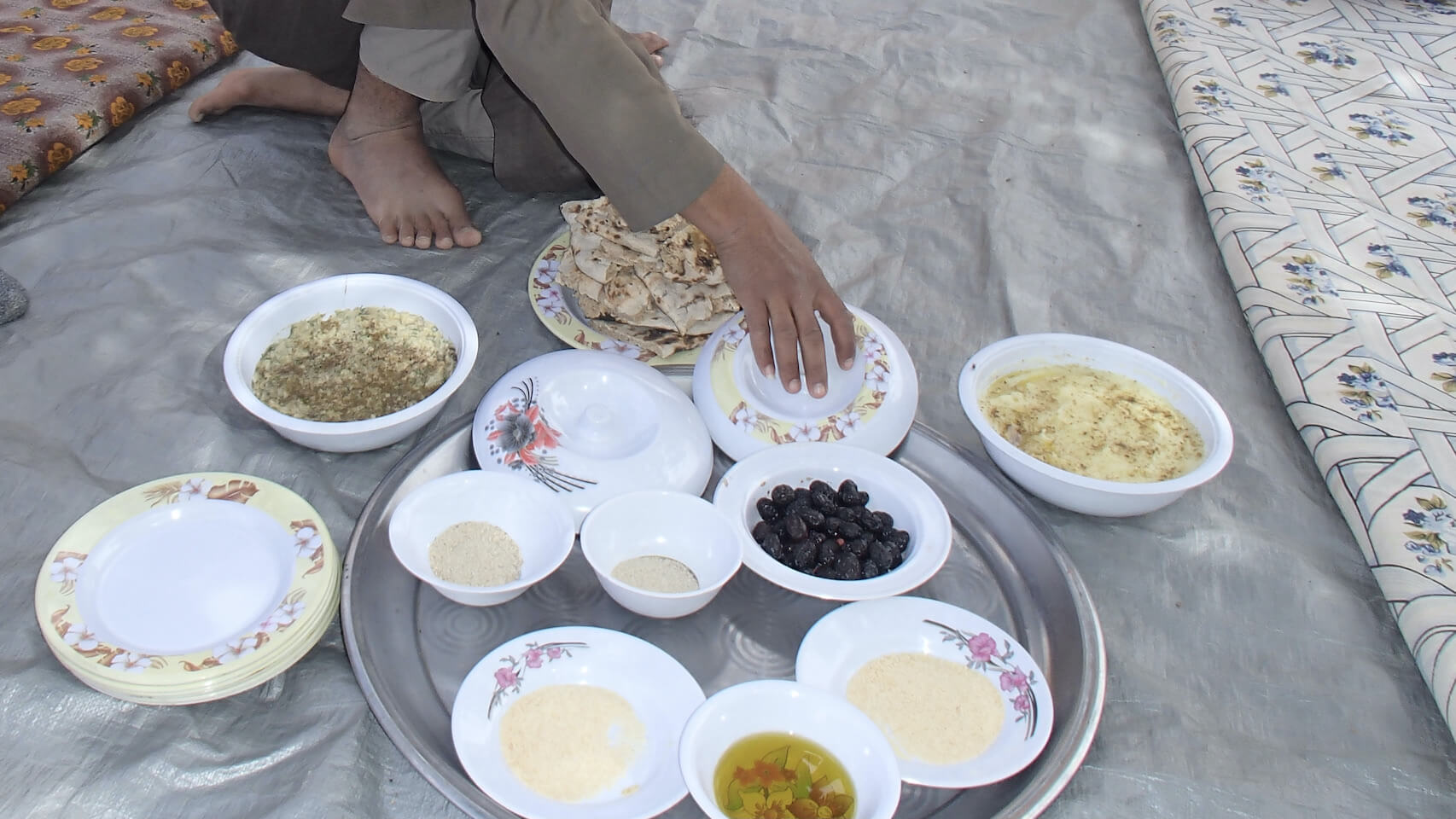


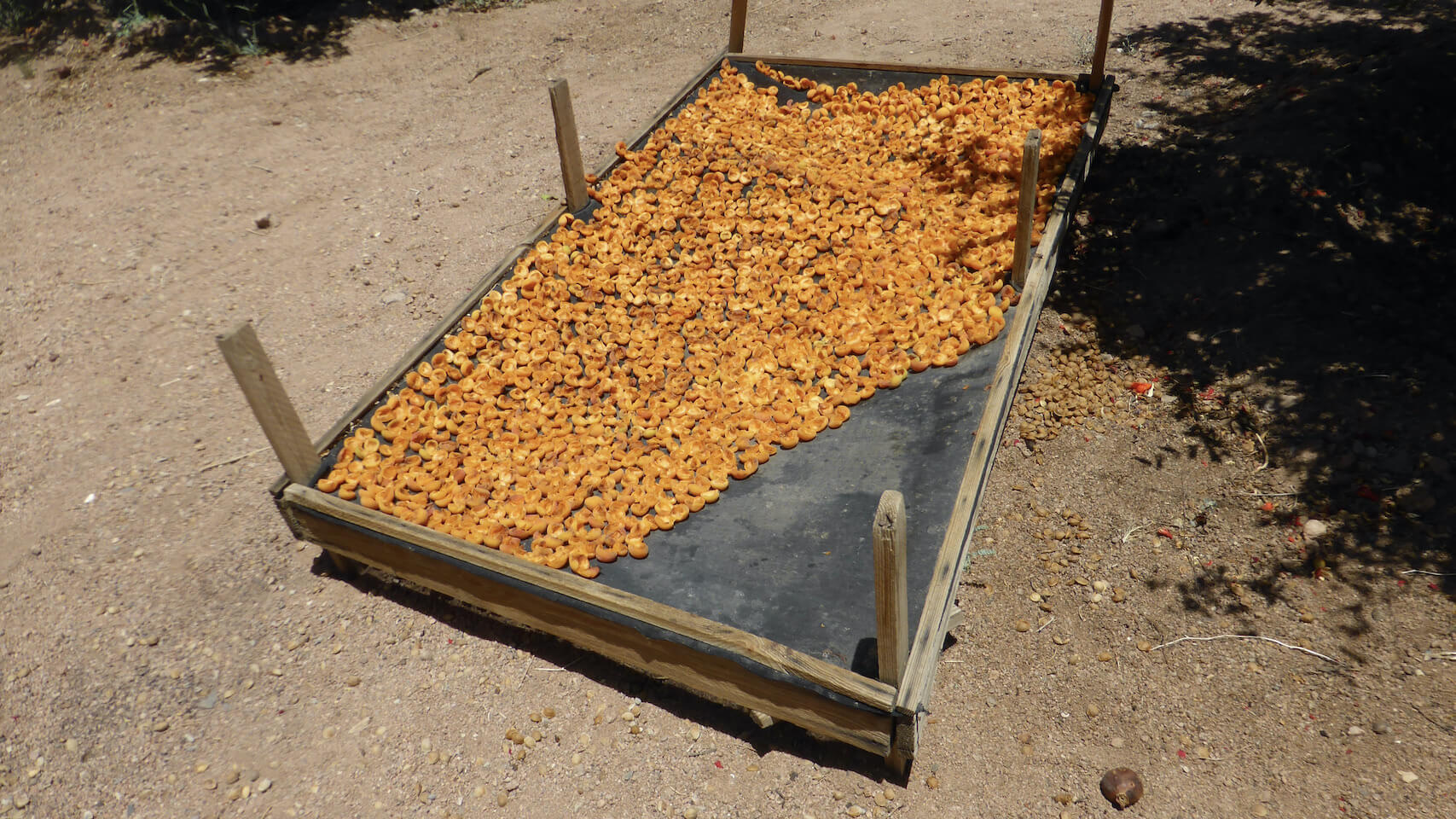
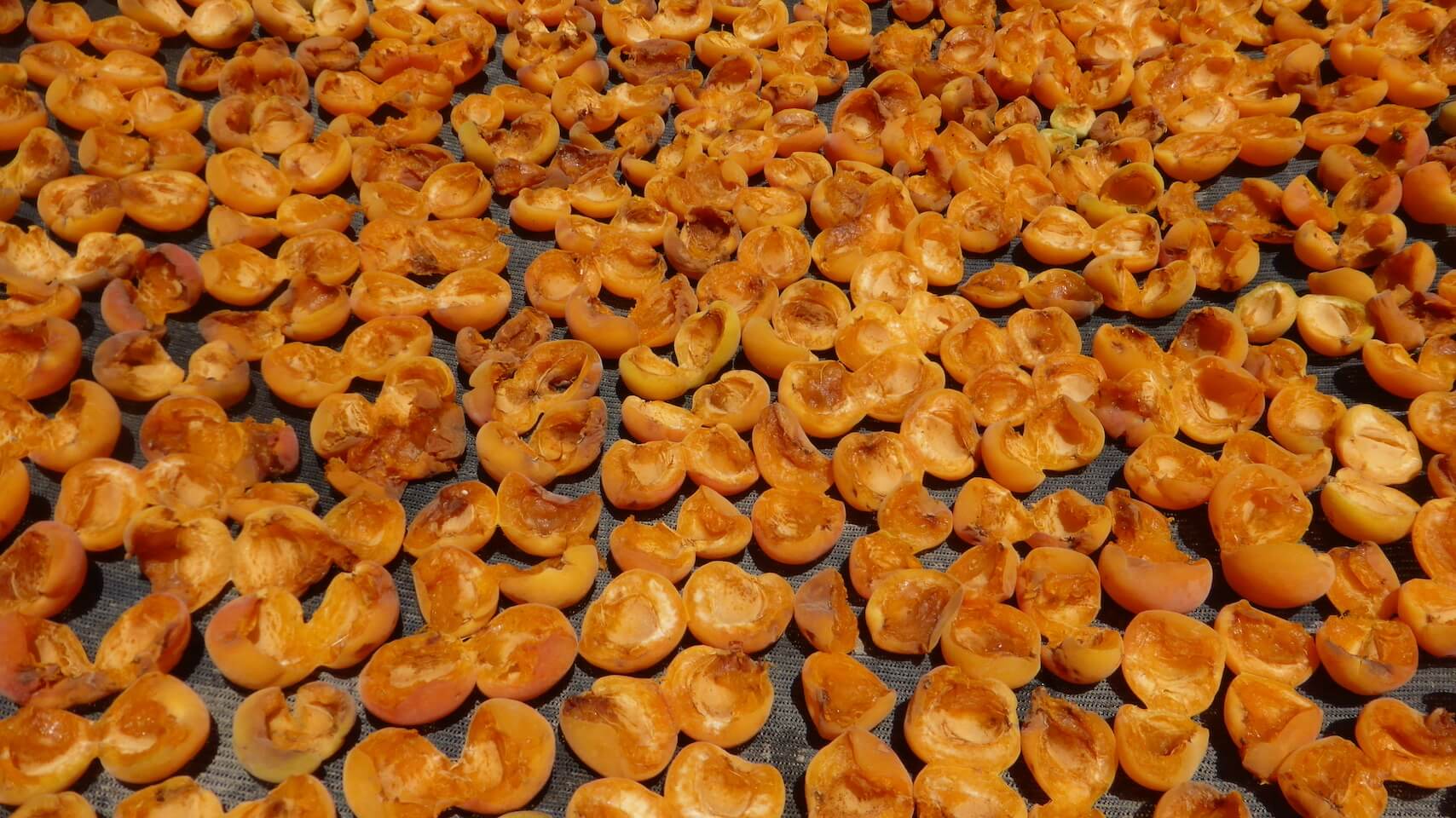
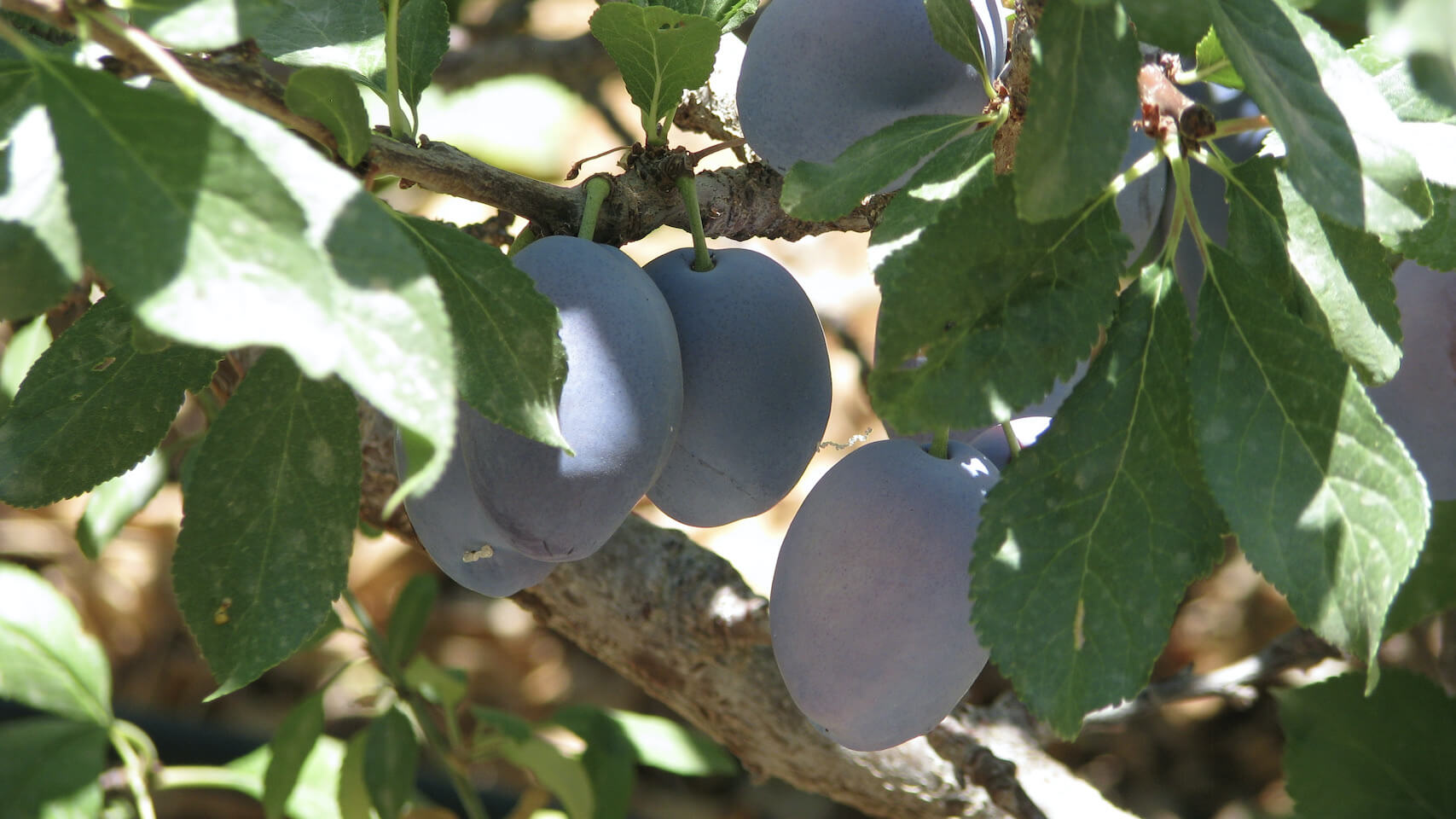
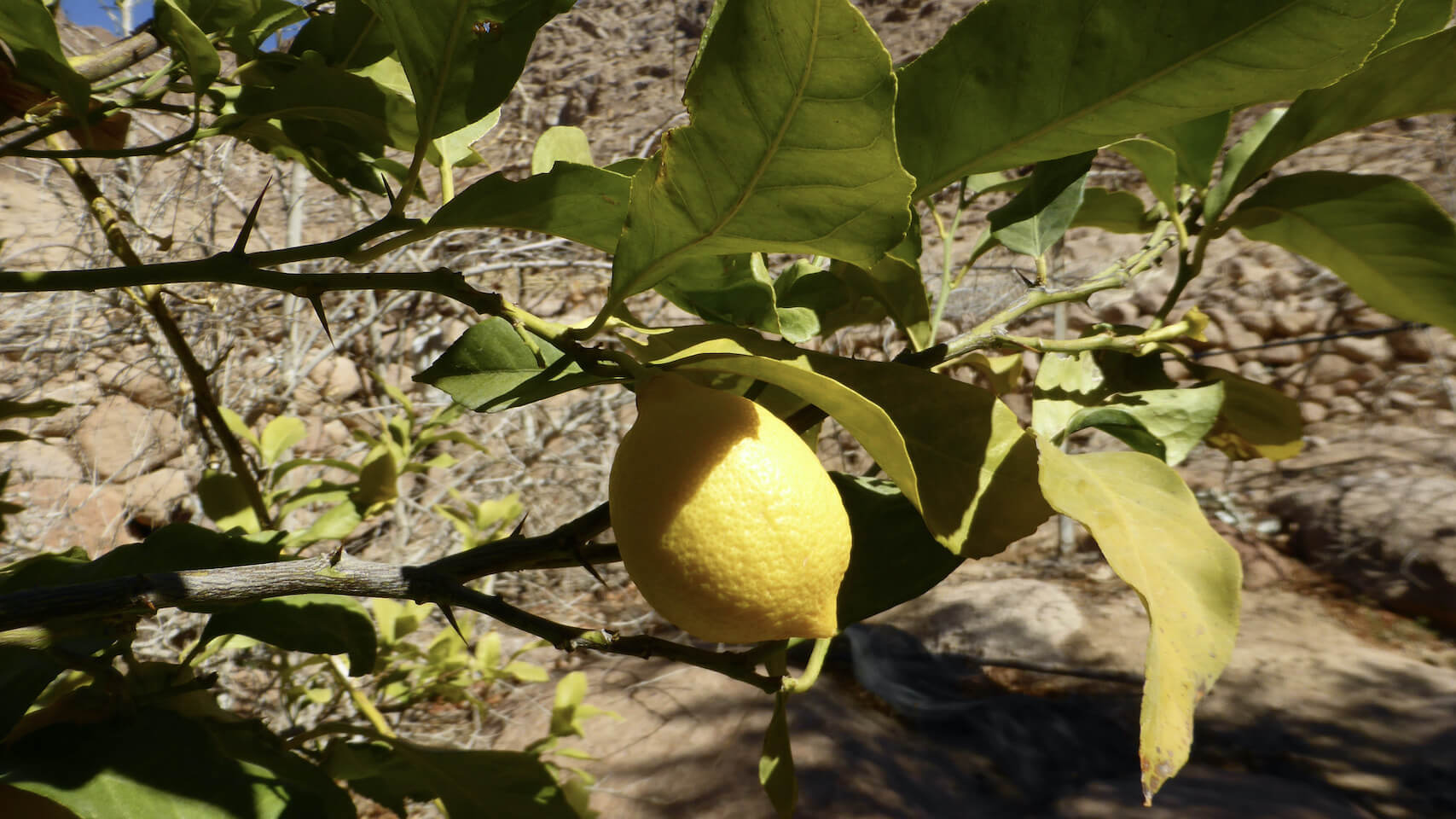


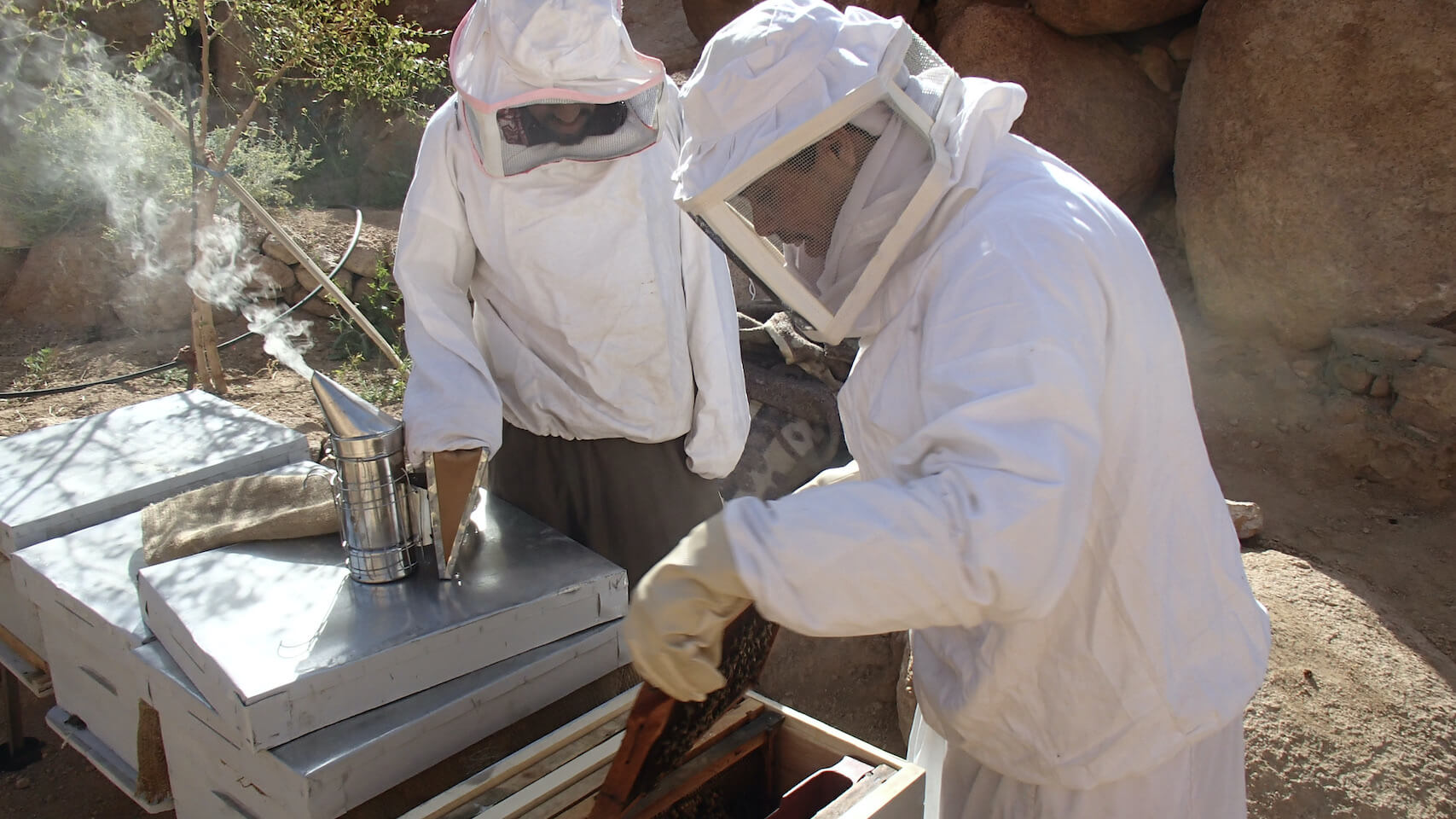
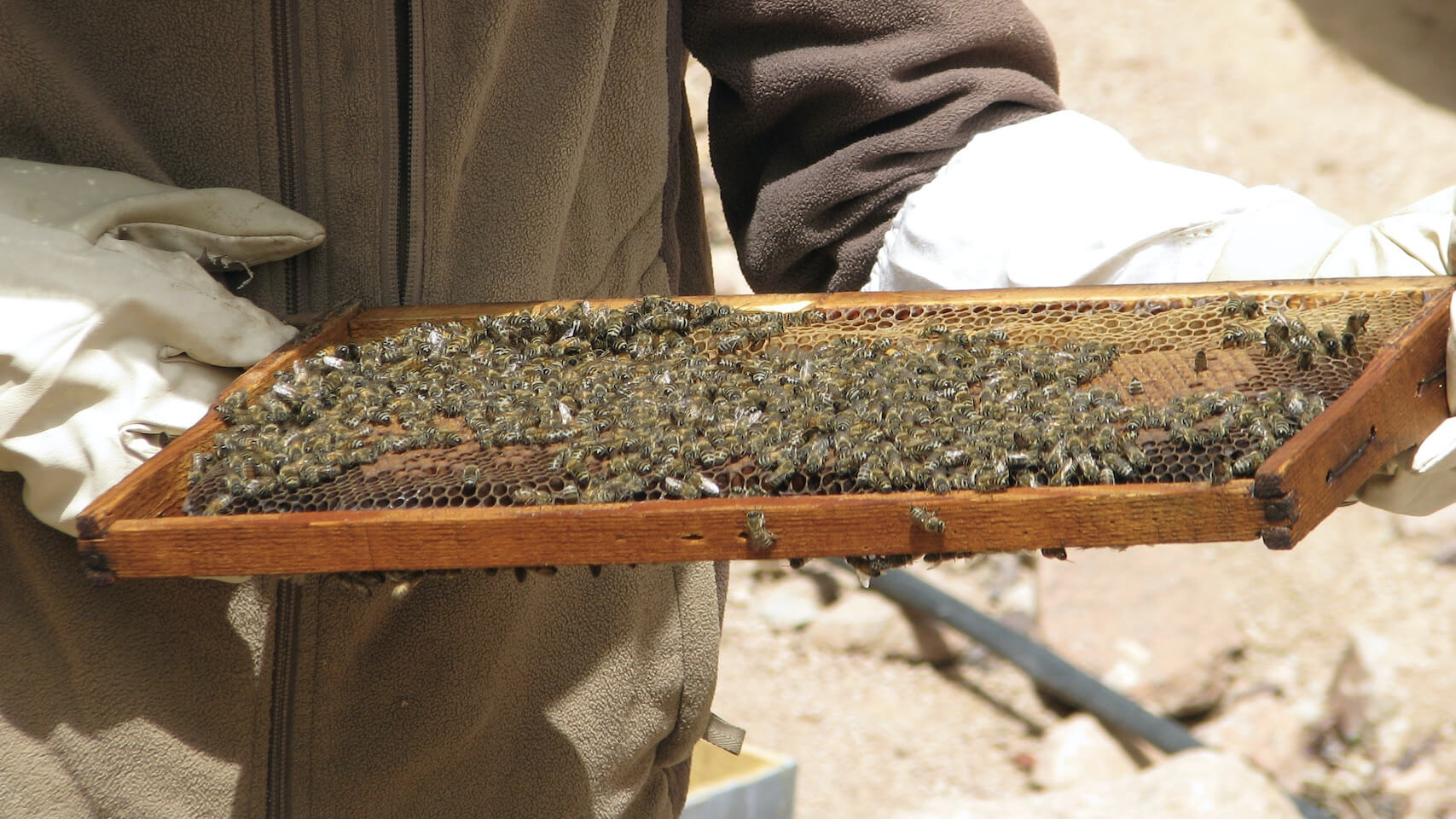
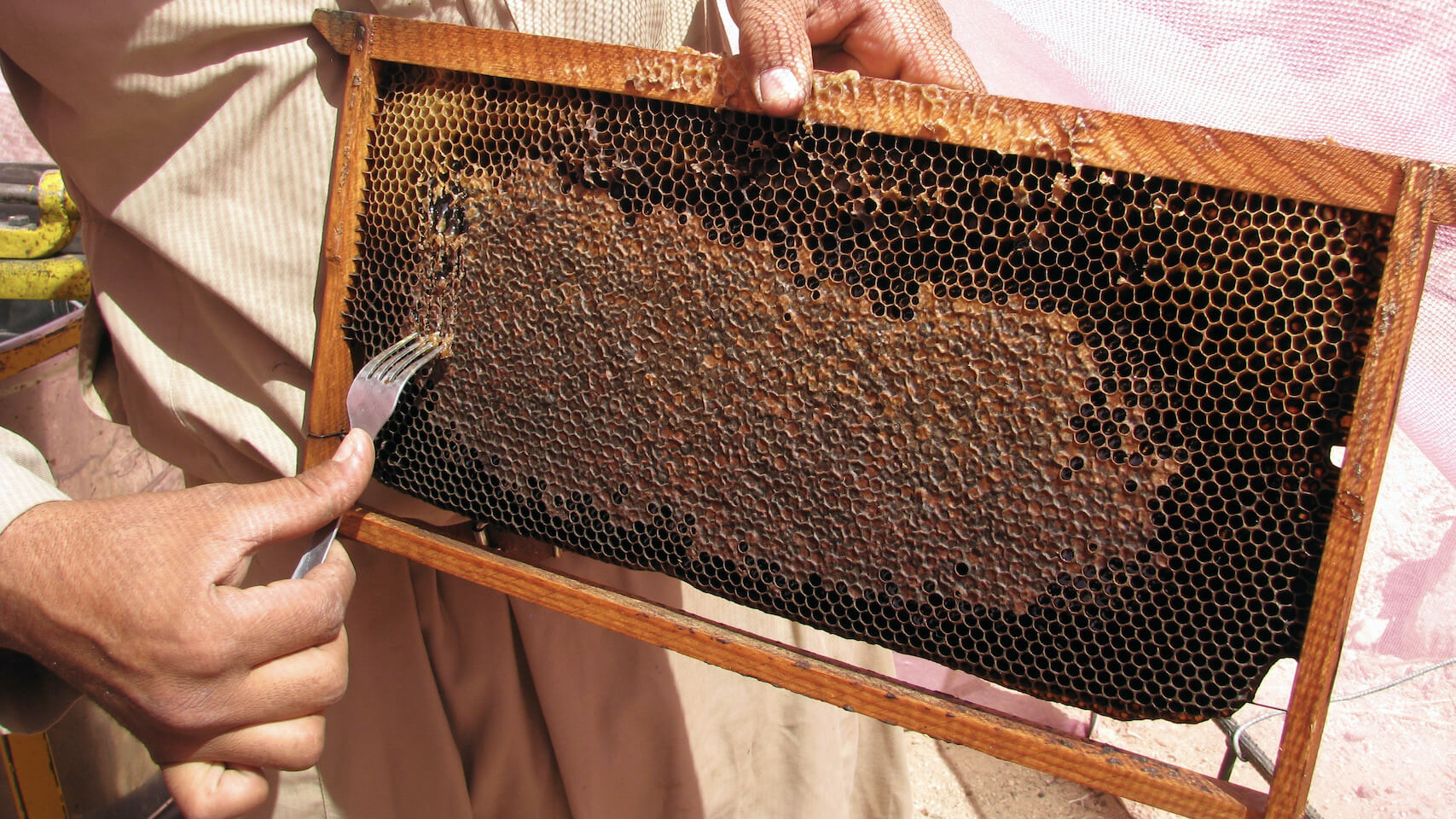
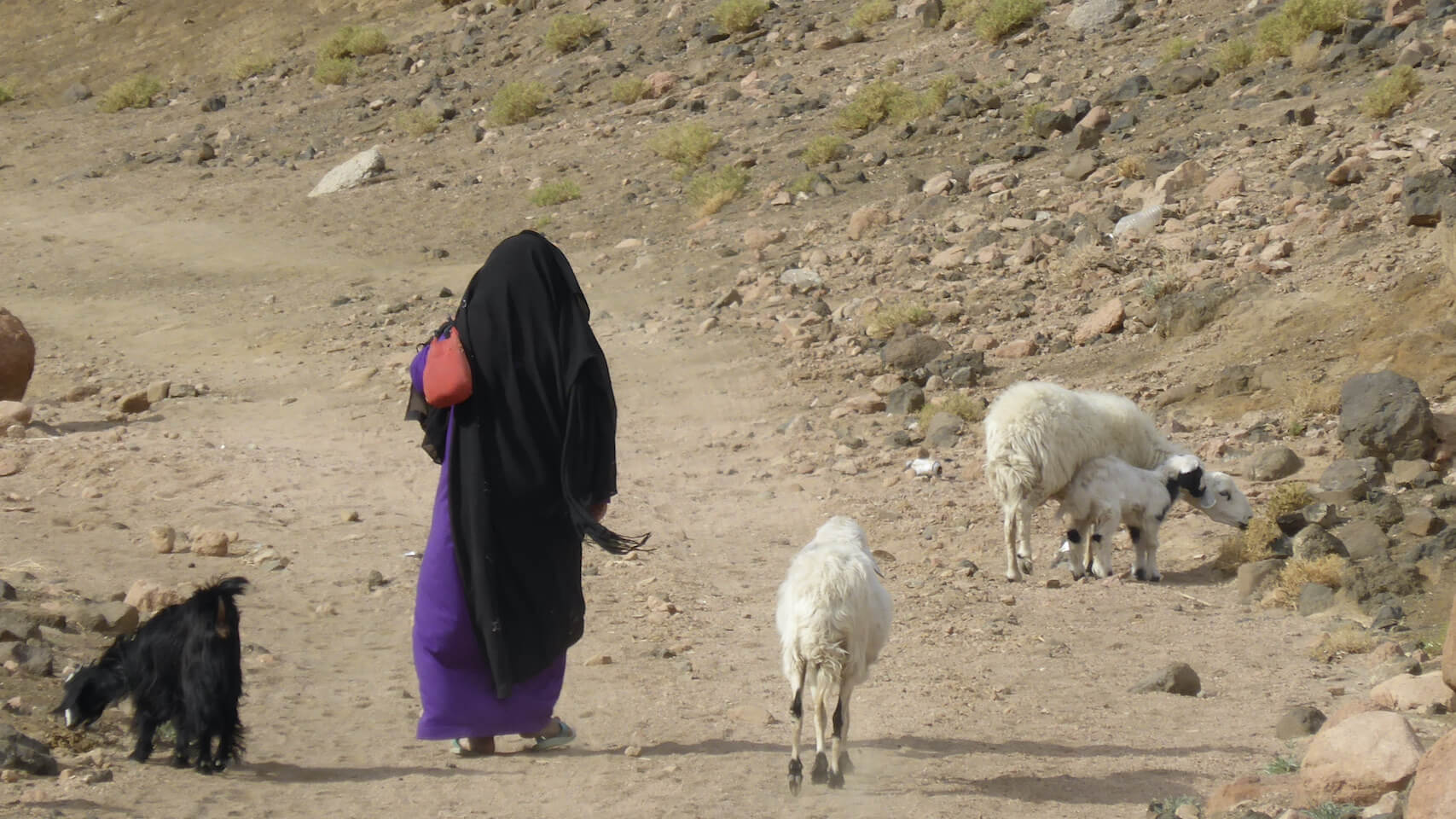
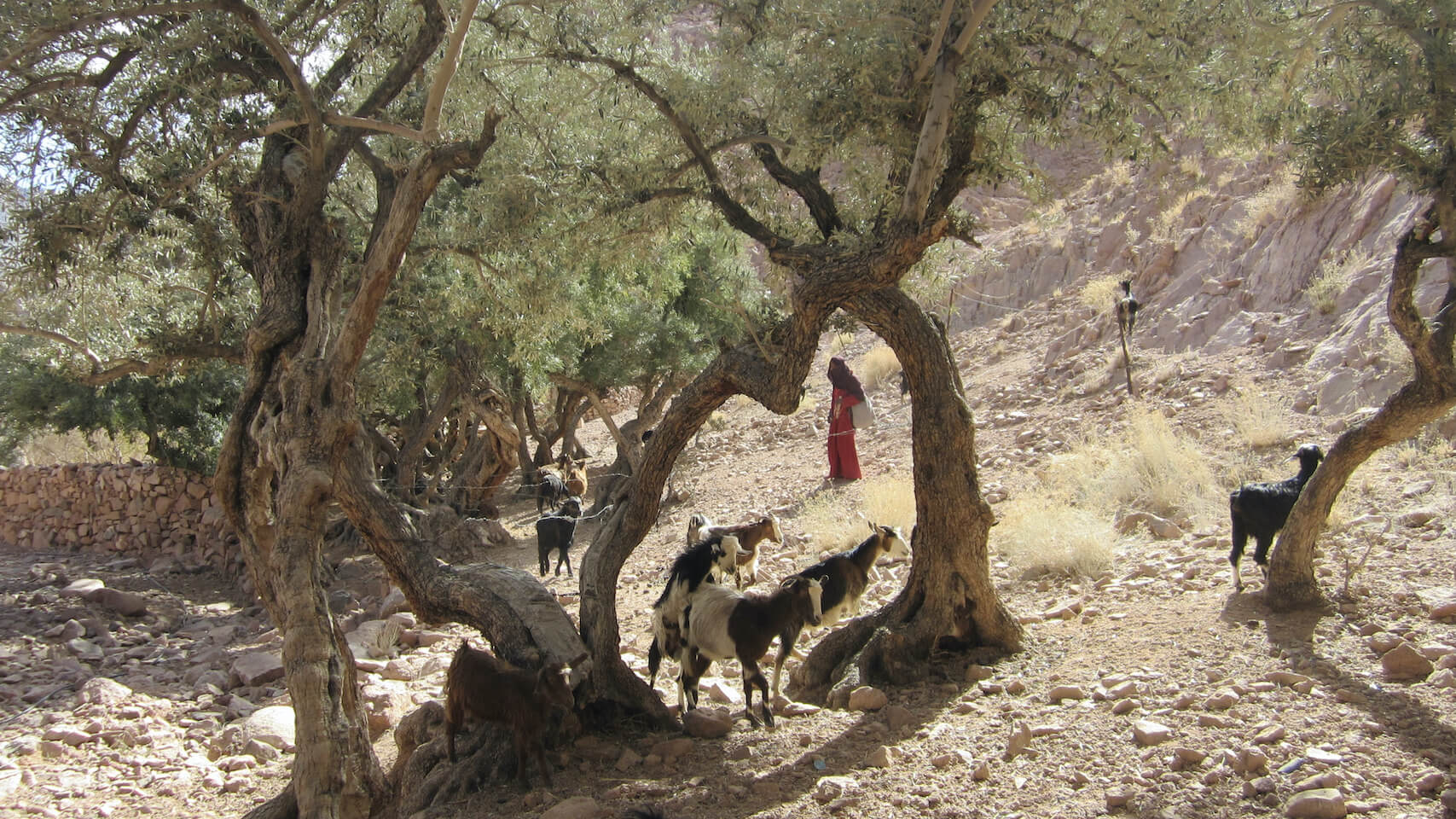

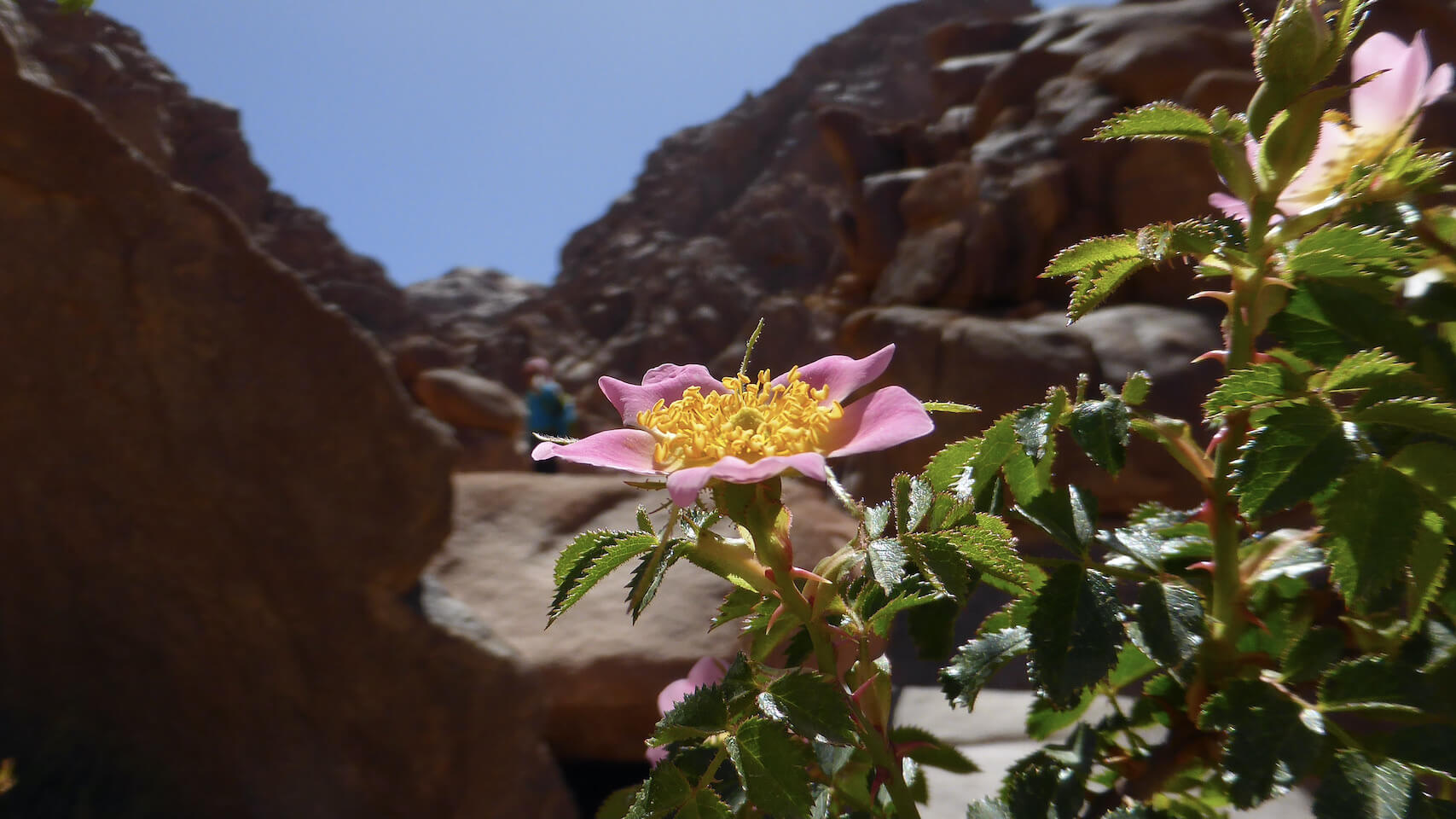
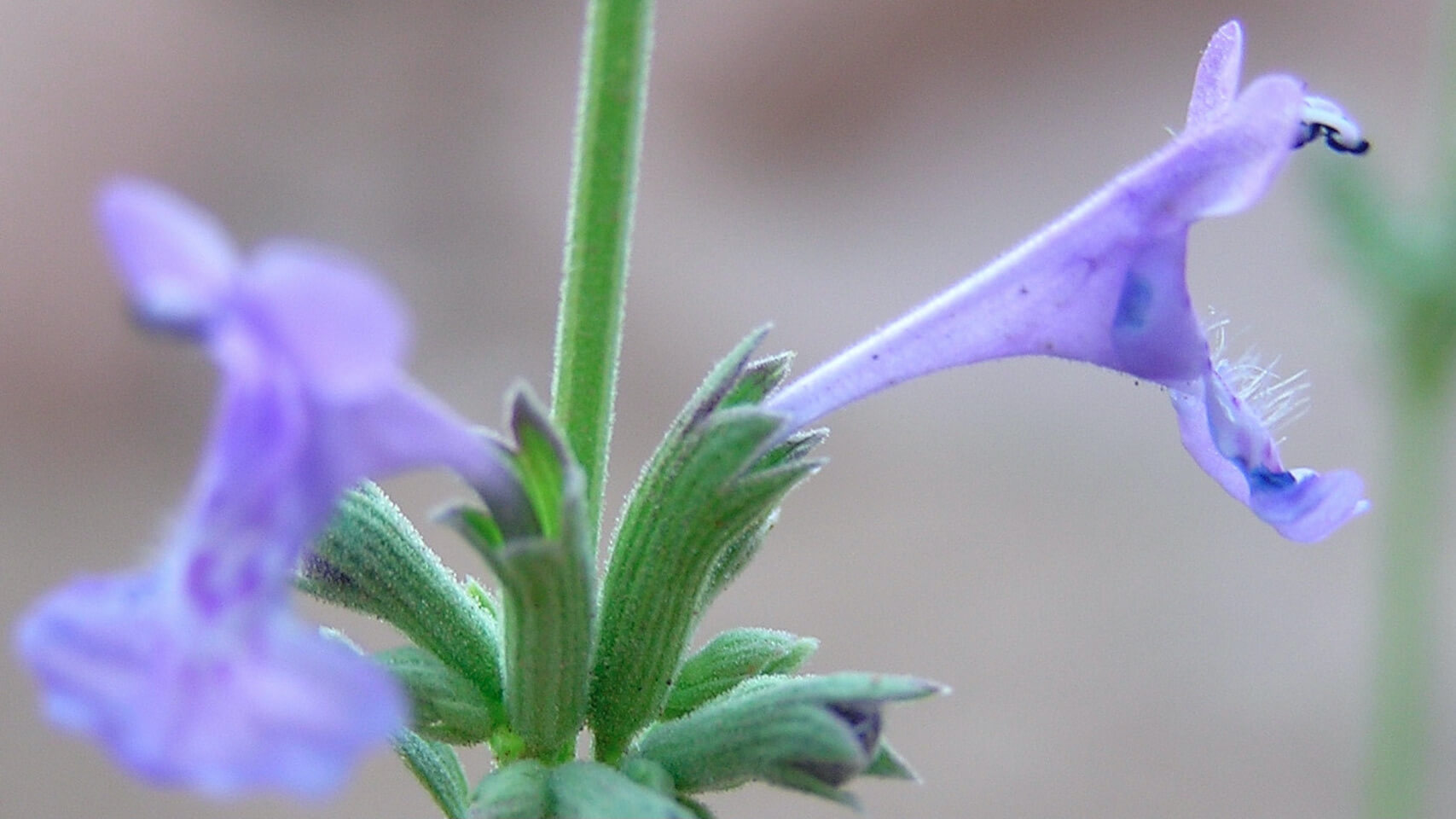
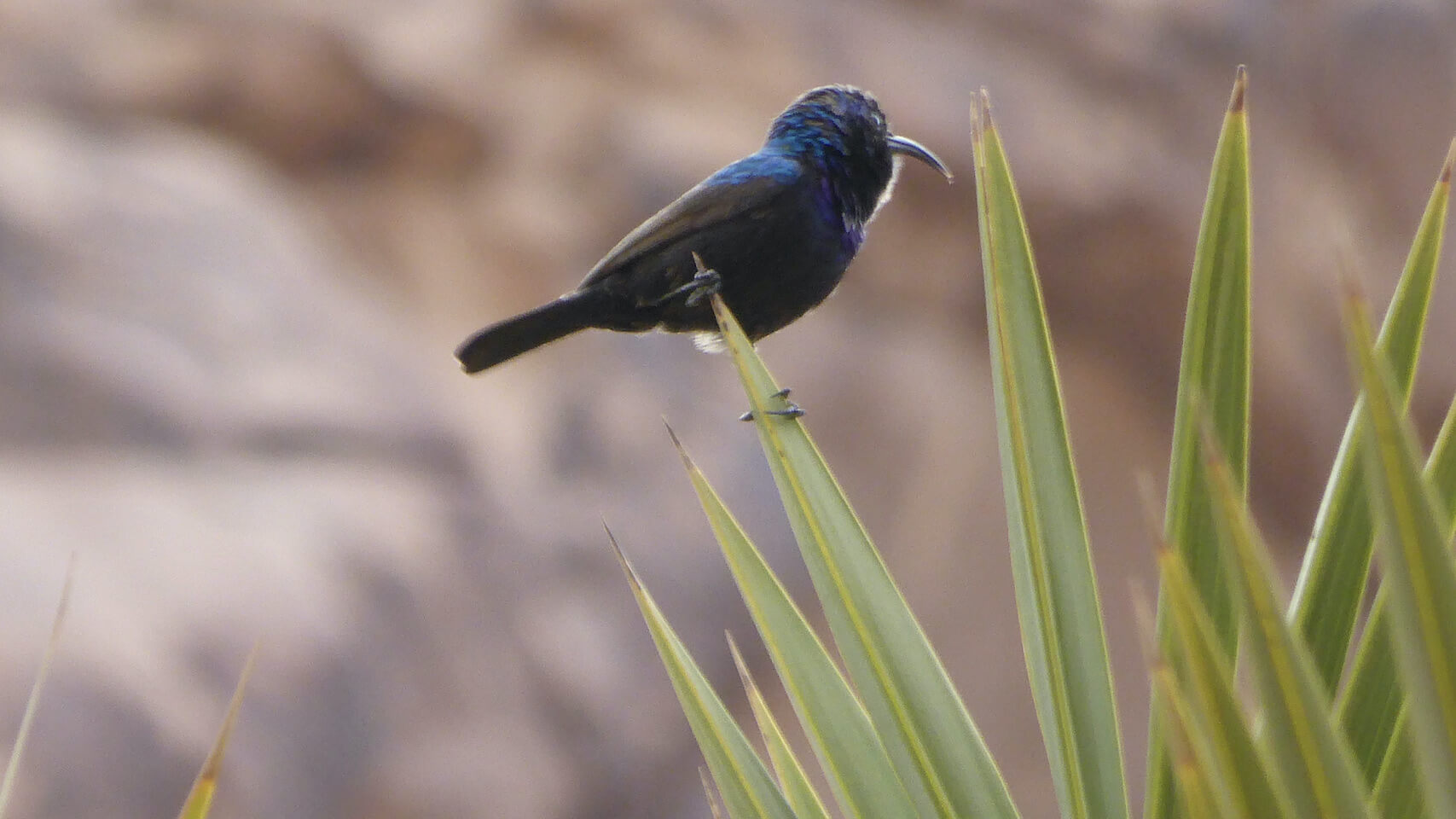
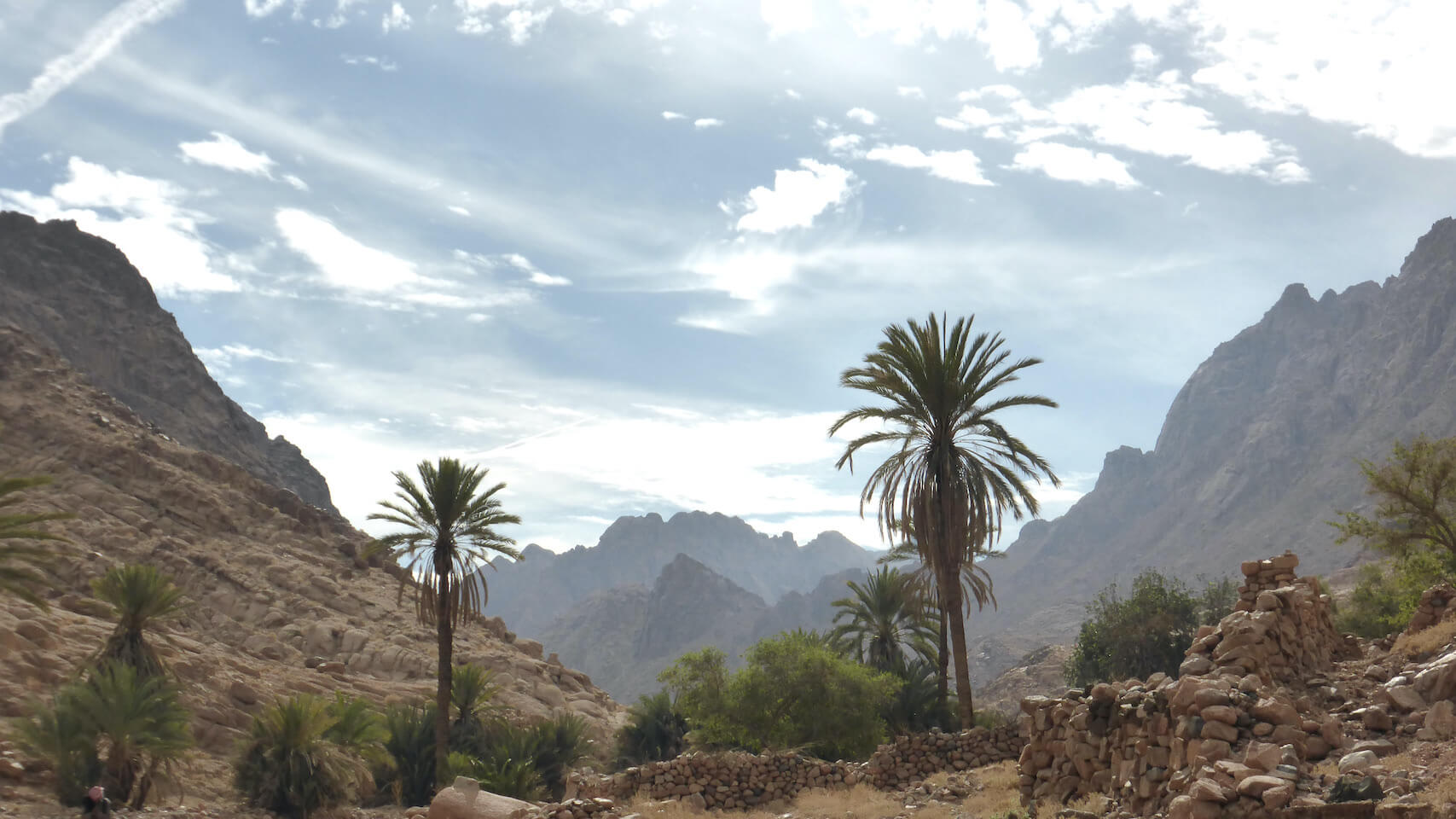
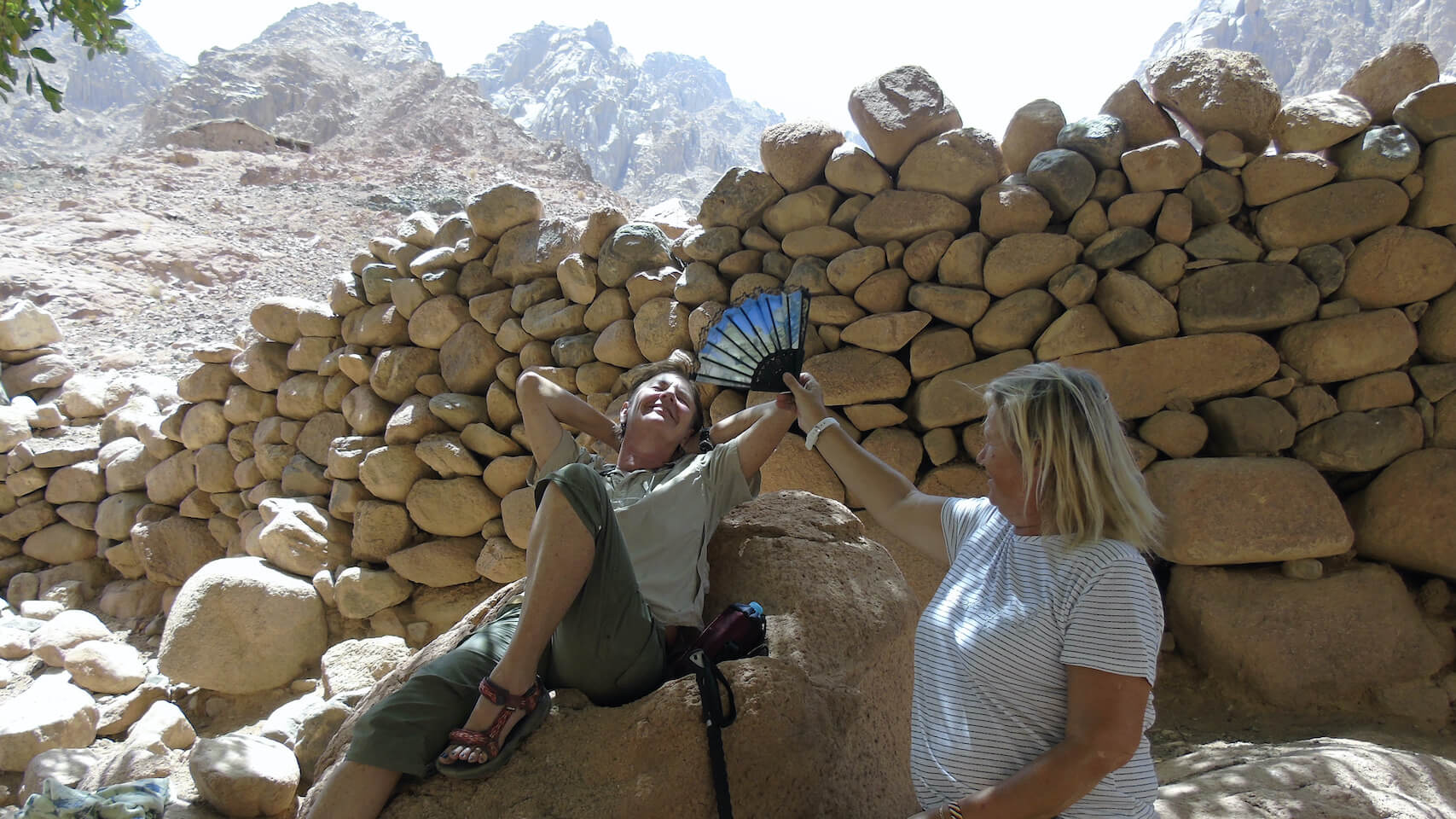
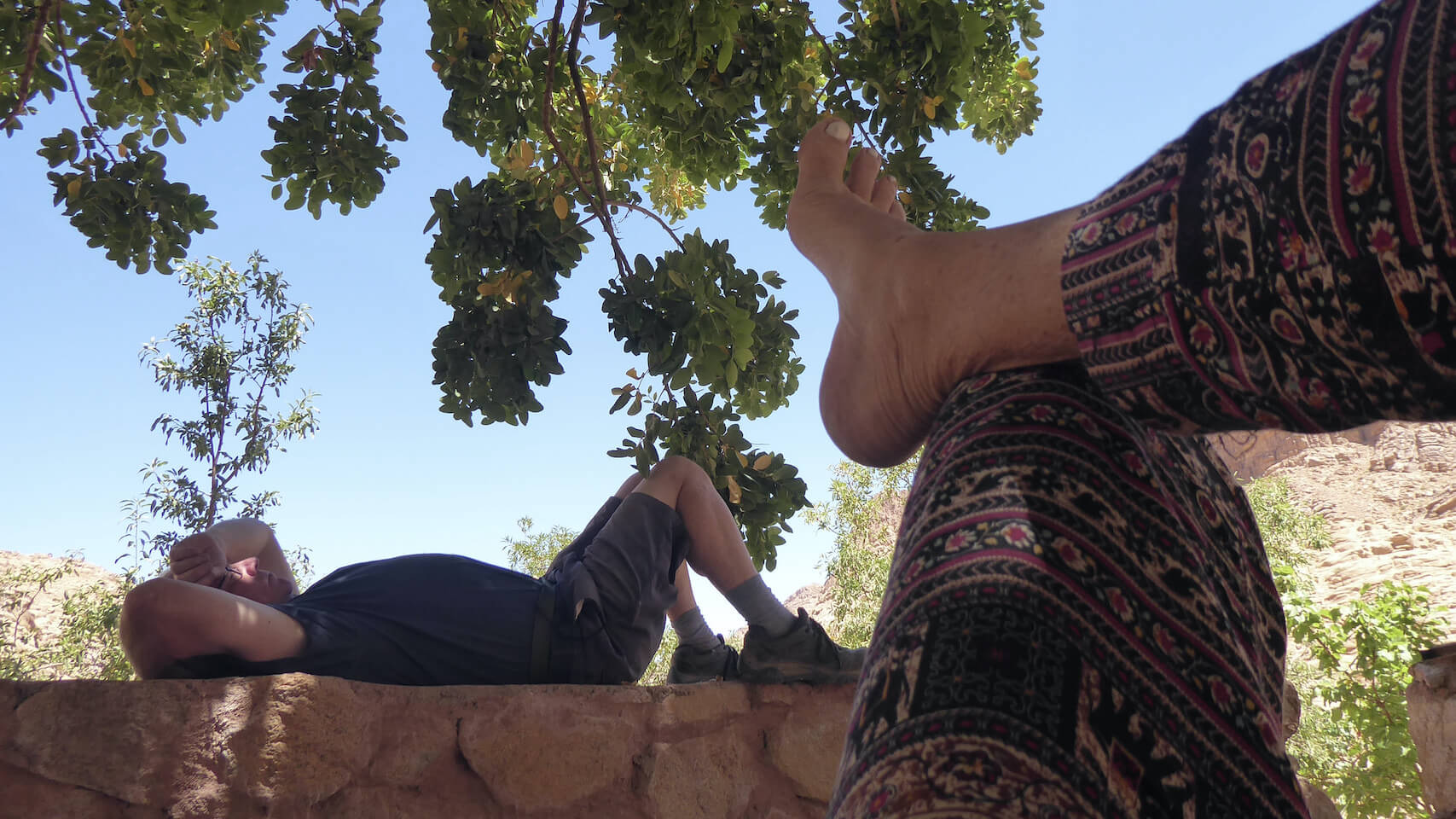
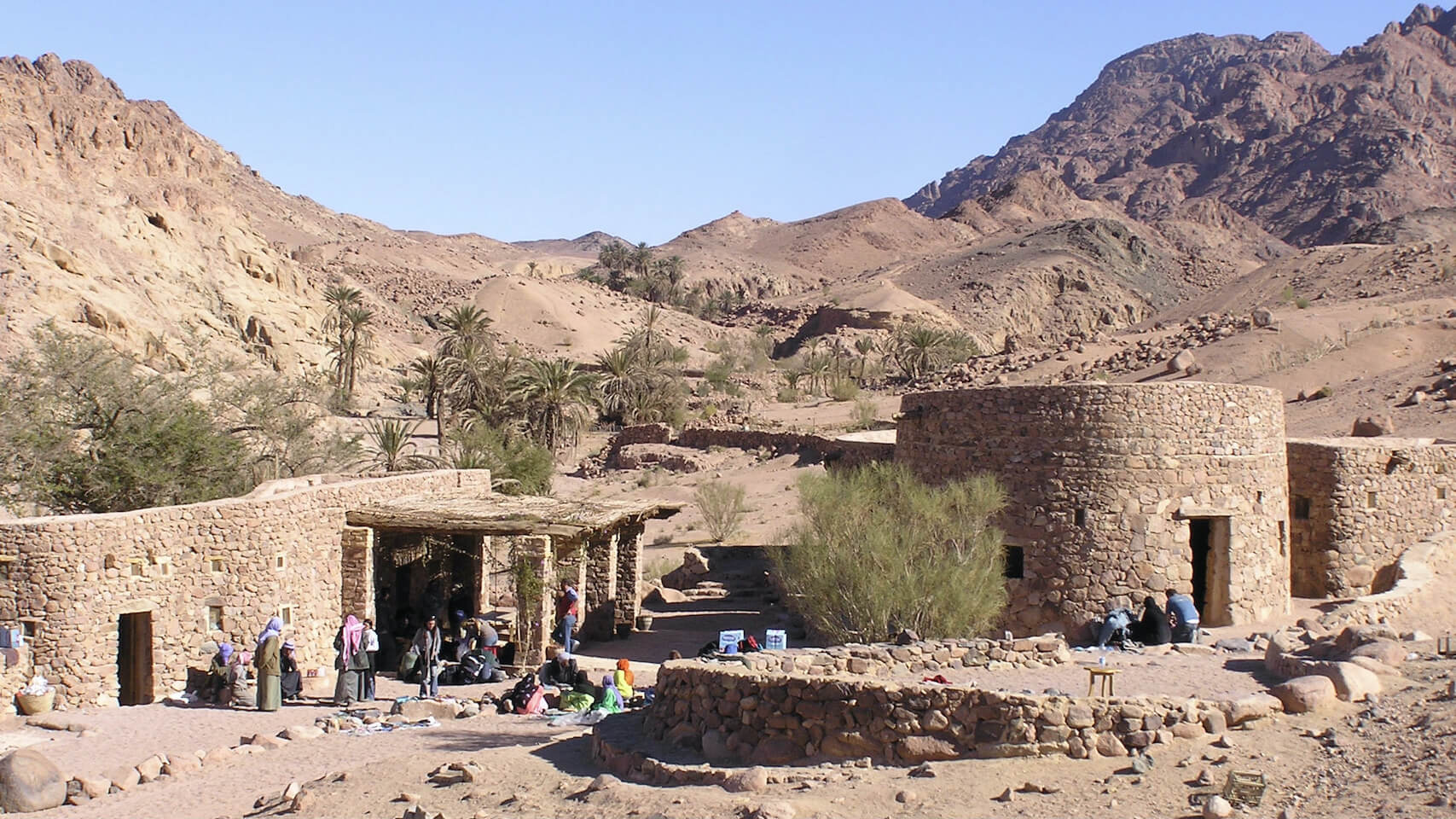
Mohamed Ouda has planted over 30 different mountain herbs in his garden and built stone rooms, a sun shelter, kitchen and bathroom. It’s not only a fascinating place to discover Bedouin herbal traditions but also a place to chill out and enjoy Bedouin hospitality and cuisine, with fruit, vegetables, honey and herbs from the garden.
Star gazing
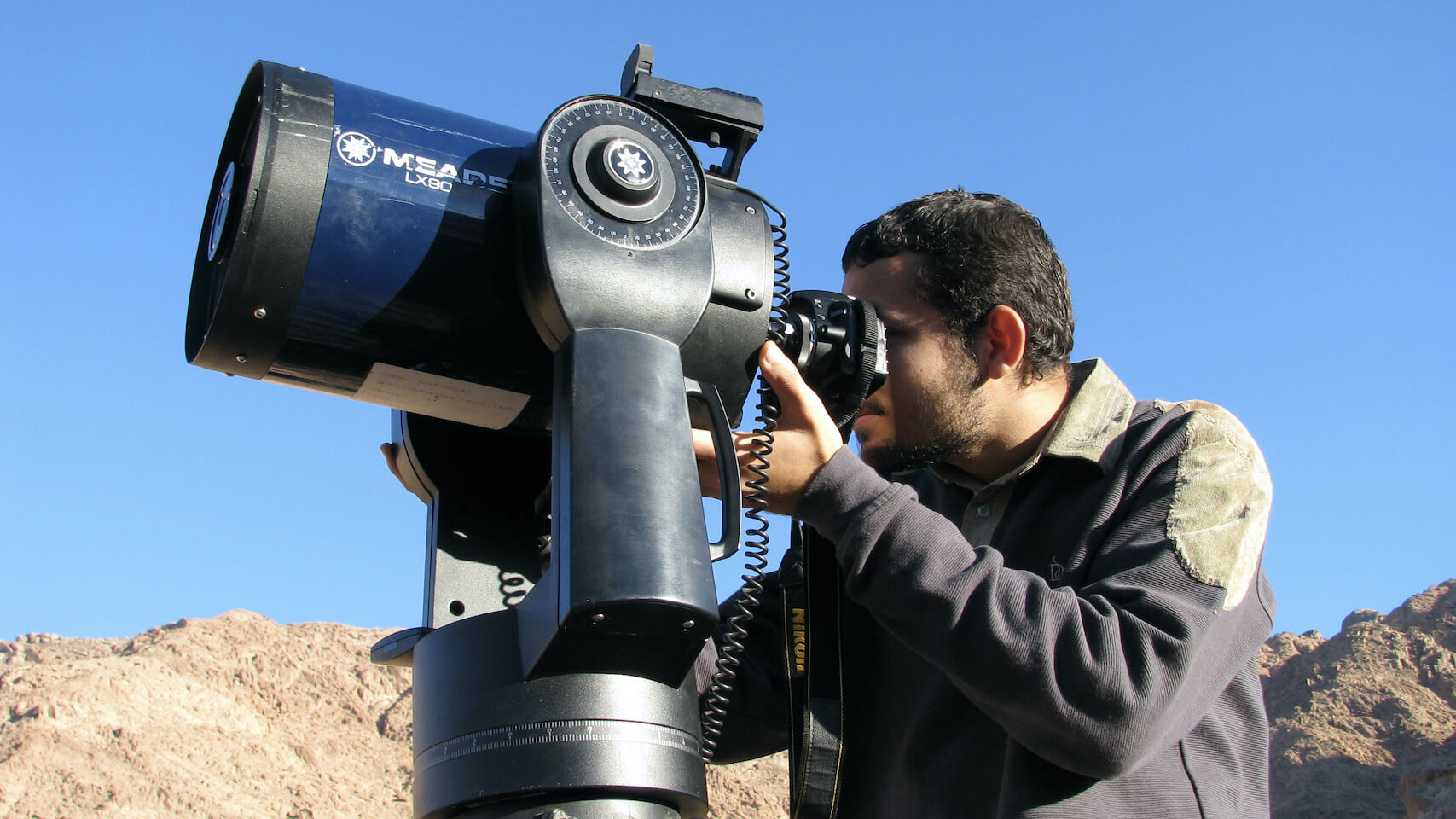
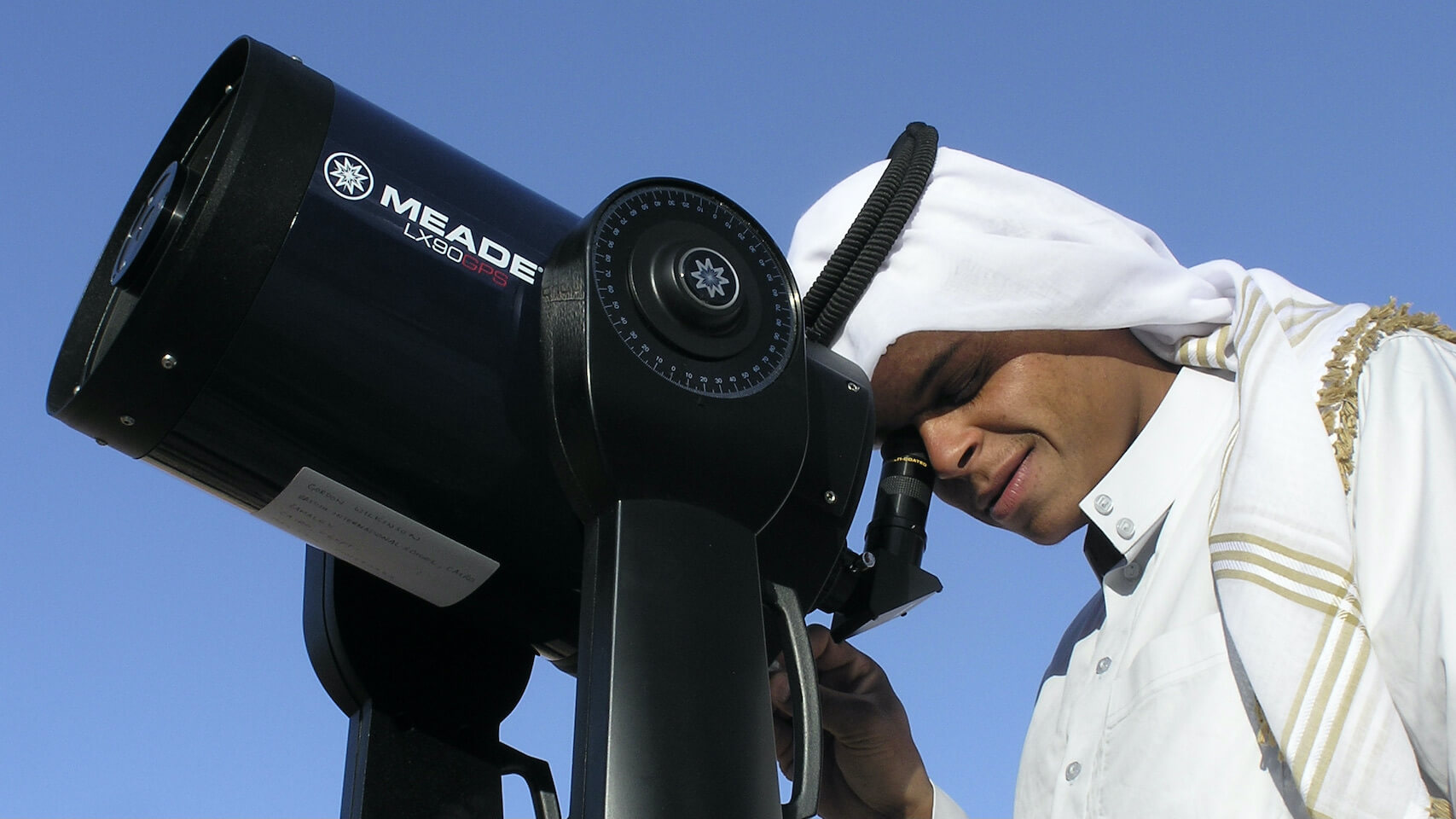

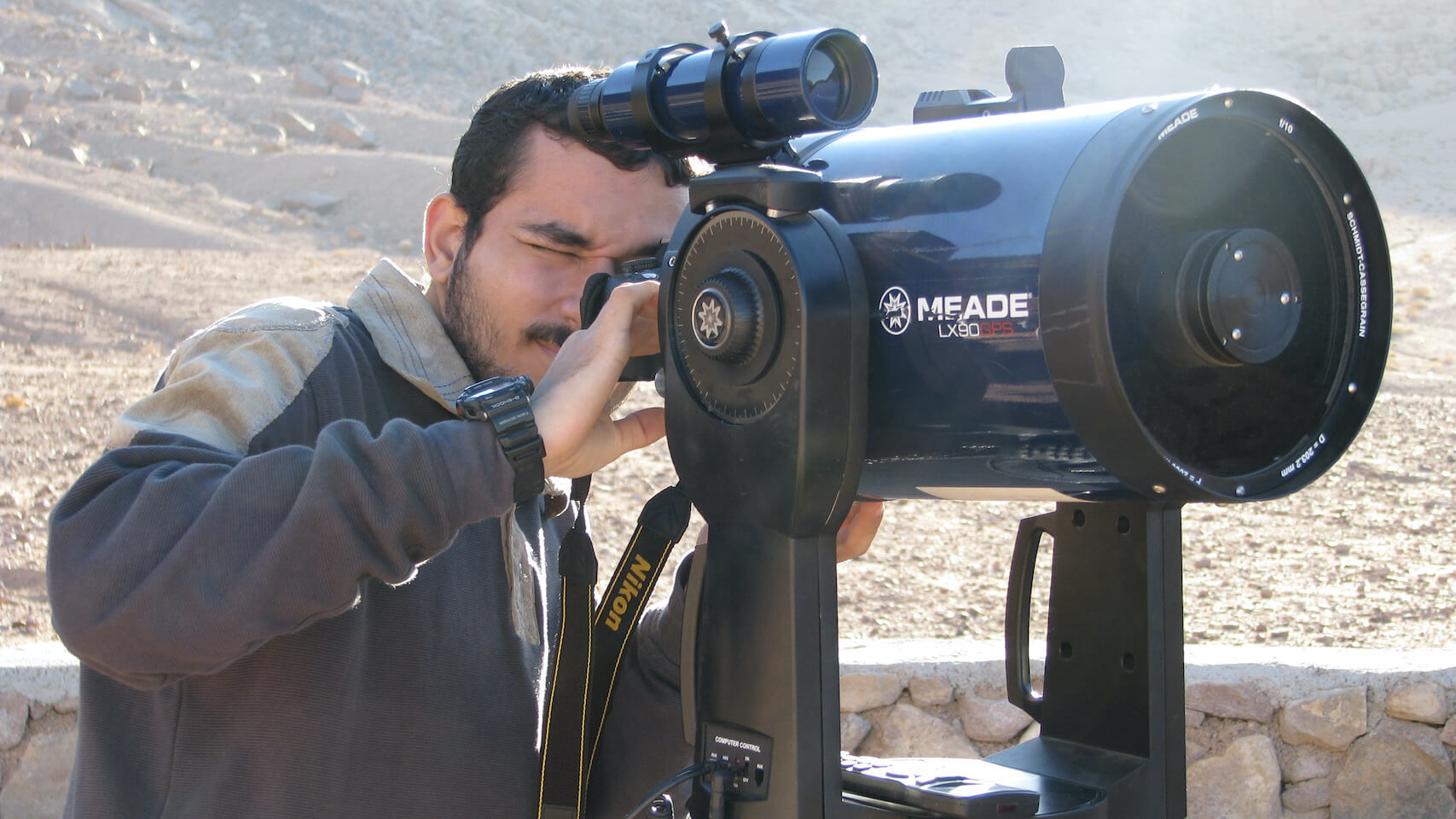
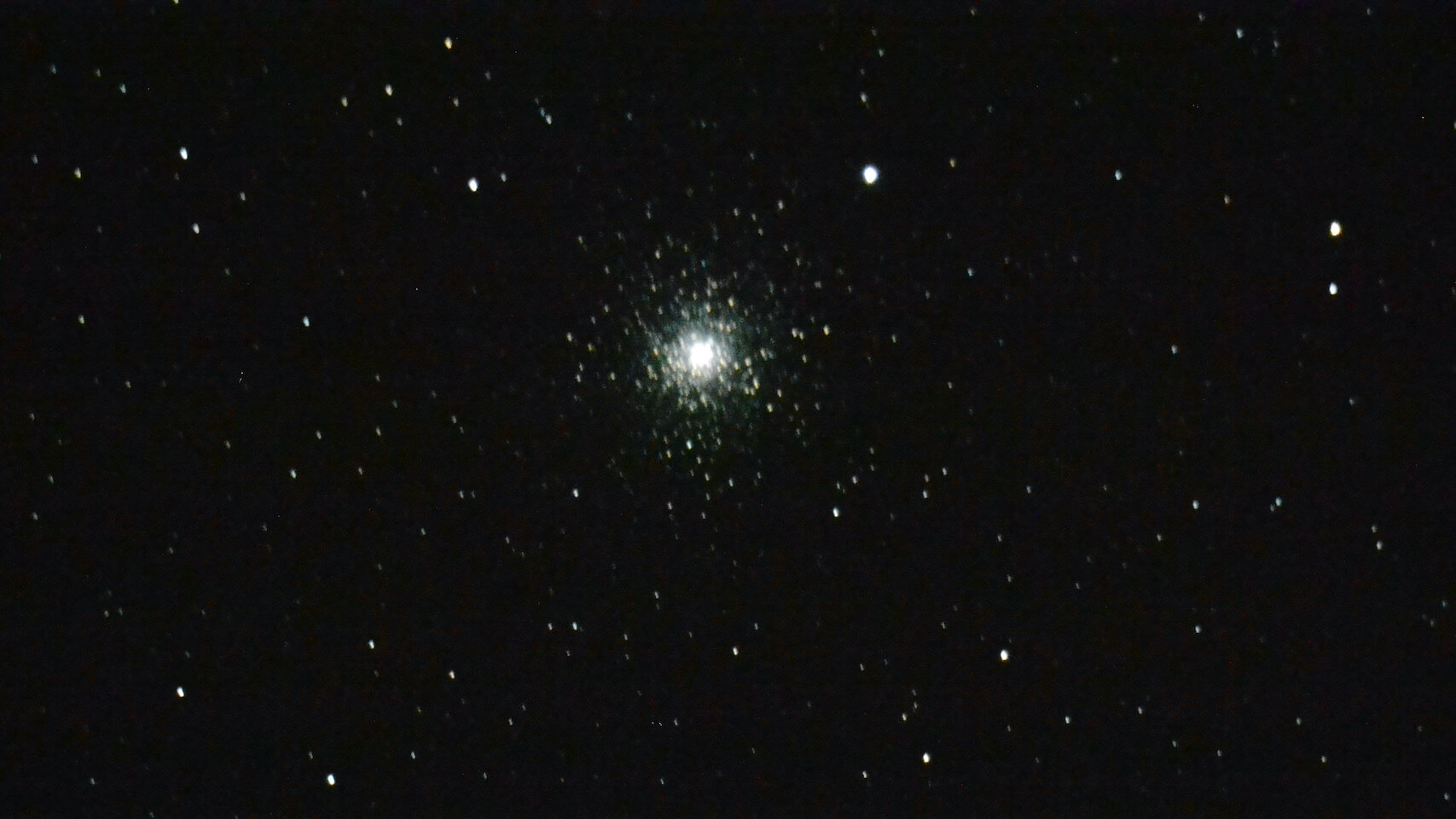
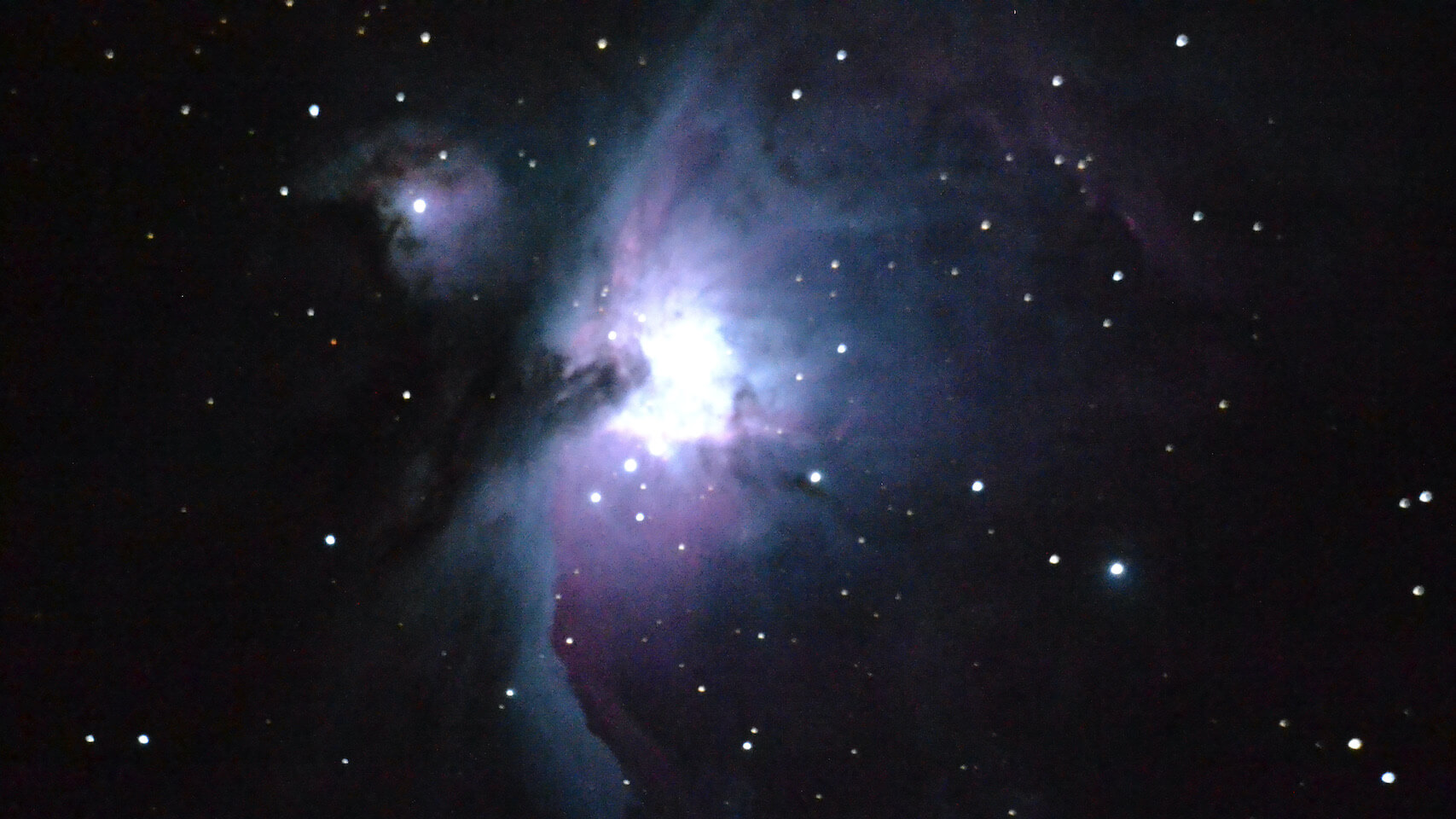
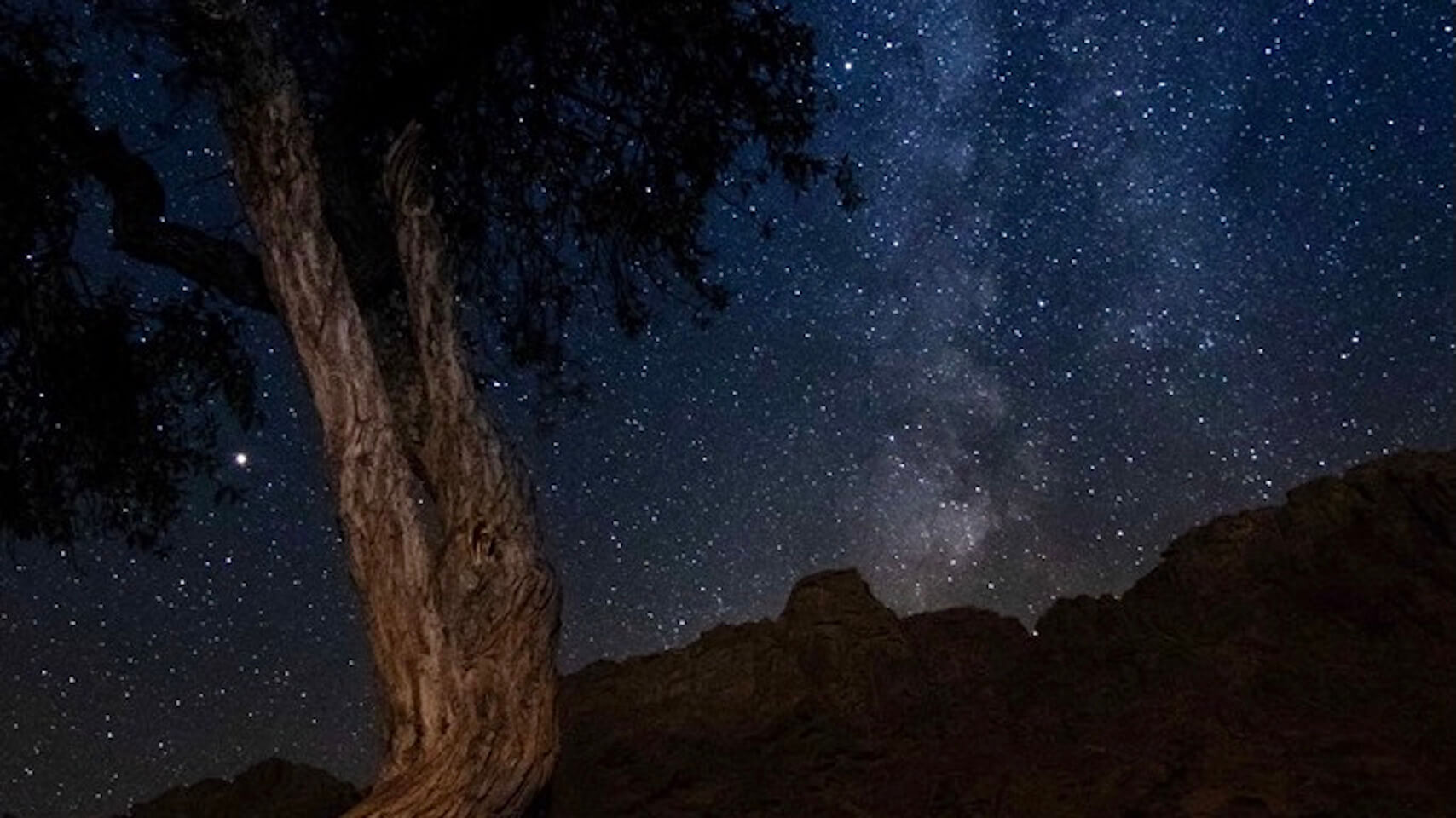
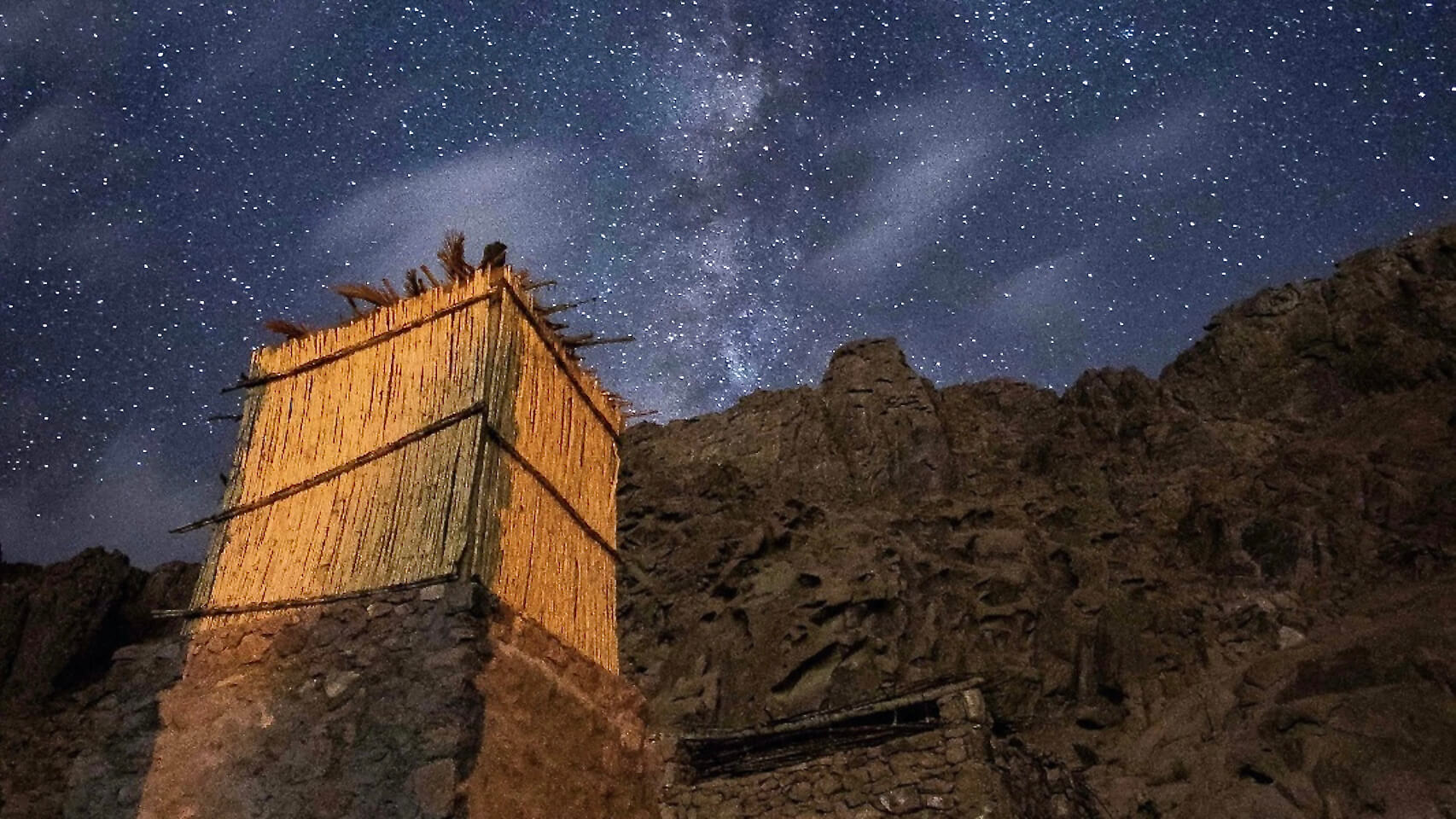
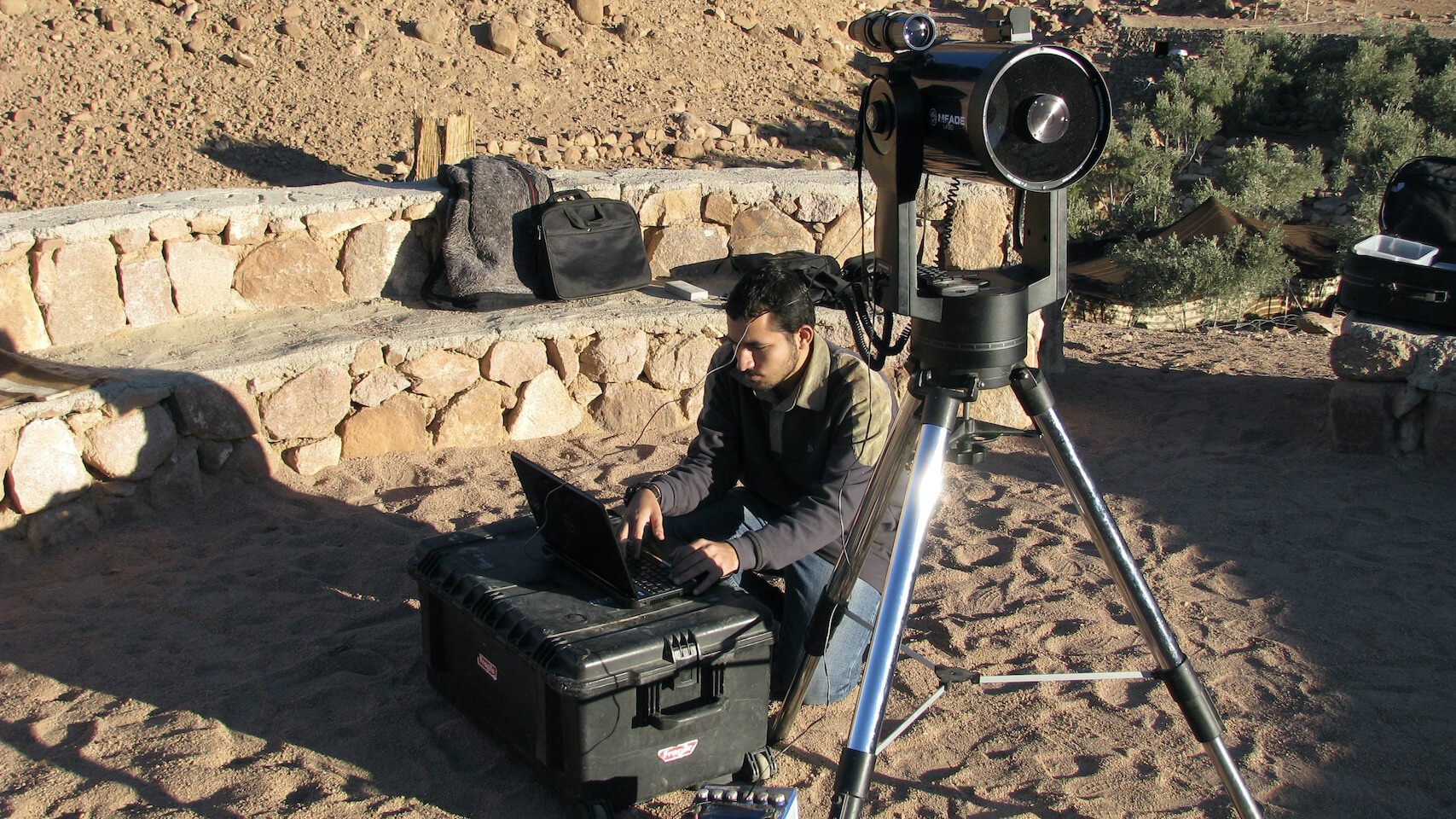
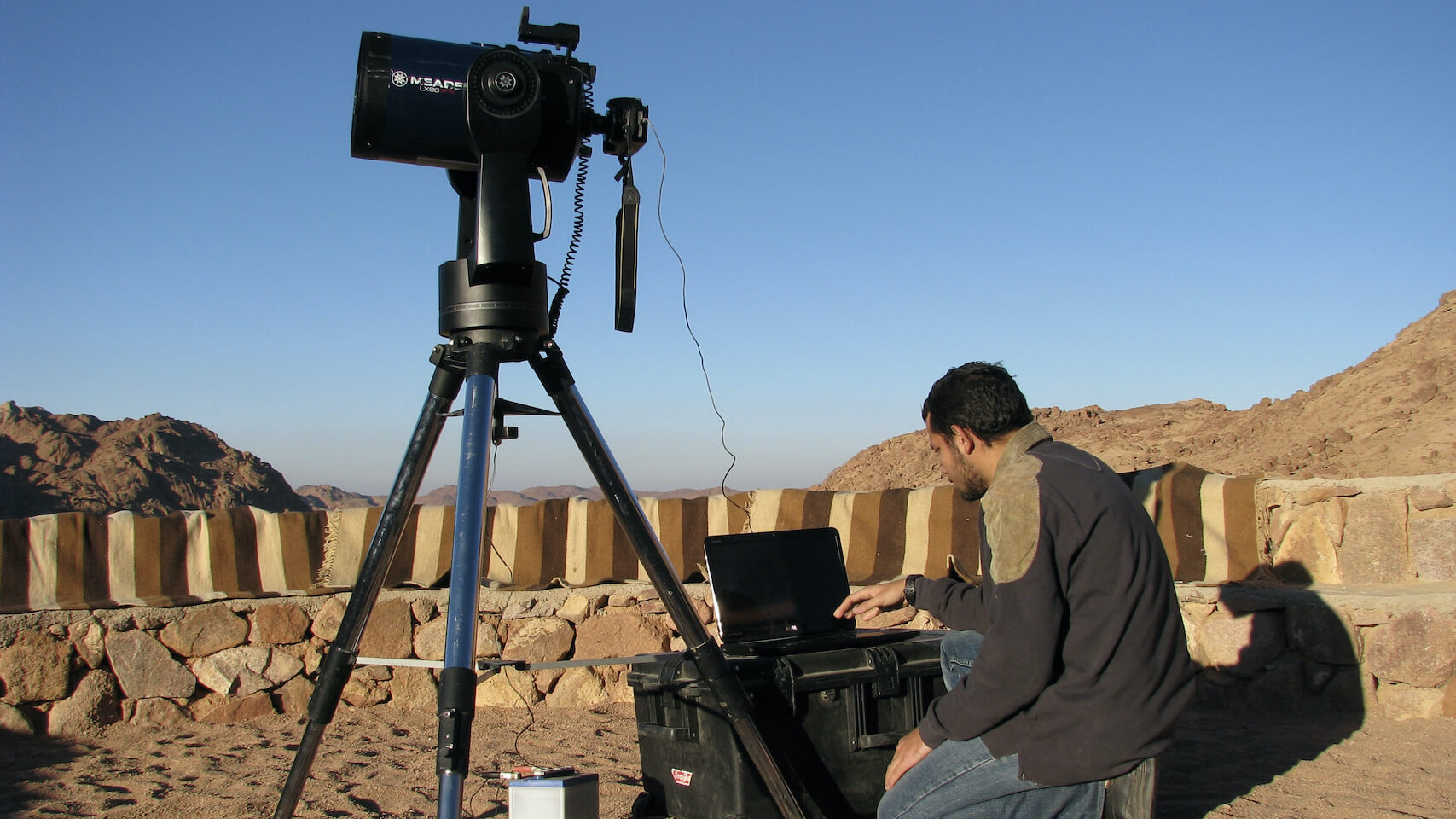
Our understanding of the stars and planets has been evolving for over three thousand years in a single unbroken intellectual quest which has deepened our understanding of the heavens while simultaneously confounding us with ever greater mysteries.
Yet many of us have now lost our connection to the stars.
So join us in the evening as the first stars appear. Learn to evaluate their brightness and colours, understand the celestial sphere and identify the constellations of the zodiac. Then, with the aid of the telescope, view planets, globular clusters, nebulae and distant galaxies.
We have been running evenings of astronomy for over 10 years and have migrated further and further into the mountains to escape light pollution. We have an observation circle in the Camel School which is good for an introduction to the stars but light pollution from the nearby town is now obscuring the finer detail. The Ecolodge is another good location and can be reached by jeep but it is also suffering the effects of light pollution. The best is to hike out into the High Mountains away from the dust and glare to discover the real splendour of the stars. We are currently building a new observation circle in Wadi Rumana which has a clear horizon and crisp mountain air to give a perfect view of the heavens.